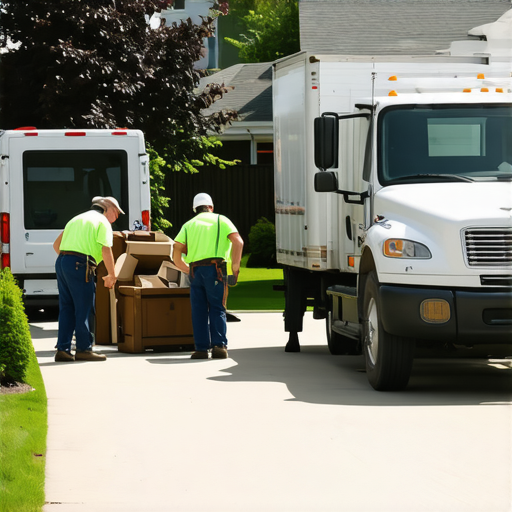

Why Most Aurora Warehouse Cleanouts Take Twice as Long as They Should
If you have ever stood at the edge of a 20,000-square-foot facility in Aurora and thought, “We can have this cleared out by Friday,” you are not alone. In our years of experience at Mile High Junk, we’ve seen countless business owners and facility managers underestimate the sheer logistical weight of a commercial cleanout. What looks like a big, open box is actually a complex logistical minefield. Without a specialized plan, “project creep” sets in almost immediately. A three-day job turns into a two-week ordeal, and suddenly your operational budget is bleeding. For many businesses, junk removal aurora isn’t just about hauling away trash; it’s about reclaiming expensive square footage before the next lease cycle or renovation begins. Before you back a truck up to the loading dock, it is vital to understand why these projects spiral. You might even want to learn how to spot a sketchy Aurora junk removal company before they damage your property, as the wrong team can add even more delays to an already bloated timeline.
The “Hidden” Time Sucks of Industrial Spaces
The biggest mistake people make during an Aurora warehouse cleanout is only looking at the floor. In an industrial environment, the floor space is just the beginning. At Mile High Junk, we’ve learned that the true “time sucks” are vertical. High ceilings and structural I-beams are magnets for decades of dust, cobwebs, and forgotten debris. If your cleanout includes “broom clean” requirements for a lease handover, you cannot ignore the rafters. Clearing vertical space requires specialized equipment – elevated platforms, scissor lifts, or industrial-grade extendable tools – that most internal teams simply don’t have on hand.
Furthermore, the infrastructure of the warehouse itself often becomes a hurdle. Pallet racking, for instance, isn’t just “furniture.” It is bolted into the concrete. Disassembling hundreds of linear feet of industrial shelving takes significant man-hours and the right impact tools. We often see managers assume their warehouse staff can handle this in their downtime, but the reality is that industrial disassembly is a full-time job. When you factor in the sheer volume of material – steel, wood, and plastic – the sorting process alone can consume days. Most people underestimate the time it takes to move items from the back of a deep warehouse to the loading dock. If you are moving items 300 feet across a floor dozens of times a day, those minutes aggregate into lost hours. This is one of the hidden costs of managing your own Aurora office cleanout or warehouse project; the labor hours you think you’re saving are actually being spent on inefficient movement and lack of proper equipment.
The Inventory Audit Trap: Why “Just Throwing it Out” Doesn’t Work
One of the primary reasons a cleanout stalls is a lack of decision-making authority on the ground. We call this the “Inventory Audit Trap.” A team starts moving quickly, but every five minutes, a worker holds up an old motor, a crate of circuit boards, or a stack of files and asks, “Do we keep this?” If the person with the power to say “yes” or “no” isn’t standing right there, the item gets set aside in a “maybe” pile. Before you know it, the “maybe” pile is larger than the “junk” pile, and you’re moving the same items twice.
To avoid this, we recommend a strict “Keep, Donate, Junk” system before our junk removal service team even arrives. Conducting a thorough inventory audit prior to the start date ensures that when the heavy lifting begins, there is no hesitation. Efficiency in junk removal is built on momentum. Once the flow of material from the building to the truck is interrupted, productivity drops by half. If you are looking to optimize your budget, understanding these logistical hurdles is key. In fact, checking out junk removal in Aurora: 5 ways to cut disposal costs in 2026 can help you categorize your inventory more effectively to save on tipping fees and labor.
Safety Hazards and Navigational Nightmares
Warehouses are high-risk environments, and a cleanout increases that risk exponentially. When you start moving stagnant inventory, you aren’t just moving boxes; you are disturbing years of settled particulates. In many Aurora industrial zones, older buildings may have issues with mold, mildew, or even pest droppings in neglected corners. Handling these without proper PPE (Personal Protective Equipment) is a violation of safety standards and a health risk to your employees.
Navigational hazards are another major delay factor. A warehouse in the middle of a cleanout is a maze of tripping hazards, sharp metal edges from disassembled racking, and heavy traffic. If your warehouse is still partially operational, you have the added complexity of navigating around active forklifts and shipping schedules. Safety isn’t just about preventing injury; it’s about preventing the total project shutdown that occurs when an accident happens. We strictly adhere to OSHA’s Warehouse Safety Guidelines to ensure that the removal process doesn’t result in a workers’ comp claim or property damage.
Specialized Removal: From Heavy Machinery to Old Office Furniture
A warehouse cleanout is rarely uniform. Usually, it’s a hybrid of industrial scrap and administrative waste. This is where many general labor teams get stuck. They might be fine moving cardboard boxes, but they struggle when faced with furniture removal for fifty integrated cubicles or appliance removal for industrial-sized breakroom coolers and defunct HVAC units.
Commercial furniture removal in a warehouse setting often involves desks that are bolted together or heavy-duty filing cabinets that require specialized dollies to move without scarring the epoxy floor. Similarly, appliance removal in a commercial context isn’t as simple as carrying a toaster to the curb. We’re talking about commercial-grade refrigerators that may contain refrigerants requiring special disposal under EPA regulations. If your cleanout involves these items, you need a plan for each category. For more specific advice on these items, read our guides on 7 best ways to handle large furniture removal in Aurora (2026) and 5 best Aurora fridge disposal services to use this summer [2026]. Having the right tools – like lift-gate trucks and heavy-duty straps – is the difference between a four-hour task and a two-day struggle.
The Aurora Advantage: Why Local Logistics Matter
Operating in Aurora, Colorado, presents its own unique set of logistical challenges. From the traffic patterns along the I-225 corridor to the specific regulations at local transfer stations, knowing the local landscape is essential for a timely cleanout. For instance, Aurora has specific rules regarding the disposal of electronics (e-waste) and hazardous industrial materials. If you show up at a local dump with a mixed load that hasn’t been properly sorted, you might find your truck turned away, forcing you to spend hours re-sorting the material in the parking lot.
Mile High Junk understands these local nuances. We know which facilities accept industrial scrap and which ones are best for large-scale furniture recycling. We also know how to time our hauls to avoid the peak traffic hours that can turn a 20-minute trip to the disposal site into an hour-long crawl. Local expertise saves time that you can’t account for on a spreadsheet. If you’ve ever wondered why your old couch is still sitting there: Aurora’s toughest removal rules often play a role, and those same rules apply – on a much larger scale – to warehouse debris.
5 Tips to Cut Your Cleanout Time in Half
If you want to ensure your next commercial junk removal Aurora project stays on schedule, follow these five battle-tested tips from our team:
- Set Clear Goals: Define exactly what “done” looks like. Does it mean the floor is swept? Are the walls wiped down? Are the racks removed?
- Create a Detailed Floor Plan: Map out the warehouse and tackle it in “zones.” This prevents the team from feeling overwhelmed and helps track progress.
- Optimize the “Exit Path”: Ensure the path from the junk pile to the loading dock is clear of obstructions. Every turn or narrow doorway adds seconds to every trip.
- Schedule Periodic Maintenance: Don’t wait five years to clean out the warehouse. A quarterly purge prevents the “mega-cleanout” from ever needing to happen.
- Hire a Professional Junk Removal Service: Professionals bring the trucks, the labor, the insurance, and the disposal knowledge. What takes an amateur team a week, we can often finish in a day or two.
Conclusion & Call to Action
Warehouse cleanouts don’t have to be a headache or a drain on your company’s resources. By understanding the hidden time-sucks and planning for specialized removal, you can reclaim your space efficiently. Ready to reclaim your square footage? Contact Mile High Junk today for the most efficient junk removal aurora has to offer.