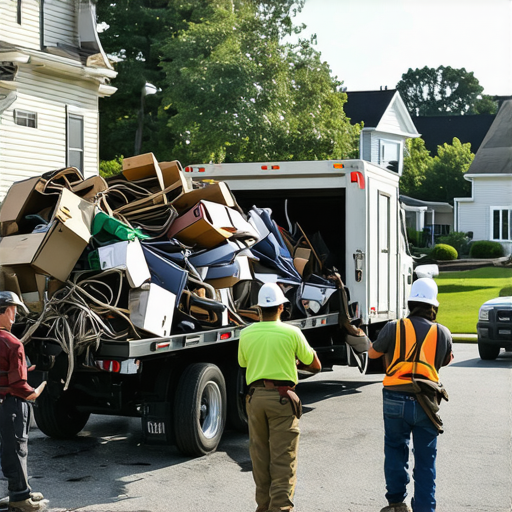
The air in the cab of my Kenworth smells like diesel exhaust and hydraulic fluid. It is the scent of twenty five years in the waste game. I see the world in cubic yards. Every driveway in Aurora tells a story of accumulation. A business owner tried to save 500 dollars by hiring a guy with a pickup truck from a social media ad. Two weeks later, the police called him because his company confidential files were found in a ditch. Your junk is your liability until it hits the scale. This is the reality of waste management in 2026. If you think junk removal is just about lifting heavy objects, you are wrong. It is about logistics. It is about the science of diversion. It is about understanding that a refrigerator is not just metal but a pressurized vessel of environmental toxins. We do not just haul. We manage assets that have become liabilities.
The hidden anatomy of Aurora appliance recycling
Appliance removal in Aurora requires a certified recovery process for refrigerants, heavy metals, and PCB capacitors. Professional haulers must document the disposal chain at Colorado transfer stations to ensure compliance with EPA Section 608 regulations. Local recycling centers in the Denver Aurora metropolitan area prioritize ferrous metal recovery over simple landfilling. The weight of an old washing machine is easy to calculate. The logistics of its destruction are complex. You have to account for the transmission fluid in older top loaders. You have to strip the copper wiring. You have to handle the concrete counterweights found in European style front loaders. In Aurora, the local tipping fees fluctuate based on the purity of the scrap load. If you mix your appliances with general garage clean out debris, you pay a premium. The scale operator does not care about your excuses. They care about the integrity of the pile. Modern appliances are lighter but contain more hazardous circuit boards than the steel beasts of the 1970s. This shift has changed the math of recovery. We no longer look at just the weight of the steel. We look at the complexity of the teardown.
“Waste is merely a resource in the wrong place; professional removal is the science of putting it back where it belongs.” – Disposal Industry Maxim
The ghost in the garage
Garage clean outs in Aurora often reveal structural hazards like bowing joists and hazardous chemical storage. Junk removal experts identify lithium ion batteries, pesticides, and lead acid batteries that require specialized transport manifests. Aurora municipal codes strictly prohibit these items in standard dumpster rentals to prevent landfill fires. I have walked into garages where the boxes were stacked so high they reached the garage door tracks. This is a physics problem. One wrong pull and the whole stack collapses. It is not just about clearing space. It is about the safety of the structure. We see the concrete floors cracking under the weight of stored engine blocks and stacks of vintage magazines that have absorbed years of Colorado humidity. These paper stacks become as heavy as bricks. When we quote a job, we calculate the density. A garage full of empty cardboard boxes is a volume problem. A garage full of wet magazines is a weight problem. We use 15 yard trucks because they offer the best balance of maneuverability in tight suburban driveways and payload capacity. If you use a 40 yard roll off for a garage clean out, you risk the tires sinking into the asphalt during a hot Aurora afternoon. We have seen it happen. The asphalt yields. The truck gets stuck. The profit vanishes.
Why your cheap hauler is a legal time bomb
Illegal dumping near Aurora creek beds and industrial zones creates civil liability for the original property owner. Certified junk removal Aurora services provide a transfer station receipt to prove legal disposal. Aurora code enforcement uses surveillance and found documents to trace furniture removal back to the source address. If the guy you hired for fifty dollars drops your old sofa in a vacant lot, the city comes for you. They do not care that you paid someone else to take it. You are responsible for your waste from cradle to grave. This is the Resource Conservation and Recovery Act in action. It is a federal framework that trickles down to our local streets. We see the curbside cowboys every day. They have no insurance. They have no permits. They have no respect for the grid. They take the metal and dump the rest. We take everything. We sort it. We ensure that the wood goes to a mulcher and the metal goes to a smelter. This process costs money. Professionalism is expensive because the alternative is a legal nightmare. When we perform furniture removal, we look for the tags. We look for flame retardants. We ensure that if an item can be donated, it goes to a local Aurora charity instead of the pit. This is the difference between a hauler and a strategist.
| Material Type | Decomposition Time | Recycling Potential | Aurora Disposal Difficulty |
|---|---|---|---|
| Steel Appliances | 50 Years | 95% High | Low |
| Upholstered Furniture | 80 Years | 15% Low | Medium |
| Lithium Batteries | Never | Hazardous | Extreme |
| Untreated Wood | 15 Years | 80% Medium | Low |
| Low Grade Plastic | 500 Years | 5% Low | High |
The heavy cost of keeping everything
Hoarder clean out Aurora operations require biohazard protocols and structural stabilization of the residential property. Professional crews utilize PPE and industrial grade air scrubbers to manage particulate matter during the debris removal. Aurora social services often coordinate with junk removal specialists to ensure safety compliance for vulnerable residents. A hoarding house is an autopsy of a life. We find layers. The top layer is recent trash. The middle layer is memories. The bottom layer is the structural decay. We have to be careful. Rodent droppings and mold are common. We do not just throw things in a bin. We have to sort for valuables and hazards simultaneously. The pressure on the floor joists in these homes is often double what the engineers intended. We have to clear paths like we are mining a tunnel. We use a method called cubing out. We pack the truck with the heaviest items on the bottom to keep the center of gravity low. We use blankets for the few items that are being saved. We use shovels for the rest. It is a grueling process that takes a toll on the body and the mind. You have to be part therapist and part demolition expert. In Aurora, the dry climate helps preserve some items, but it also makes the dust more dangerous. We never enter without a respirator. We never work alone. The load is too great for one person.
“The mismanagement of solid waste leads to the contamination of groundwater and the unnecessary loss of valuable raw materials.” – EPA Waste Management Bulletin
The logistics of the Aurora dumpster rental
Dumpster rentals Aurora must account for street permit requirements and weight limit restrictions on residential cul de sacs. Roll off containers come in 10 yard, 20 yard, and 40 yard sizes, each designed for specific debris types like concrete or household junk. Aurora homeowners must ensure clearance heights for the delivery truck hoists to avoid overhead wire interference. If you are doing a garage clean out, do not just order the biggest bin. A 40 yard bin filled with shingles will exceed the weight limit of the truck. You will be stuck with a bin that cannot be moved. We call this being heavy. It is a rookie mistake. We recommend 20 yard bins for most residential projects. They fit in a standard driveway. They are easier to load over the sides. In Aurora, you have to be mindful of the wind. A light load in a large bin can become a kite. We provide tarps and tie downs. We check the weather. If a storm is coming off the Rockies, we secure the site. The physics of a dumpster are simple until you add the variables of a Colorado afternoon. We also monitor for unauthorized dumping. If you leave a bin on the street overnight, neighbors will try to fill it. We provide locking lids for high traffic areas. We protect your investment.
The checklist of the untouchables
- Propane tanks and pressurized cylinders
- Lead acid automotive batteries
- Biohazardous waste and medical needles
- Industrial solvents and chemical pesticides
- Wet paint and liquid petroleum products
- Radioactive smoke detectors
- Asbestos containing insulation materials
- Ammunition and explosive devices
The contrarian truth about plastic diversion
While most people think recycling is always better, the carbon footprint of hauling low grade plastics 500 miles often exceeds the impact of local high efficiency waste to energy incineration. In the Aurora region, we have to look at the math. If we spend 40 gallons of diesel to move a ton of plastic that will ultimately be rejected by the processor, we have failed. Sometimes the most environmental choice is the local landfill with methane capture. This is a hard truth for many to swallow. We live in a world of greenwashing. I tell my clients that the best way to recycle is to not buy the junk in the first place. Once it is in your house, the options narrow. We focus on high value recovery. Steel, aluminum, copper, and clean wood. These have real markets. They actually get turned into new products. The rest is often just a shell game. We are honest about where your waste goes. We do not promise miracles. We promise compliance. We promise that your junk will not end up in a ditch in the plains. We promise that the logistics will be handled with the precision of a military operation. This is how you survive twenty five years in this business. You stay honest and you stay heavy.