
The hazardous surprise hidden in Aurora waste streams
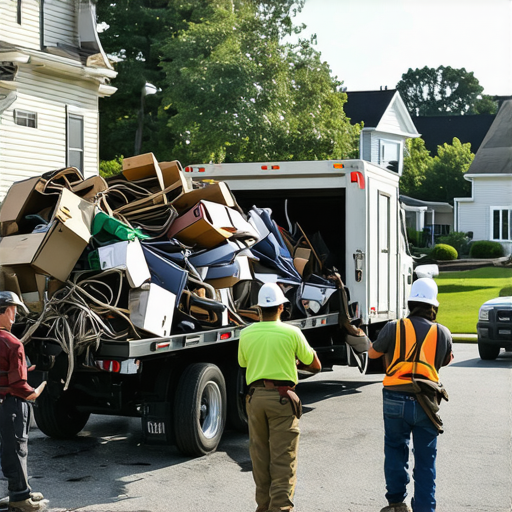
Appliance removal and Junk Removal Aurora services in 2026 require rigorous inspection protocols because hazardous materials remain the primary threat to landfill safety and worker health. I watched a rookie almost lose his eyebrows because a customer hid a half-full propane tank inside a pile of ‘harmless’ yard waste. We don’t just lift. We inspect. Every. Single. Item. In Aurora, the logistics of waste management have shifted toward a zero-tolerance policy for chemical contaminants. If you are cleaning out a property near the Fox River, you are not just moving junk. You are managing a liability chain that extends from your driveway to the regional processing facility. The physics of moving a 300-pound refrigerator down a narrow flight of basement stairs in an older Aurora home requires more than muscle. It requires an understanding of structural load limits and the chemical stability of legacy refrigerants. If that cooling coil snaps, you are looking at a localized environmental event and a massive fine from the state. We see it every day. People try to save a few dollars by hiring an uncertified hauler. Then the cops show up because the ‘hauler’ dumped the compressor in a ditch along Sullivan Road.
Illinois Environmental Protection Act updates for 2026
The Illinois Environmental Protection Act mandates that all Appliance removal must involve certified recovery of chlorofluorocarbons (CFCs) and hydrochlorofluorocarbons (HCFCs) before the metal carcass can be scrapped. By 2026, the state has tightened the manifest requirements for ‘white goods,’ which include refrigerators, freezers, and air conditioners. In Aurora, this means any unit manufactured before 2010 is treated as a high-risk asset. The law requires a documented chain of custody. You cannot simply toss an old chest freezer into a Dumpster Rentals Aurora unit and hope for the best. The weight of these items also triggers specific DOT regulations for transport. A standard 15-yard truck ‘cubes out’ long before it ‘grosses out’ on weight when dealing with residential debris, but appliances flip that math. The density of steel and the weight of the motors can easily push a truck over its legal axle limit if the load is not balanced properly across the chassis.
“Waste is merely a resource in the wrong place; professional removal is the science of putting it back where it belongs.” – Disposal Industry Maxim
The logistics of a full Aurora garage extraction
Garage Clean outs in Aurora represent a complex logistical puzzle where Furniture Removal and chemical disposal intersect in tight physical spaces. Most residents do not realize that the concrete floor of their garage is likely the most contaminated part of their property. Old oil cans, dried paint, and pesticide bottles often leak over decades. When we perform a cleanout, we utilize a process called ‘Zonal Extraction.’ We clear the perimeter first to create a staging area. This allows us to inspect each item for integrity. We look for ‘bloated’ containers, which indicate chemical reactions are occurring inside. These are immediate red flags. In the 2026 regulatory environment, the cost of disposing of these items has skyrocketed due to the closure of several regional hazardous waste landfills. We now have to transport certain materials to specialized incinerators that can handle high-temperature destruction of toxic compounds.
| Material Category | Disposal Priority | 2026 Tipping Fee Trend | Aurora Recovery Rate |
|---|---|---|---|
| White Goods (Appliances) | High (CFC Recovery) | Increasing (Regulatory) | 92% |
| E-Waste (TVs, PCs) | Mandatory Recycling | Stable | 88% |
| Bulk Furniture | Low (Landfill) | Increasing (Space) | 45% |
| Construction Debris | Medium (Sortation) | Variable | 60% |
Why your old fridge is a chemical time bomb
Refrigerant recovery protocols are the most critical part of Appliance removal because older units contain R-12 or R-22 gases that have a global warming potential thousands of times higher than CO2. When a compressor is cut by a scrap yard that does not follow the law, those gases vent instantly. In 2026, Illinois law uses satellite and atmospheric monitoring to detect large-scale venting events. If a haul of twenty fridges disappears from a Hoarder Clean Out aurora site and the metal is sold without recovery certificates, the state will trace it back. The equipment required to safely evacuate these gases is expensive. It involves vacuum pumps, recovery cylinders, and digital scales that measure the gas to the gram. This is why a ‘free’ pickup service is never actually free. They are cutting corners that will eventually cost the homeowner or the business owner in legal fees. The logistics of the haul are only 30 percent of the job. The remaining 70 percent is compliance and documentation.
The heavy cost of keeping everything
Hoarder Clean Out aurora projects are structural interventions rather than simple cleaning tasks. When newspapers are stacked six feet high for twenty years, they absorb moisture from the air. A single cubic yard of dry paper weighs about 500 pounds. A cubic yard of damp, compressed paper can weigh over 1,200 pounds. This creates a ‘dead load’ on the floor joists that the house was never designed to support. We have seen floors in Aurora bungalows sagging by three inches in the center because of the weight of ‘junk.’ Removing this material requires a ‘Reverse Loading Strategy.’ We cannot just start at the door. We have to brace the floor from the basement below and then remove weight in increments to prevent a structural collapse. It is a slow, methodical process that involves industrial-grade respirators and full-body Tyvek suits. The air quality in these environments is often toxic due to mold spores and animal waste. We treat these sites like hazmat scenes because, legally and biologically, that is exactly what they are.
The permit nightmare of Aurora street placement
Dumpster Rentals Aurora services are governed by strict municipal codes regarding placement on public right-of-ways. If you do not have a driveway, you need a permit to place a roll-off container on the street. The City of Aurora requires reflective barricades and specific insurance riders. If a car hits that dumpster at night and you do not have the proper lighting, the liability is yours. Furthermore, the 2026 local ordinances have banned the placement of dumpsters near storm drains to prevent leachate runoff. If it rains and the ‘junk’ in your dumpster leaks oily residue into the Fox River watershed, the fines are calculated by the gallon of contaminated water. We recommend ‘Live Loading’ for narrow streets in Aurora. This is where the truck stays on-site, we fill it in two hours, and we haul it away immediately. It eliminates the permit headache and the risk of neighbors tossing their own trash into your rented bin overnight.
“The Resource Conservation and Recovery Act (RCRA) ensures that waste is managed from ‘cradle to grave,’ and appliances are no exception to this federal oversight.” – SWANA Compliance Handbook
The science of cubing out a 15-yard truck
Junk Removal Aurora professionals focus on ‘Load Density’ to maintain profitability and safety. A 15-yard dump truck has a specific volume, but the ‘Tetris’ of the load determines the cost. If we load a truck with hollow items like old cabinets and do not break them down, we are hauling air. Hauling air is the fastest way to go out of business. We use ‘Destructive Loading,’ where we dismantle Furniture Removal items on-site to minimize voids. An old sofa can be reduced by 60 percent in volume if the springs and frame are separated from the cushions. In 2026, tipping fees at the Orchard Hill Landfill are charged by weight, but our transport costs are determined by volume. The tension between these two metrics is where the expertise of a logistics manager comes in. We have to balance the load so the truck is heavy enough to be efficient but light enough to stay under the 26,001-pound CDL threshold for our smaller units.
- Lead-acid batteries (found in backup power systems).
- Uninterrupted Power Supplies (UPS) with internal batteries.
- Industrial-sized capacitors from old medical equipment.
- Propane tanks or any pressurized vessel.
- Biohazardous waste or medical needles.
- Mercury-containing thermostats and switches.
The environmental math of waste to energy
Information Gain: While most people think recycling is always ‘better,’ the carbon footprint of hauling low-grade plastics 500 miles often exceeds the impact of local, high-efficiency waste-to-energy incineration. In Aurora, we have access to regional facilities that turn non-recyclable debris into electricity. This is a contrarian view, but in 2026, the energy recovery from a piece of treated wood furniture is often more ‘green’ than trying to strip the chemicals and recycle the fibers. We analyze the ‘Net Environmental Benefit’ of every load. If the logistics of recycling a specific material consume more diesel than the material is worth, we redirect it to a waste-to-energy plant. This is the reality of modern waste management. It is not about feeling good. It is about the hard math of carbon and chemistry. When we handle a Garage Clean outs project, we sort the load into four streams: direct reuse, metal scrap, energy recovery, and finally, landfill as a last resort.
The ghost in the garage
Legacy waste in Aurora often includes items like old PCB-containing ballasts from shop lights. These were banned decades ago but still sit in garages across the city. If these leak, the soil remediation costs can exceed the value of the home. As experts, we look for the telltale signs of ‘black gunk’ leaking from old electrical components. The 2026 laws have made the generator of the waste—the homeowner—responsible for the cleanup costs. This is why professional Appliance removal is a form of insurance. We take on the liability when we sign the manifest. We ensure the items are processed at a facility that is equipped to handle 20th-century toxins with 21st-century technology. The Fox River is a vital resource for our community. Protecting it starts with how we handle the junk in our basements. Every refrigerator properly recycled is a win for the local ecosystem and a shield against legal trouble.