The rookie and the propane bomb
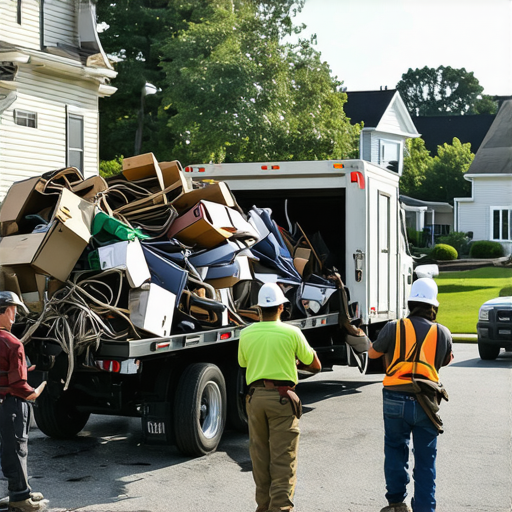
I watched a rookie almost lose his eyebrows because a customer hid a half-full propane tank inside a pile of ‘harmless’ yard waste. We do not just lift, we inspect. Every. Single. Item. The air in Aurora was crisp that morning, the kind of cold that makes hydraulic fluid sluggish. We were clearing a massive pile of debris from a backyard near the High Line Canal. The rookie, eager to prove his worth, grabbed a handful of dry brush and tossed it into the hopper of our rear-loader. A loud hiss echoed against the garage walls. I tackled him into the mud just as the pressure relief valve on a 20-pound propane cylinder gave way. The customer had buried it under leaves to avoid the extra surcharge at the transfer station. That is the reality of the waste industry. People cut corners, but physics never does. Your junk is a collection of materials, some stable and some volatile, and treating it like a single mass of ‘trash’ is how people get hurt and trucks get ruined.
Why Aurora winters turn trash into stone
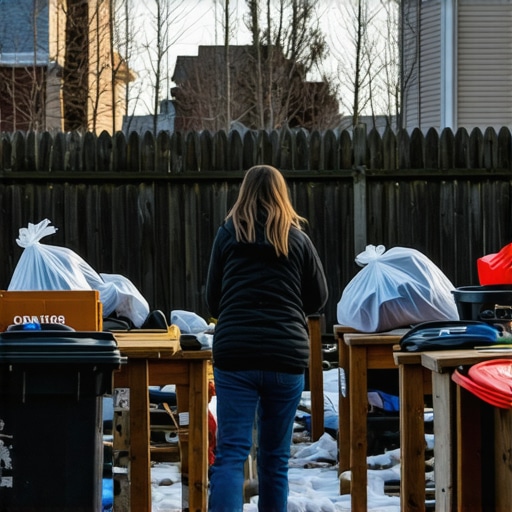
Junk Removal Aurora services become infinitely more difficult when the temperature drops below freezing. Residential Junk Removal requires speed because Garage Clean outs and Furniture Removal in sub-zero conditions can lead to ice-locked debris. Appliance removal and Dumpster Rentals Aurora must be managed before the ground hardens. If you leave a pile of debris exposed to an Aurora blizzard, that pile becomes a singular block of frozen matter. The moisture in untreated wood and cardboard acts as a bonding agent. When we arrive for a pickup in January, we often spend more time with a pry bar and a sledgehammer than we do with our hands. A 15-yard dumpster left in a driveway during a snowstorm can easily exceed its weight limit because of ice accumulation. Snow is not just water, it is weight. If you are planning a clean out, the window of opportunity closes the moment the first frost hits the soil near the Cherry Creek Reservoir.
“Waste is merely a resource in the wrong place; professional removal is the science of putting it back where it belongs.” – Disposal Industry Maxim
The hidden chemistry of old appliances
Appliance removal in Aurora is governed by strict environmental protocols because of the refrigerants and heavy metals found in older units. Most homeowners see an old freezer as a heavy box. I see a pressurized system containing R-22 or R-134a. These refrigerants have a high global warming potential and require certified technicians for recovery. When we pull a refrigerator from a basement, we are managing a logistical sequence that includes checking for compressor leaks and ensuring the unit is secured for transport to a specialized processing facility. The insulation foam in units manufactured before 2005 often contains ozone-depleting substances. We do not just dump these at the local landfill near Tower Road. We take them to facilities that can safely evacuate the gases. The same applies to washing machines. The balance rings often contain salt water or even lead weights. Tossing these into a standard trash stream is an environmental failure that can lead to heavy municipal fines for the property owner.
The brutal math of the fifteen yard bin
Dumpster Rentals Aurora are often misunderstood by customers who think a larger bin is always better. The math of a haul is dictated by density and the ‘angle of repose’ of the materials inside. A 15-yard dumpster filled with concrete will exceed the lifting capacity of most roll-off trucks. Conversely, a 40-yard dumpster filled with light furniture is a waste of fuel and road space. We calculate the load by cubic yardage but pay the tipping fees by the ton. If you are doing a garage clean out, you must stack the heavy items like scrap metal and old tools at the bottom to maintain a low center of gravity. We call this ‘cubing out’ the truck. If there is air space in the load, the customer is paying for us to haul Aurora oxygen. I hate seeing empty pockets in a hopper. It is a sign of poor logistics. Every square inch should be utilized with a strategic mix of soft goods and hard materials to maximize the efficiency of the trip to the transfer station.
| Mixed Household Junk | 250 – 300 | 20 – 50 Years | Transfer Station | Construction Debris | 400 – 500 | Indefinite | C&D Landfill | Green Waste | 300 – 400 | 6 – 12 Months | Composting Facility | Concrete/Brick | 2000 – 2400 | None | Crushing/Recycling |
The heavy weight of a life collected
Hoarder Clean Out aurora projects are the ultimate test of a waste manager’s resolve and logistical planning. These are not just junk removals, they are forensic excavations of a life lived in excess. We often find that the floor joists in older Aurora homes are bowing under the weight of decades of accumulated paper and textiles. Paper is deceptively heavy. A stack of National Geographic magazines three feet high weighs more than a standard microwave. In these environments, the air quality is often compromised by mold spores and pest droppings. My crew wears N95 masks or P100 respirators depending on the level of decay. We categorize items into three streams: immediate disposal, potential donation, and hazardous waste. The logic of the ‘data overflow’ applies here. When the physical space can no longer index the items, the system crashes. We are the hard drive wipe for a house that has run out of memory. We start at the exits and work inward, creating a ‘backdoor’ for the logistics of removal so that we never get trapped by a shifting pile of debris.
- Lead-acid automotive batteries (Chemical burn hazard)
- Wet oil-based paints and thinners (Combustible)
- Pressurized cylinders like propane or oxygen (Explosive)
- Fluorescent light tubes (Mercury content)
- Tires (Illegal to landfill in many jurisdictions)
- Medical waste or biohazards (Requires specialized manifests)
Sorting the chaos before the first blizzard
Garage Clean outs should be viewed as a tactical preparation for the winter months. In Aurora, a garage is not just for storage, it is a shield for your vehicle against hail and heavy snow. When we clear a garage, we often find ‘ghost junk’ which is the stuff that was moved there five years ago and never touched again. The logic of disposal here is simple. If the item has survived a full cycle of four seasons without being used, it is no longer an asset. It is a liability. We focus on clearing the floor first. Once the floor is visible, the psychological weight of the clutter lifts. We then move to the rafters. Old lumber, rusted garden tools, and forgotten camping gear are sorted by material. Metal goes to the scrap yard. Wood is checked for rot. Plastic is evaluated for its recycling code. While many believe that recycling is always the superior path, the carbon footprint of hauling low-grade plastics 500 miles often exceeds the impact of local, high-efficiency waste-to-energy incineration. We make the call based on the current market for secondary materials in the Denver-Aurora metro area.
“Modern waste management is the silent guardian of urban public health; without it, the city would choke on its own consumption.” – SWANA Technical Manual
The legal shadow of illegal dumping
Junk Removal in Aurora is not just about physical labor, it is about the chain of custody. Many residents hire ‘curbside cowboys’ because they offer a lower price. These operators often lack the proper insurance and permits. They might take your old furniture and dump it in a ditch near the Rocky Mountain Arsenal to avoid the $60 per ton tipping fee at the landfill. If your name is found on a piece of mail in that pile, you are the one the police will call. Your junk is your legal responsibility until it is officially processed at a licensed facility. We provide a paper trail. We track the tonnage. We ensure that your liability ends the moment our truck pulls out of your driveway. The cost of professional removal includes the peace of mind that you will not be facing a thousand-dollar fine for illegal dumping. The waste industry is built on trust and the strict adherence to the Resource Conservation and Recovery Act. We follow the rules because the alternative is a degraded local environment and a damaged professional reputation. The truck idles. The load is secure. We move to the next site before the Aurora sky turns gray with the promise of snow.