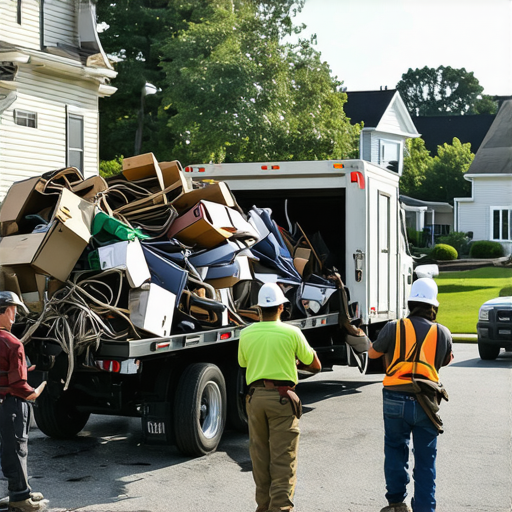

The physics of the Aurora spare room graveyard
Residential junk removal in Aurora involves identifying high-density materials and unwanted items that occupy cubic footage within spare rooms. Professional haulers prioritize volume optimization to reduce tipping fees at local transfer stations while ensuring the safety and structural integrity of the Aurora residence during the extraction process.
I once cleared a house where the junk wasn’t just ‘stuff.’ It was a structural hazard. We found the floor joists were bowing under the weight of 40 years of newspapers that had absorbed ten years of basement humidity. The air was thick with the scent of cellulose rot. Every step was a gamble. The structural integrity of the home depended on how we sequenced the removal. We couldn’t just grab and go. We had to shore up the beams first. That is the reality of heavy volume hauling. When you look at a spare room in Aurora, you see a mess. I see a logistical puzzle where the load-bearing capacity of the floor meets the volumetric limits of a fifteen yard dump truck. Spare rooms often become the final resting place for furniture removal projects that never happened. These spaces accumulate a mix of textiles, old electronics, and heavy oak furniture. The weight builds up. A single stack of old magazines can exert two hundred pounds of pressure per square foot. If that room is on a second floor, you are looking at a potential collapse if the wood has any dry rot. This is why we inspect the joists before we start pulling. We check for moisture. We check for termites. We treat every load like a hazardous extraction.
Furniture removal and the structural load
Furniture removal in Aurora requires strategic lifting of heavy furniture such as couches, dressers, and armories to prevent property damage. Skilled junk removal specialists use dolly systems and straps to manage weight distribution and navigate tight hallways or narrow stairs in Aurora homes without compromising worker safety.
The average mid-century dresser weighs eighty to one hundred and fifty pounds. When it is filled with old clothes and stored in a humid spare room, that weight increases. Wood absorbs moisture from the Aurora air. It swells. The drawers stick. You cannot just grab it and pull. You have to empty it first. Every pound counts toward the truck’s weight limit. I have seen rookies try to carry a sleeper sofa down a flight of stairs alone. They forget the internal mechanism is a spring-loaded trap. If it pops open, you lose a finger or a wall. We use moving blankets to protect the drywall and the hardwood floors. In Aurora, many older homes have narrow stairwells that were not built for modern king-sized mattresses or massive entertainment centers. We often have to disassemble the pieces where they stand. It is a slow process. It is a necessary process. The math of the truck depends on it. If we do not break down the furniture, we are hauling air. Air does not pay the bills. Air takes up space that could be used for more junk. We want a dense load. We want the truck to cube out exactly when it reaches its weight capacity. That is the art of the haul.
“Waste is merely a resource in the wrong place; professional removal is the science of putting it back where it belongs.” – Disposal Industry Maxim
Appliance removal and the ozone
Appliance removal in Aurora must follow EPA regulations regarding the disposal of freon and refrigerants found in old refrigerators and freezers. Junk removal services in Aurora ensure that household appliances are recycled at specialized facilities to prevent toxic chemicals from leaching into the local environment and soil.
An old refrigerator is a bomb. Not in the explosive sense, but in the environmental sense. The cooling coils contain R-12 or R-134a. These are potent greenhouse gases. If you just toss a fridge into a dumpster, the compressor will eventually rupture. The gas escapes. The EPA does not take this lightly. In Aurora, we track every unit. We have to document the recovery of the refrigerant. Then there is the weight. A vintage fridge can weigh three hundred pounds. The insulation is often thick foam that has degraded into a fine powder. If you tilt it the wrong way, that powder gets into your lungs. We use specialized appliance dollies with stair-climber tracks. We secure the doors with heavy-duty tape or straps. You do not want a door swinging open while you are on a ramp. It can pull the whole crew down. We also look for mercury switches in old washing machines. We look for PCBs in old capacitors. Your spare room might be hiding a miniature toxic waste site. We identify these hazards before they hit the truck floor. We do not mix appliances with general household debris. They go to a scrap metal recycler where the steel is reclaimed and the hazardous components are neutralized. It is a closed-loop system.
The math of a dumpster rental Aurora
Dumpster rentals in Aurora are priced based on container size and weight limits, typically ranging from ten to forty cubic yards. Homeowners must consider permit requirements for street placement in Aurora and the type of debris being disposed of to avoid overage fees or prohibited item penalties.
| Container Size | Weight Limit (Tons) | Best Use Case |
|---|---|---|
| 10 Yard | 2 Tons | Small garage clean outs or heavy debris like concrete. |
| 20 Yard | 3 Tons | Large spare rooms and furniture removal. |
| 30 Yard | 4 Tons | Hoarder clean out Aurora and estate clearing. |
Renting a dumpster seems simple. It is not. People think they can fill it to the brim with whatever they want. They are wrong. If you put two tons of concrete in a 20-yard bin, you have already hit the weight limit but the bin is only a quarter full. If you continue to fill it with household junk, the truck will not be able to lift it. The hydraulic systems have limits. In Aurora, we see this all the time. A customer hires a cheap bin and fills it with wet dirt. The driver shows up and can’t pull the load. Now the customer is stuck with a bin they cannot move and daily rental fees that add up. You have to understand density. Drywall is light. Wet carpet is heavy. Old shingles are a nightmare. We calculate the expected weight before the bin even hits your driveway. We also have to consider where the bin sits. A 40-yard dumpster will crack a standard residential driveway if it is not placed on wooden planks. We look at the slope. We look at the overhead wires. Logistics is about anticipating the failure before it happens. If you are doing a garage clean out, you might have old paint cans. You cannot put those in the bin. If the landfill finds hazardous liquid in a load, the entire load is rejected. The fines are massive. You need a pro who knows the local Aurora ordinances.
Hoarder clean out Aurora and the psychology of volume
A hoarder clean out in Aurora requires a systematic approach to debris removal that addresses biohazards, mold, and structural instability caused by excessive clutter. Professional junk removal teams use Personal Protective Equipment (PPE) to safely navigate impacted living spaces and ensure sanitary disposal of contaminated materials.
A hoarding situation is not just a big junk removal job. It is a tactical operation. We often find that the junk has become part of the house. In Aurora, I have seen cases where stacks of paper were literally supporting a sagging ceiling. When you pull one box, the whole pile shifts. We call it ‘the slide.’ We start from the top and work our way down in layers. We look for signs of infestation. Roaches, rodents, and spiders thrive in these environments. We wear Tyvek suits. We wear respirators. The air quality in a hoarder house is often toxic due to mold spores and animal waste. We use heavy-duty bags that will not puncture. We do not use the elevators if we can avoid it because the weight of the crew and the junk can exceed the limit. We use the stairs. We establish a staging area outside. This prevents us from dragging contaminants back and forth. We sort as we go. We look for valuables, but we also look for hazards. Old ammunition. Unused medications. Biological waste. Everything has a specific disposal path. You cannot just throw it all in a hole in the ground. We work with local Aurora agencies to ensure that the disposal is done according to the Resource Conservation and Recovery Act. It is about protecting the community as much as it is about cleaning the house.
“Proper management of household hazardous waste is not just a preference but a legal necessity to protect local groundwater and soil health from toxic leaching.” – Solid Waste Association of North America
Garage clean outs and the hazardous chemicals
Garage clean outs in Aurora often reveal hazardous materials such as motor oil, pesticides, propane tanks, and lead-acid batteries. These prohibited items require specialized handling and cannot be included in standard junk removal loads or residential trash pickup due to fire risks and environmental regulations.
- Lead-acid batteries from old vehicles or backup power systems.
- Propane tanks, even if they appear to be empty.
- Oil-based paints and chemical solvents.
- Pesticides and herbicides with active chemical agents.
- Biohazardous waste or medical sharps.
- Tires, which must be recycled at specific Aurora tire facilities.
I watched a rookie almost lose his eyebrows because a customer hid a half-full propane tank inside a pile of ‘harmless’ yard waste. We don’t just lift. We inspect. Every. Single. Item. The garage is the most dangerous room in any Aurora home. It is where the volatile chemicals live. Gasoline for the lawnmower. Fertilizer for the yard. These things are stable on a shelf. They are not stable in the back of a hot junk truck. When we crush the load with the hydraulic ram, those containers break. If you mix pool chlorine with brake fluid, you get a fire that we cannot easily put out. We look for labels. We smell the air. If we find a leaking container, we isolate it. We use floor dry or sawdust to soak up spills. We do not take chances. Many people in Aurora try to hide these things at the bottom of a bag. They think they are saving money. They are actually creating a liability. If our truck catches fire on a public road, the person who put the hazard in the bag is legally responsible. Your junk is your liability until it hits the scale and is signed for by the facility. We provide that buffer. We provide the expertise to know what can go and what must stay for a hazardous waste collection day. We keep the Aurora streets safe by being the filter for the landfill.
The heavy cost of keeping everything
While most people think recycling is always ‘better,’ the carbon footprint of hauling low-grade plastics 500 miles often exceeds the impact of local, high-efficiency waste-to-energy incineration. We have to be honest about where the junk goes. In the Aurora region, we have access to several transfer stations that utilize advanced sorting. This means we can drop a mixed load and they will pull out the metal and the clean wood. The rest goes to the landfill or a waste-to-energy plant. We focus on the diversion rate. We want to keep as much as possible out of the ground. But we also have to be realistic about the cost. Every stop we make to drop off a specific material costs time and fuel. We optimize our routes to minimize our carbon footprint. We use GPS tracking to find the most efficient path through Aurora traffic. We maintain our trucks to prevent oil leaks and ensure clean emissions. Junk removal is a dirty business, but we do it with a clean conscience. We provide a service that allows homeowners to reclaim their lives. A spare room should be for a guest or an office, not a storage locker for broken dreams and old newspapers. We clear the path. We do the heavy lifting. We make the decisions that keep your home safe and the environment protected. That is the mission of a veteran waste strategist. We don’t just move junk. We manage resources.
This post offers an eye-opening look into the complexities involved in residential junk removal, especially in a place like Aurora where older homes are common. I’ve personally seen how neglecting structural issues, like dry rot in floor joists, can lead to dangerous collapses during junk removal projects. It’s a reminder that safety and detailed inspections are crucial before hauling away large volumes of household items. The part about managing hazardous chemicals in garages really resonated with me—many homeowners underestimate the risks of propane tanks, pesticides, or lead batteries hiding in cluttered spaces. I wonder what innovative techniques or tools professionals are adopting to streamline these hazardous material identifications and improve safety further. Also, when it comes to volume psychology for hoarder cleanouts, it strikes me how much careful planning and emotional labor is involved compared to typical cleanouts. Has anyone found particular methods helpful for managing both the physical and psychological aspects of these tough projects? Overall, this article highlights the importance of trained experts in protecting both homes and the environment while efficiently clearing out space.