The dangerous reality of the hidden hazard
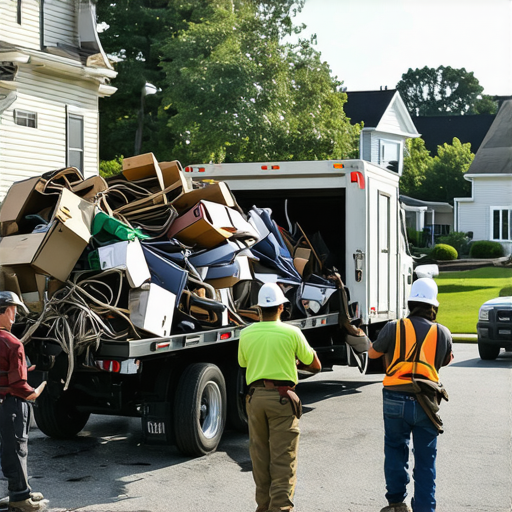
I watched a rookie almost lose his eyebrows because a customer hid a half-full propane tank inside a pile of harmless yard waste. We do not just lift. We inspect. Every. Single. Item. That incident taught me that residential junk removal in Aurora is never just about moving heavy objects from point A to point B. It is a forensic analysis of a household’s history. You see, the average garage in a place like Aurora accumulates roughly 400 pounds of uncatalogued chemical waste over a decade. When spring cleaning arrives, homeowners often treat their clutter like an amorphous mass. They toss old paint cans behind broken sofas. They bury lead-acid batteries under piles of grass clippings. This is not just a logistical hurdle. It is a violation of the Resource Conservation and Recovery Act. Professional haulers must account for the specific gravity of every load. We calculate the structural integrity of the truck bed against the concentrated weight of a cast-iron bathtub. We measure the cubic yardage of a 15-yard dumpster to ensure we do not exceed the legal height limits for transport on I-225 or E-470. Waste management is a science of volume and velocity. It requires a deep understanding of tipping fees at the Denver Regional Landfill and the specific diversion requirements of the Aurora Transfer Station.
The hidden physics of the 15 yard bin
Dumpster Rentals Aurora services rely on a precise calculation of volumetric density and weight distribution to prevent legal liabilities and road hazards. A 15-yard dumpster is not a bottomless pit but a strictly defined geometric space. If you load it with heavy debris like concrete or dirt, you will hit the weight limit long before the bin looks full. This is called cubing out. Most residential spring cleaners do not understand that a single cubic yard of wet soil weighs roughly 2,000 pounds. A standard roll-off truck in Colorado has a lifting capacity restricted by hydraulic pressure and local axle-weight laws. Overloading a bin leads to failed pick-up fees and potential structural damage to your driveway. We use wood blocking to protect your asphalt from the high-pressure steel wheels of the container. We analyze the angle of repose for loose materials to ensure nothing shifts during the haul.
“Waste is merely a resource in the wrong place; professional removal is the science of putting it back where it belongs.” – Disposal Industry Maxim
Why your local landfill hates your old fridge
Appliance removal involves more than just muscle because the cooling systems in older units contain ozone-depleting substances that require federal certification to handle. If you live in Aurora, you cannot simply drop a refrigerator at the curb and hope for the best. The Clean Air Act mandates the recovery of refrigerants like R-12 or R-134a. Our team uses specialized vacuum recovery systems to extract these gases before the metal carcass is recycled. A standard residential refrigerator weighs between 200 and 400 pounds. Its center of gravity is deceptively high. Moving one down a set of narrow basement stairs requires a specific harness system and an understanding of load-bearing pivot points. We do not just drag. We navigate. The scrap value of the steel is secondary to the environmental compliance of the disposal process.
The logistical nightmare of a hoarder clean out aurora
Hoarder Clean Out aurora projects are high-stakes logistical operations that require a blend of structural engineering knowledge and biohazard awareness. When a home has been filled to the ceiling, the floor joists are often under a constant state of stress that exceeds their original design parameters. A stack of old newspapers three feet high exerts roughly 100 pounds of pressure per square foot. In many older Aurora homes, this leads to floor sagging and wall cracking. We approach these jobs by creating a load-out path that respects the structural integrity of the building. We monitor for mold spores and pest infestations that thrive in stagnant, high-density clutter. This is not a simple cleaning job. It is a tactical extraction. We must sort materials into three primary streams: recyclables, hazardous waste, and general landfill debris. This process ensures that we minimize the tipping fees while maximizing the diversion rate for the local municipality.
| Disposal Method | Max Weight Limit | Typical Use Case | Aurora Permit Req. |
|---|---|---|---|
| 10-Yard Dumpster | 2-3 Tons | Heavy debris, concrete, dirt | If placed on street |
| 20-Yard Dumpster | 3-4 Tons | Large garage clean outs | If placed on street |
| Full Service Hauling | Truck capacity | Furniture, appliances, mixed junk | None for private property |
| Bag-style Bin | 3,300 lbs | Small yard waste projects | None |
The heavy cost of furniture removal
Furniture Removal is often the most physically taxing part of an Aurora spring clean due to the awkward dimensions of modern sectional sofas and antique armoires. Modern particle-board furniture is prone to shearing if lifted incorrectly, while older solid-oak pieces can weigh upwards of 300 pounds. Our team uses the Tetris method to load these items. This involves placing heavy, flat items against the truck walls and stacking lighter items on top. This maximizes the cubic capacity of our 15-yard trucks. We avoid wasted air space. Air space is lost profit. It is also an unstable load. Every piece of furniture is secured with high-tension straps to prevent shifting during transit through hilly residential neighborhoods. We also assess items for donation potential to local Aurora charities, which reduces the total waste sent to the landfill and provides a benefit to the community.
“The shift toward a circular economy requires that we stop seeing junk as a burden and start seeing it as a management challenge for the 21st century.” – Solid Waste Association Perspective
Items your hauler cannot legally touch
Junk Removal Aurora operations are governed by strict hazardous waste regulations that prevent us from taking certain materials that could contaminate the entire load or cause fires in the truck. If you have these items, you must contact the Tri-County Health Department or wait for a specific municipal hazardous waste collection day.
- Automotive fluids including motor oil and antifreeze
- Sealed pressurized cylinders such as propane or oxygen
- Liquid paint and thinners that have not been solidified
- Biohazardous materials or medical waste
- Lead-acid batteries and lithium-ion power packs
- Industrial chemicals and pesticides
- Asbestos-containing materials from old renovations
The truth about garage clean outs
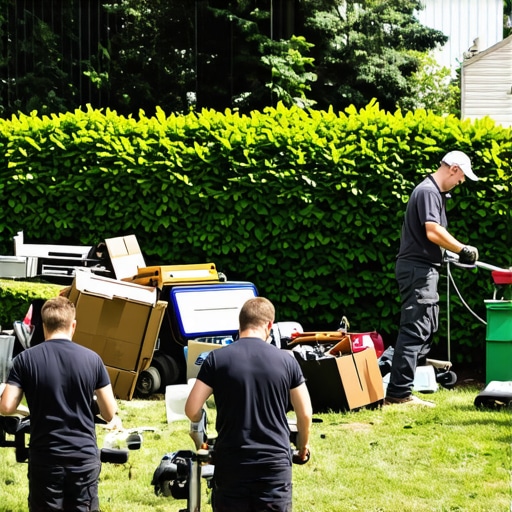
Garage Clean outs represent the ultimate test of a homeowner’s organizational resolve and a hauler’s logistical efficiency. The garage is the primary catchment zone for everything that no longer has a place in the home. In Aurora, these spaces often face extreme temperature swings that can cause plastics to become brittle and liquids to leak from their containers. When we clear a garage, we start from the door and work inward, creating a staging area on the driveway. We categorize items by material type: scrap metal, treated wood, cardboard, and plastics. Most people do not realize that the carbon footprint of hauling low-grade plastics 500 miles often exceeds the impact of local, high-efficiency waste-to-energy incineration. We focus on local solutions. We use the most direct routes to the transfer station to minimize fuel consumption. We ensure your garage is returned to its original function as a vehicle storage space, not a private landfill. Residential junk removal is the final step in reclaiming your living environment from the creep of consumer waste.