The hidden dangers of suburban reclamation
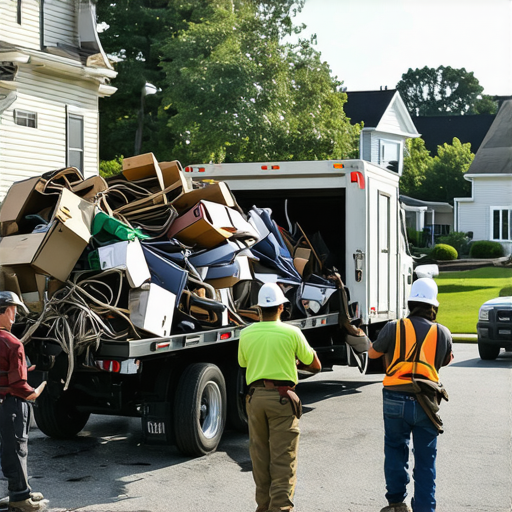
Residential Junk Removal in Aurora requires a calculated approach to volume, weight, and hazardous material identification. Junk Removal Aurora professionals must navigate local tipping fees and municipal ordinances while ensuring that material recovery remains the primary goal of every haul. I watched a rookie almost lose his eyebrows because a customer hid a half-full propane tank inside a pile of ‘harmless’ yard waste. We don’t just lift. We inspect. Every. Single. Item. That propane tank was a ticking bomb in the back of a hydraulic crusher. If that tank had ruptured under the 2,500 PSI of the packer blade, the resulting fuel-air explosion would have leveled the truck and the client’s driveway. This is the reality of the waste industry. It is not just about moving boxes. It is about chemical stability and logistical precision. Most people see a pile of old wood and rusted metal. I see three hours of labor, two tons of mixed debris, and a 40 percent diversion rate for scrap metal recovery. Your junk is a liability until it hits the scale at the transfer station. If your hauler is not checking for lithium-ion batteries or pressurized vessels, they are not professionals. They are a fire hazard on wheels. This business is defined by what we refuse to take as much as what we haul away.
The logistical nightmare of the Aurora backyard pool
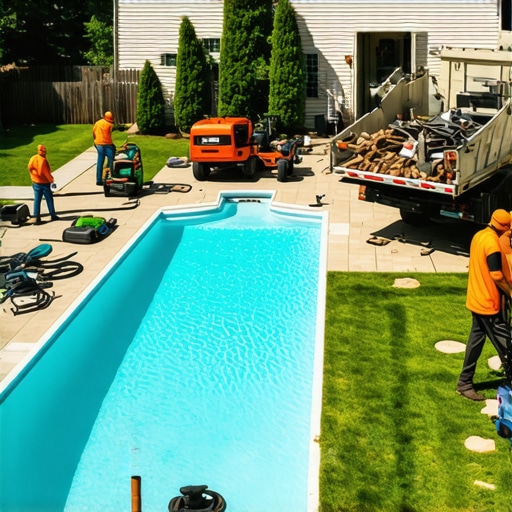
Pool Teardown and Haul Away in suburban environments like Aurora demands a deep understanding of structural fatigue and material weight ratios. Steel-walled above-ground pools often hide severe oxidation that makes them brittle and dangerous during dismantling. When we talk about Junk Removal for a pool, we are discussing the extraction of several hundred pounds of steel, thousands of gallons of potentially contaminated water, and a PVC liner that has reached its end-of-life cycle. The average 24-foot round pool contains approximately 300 pounds of galvanized steel. That steel has a specific scrap value, but the labor required to strip it from the plastic hardware often offsets the profit. We calculate the ‘dead air’ in the truck before we even pull into the driveway. If the pool wall is not cut into manageable four-foot sections, it creates massive voids in the truck bed. Voids are the enemy of profit. We use heavy-duty shears to minimize the volume. The sand base under the liner is another issue. That sand is often saturated with old chlorine and algae. It is heavy. It is messy. It requires a different disposal path than the metal.
“Waste is merely a resource in the wrong place; professional removal is the science of putting it back where it belongs.” – Disposal Industry Maxim
Why your appliance is a chemical hazard
Appliance removal is a specialized operation governed by the Resource Conservation and Recovery Act due to the presence of refrigerants and heavy metals. Junk Removal Aurora teams must identify units containing Chlorofluorocarbons or Hydrofluorocarbons before they are loaded onto any transport vehicle. Modern refrigerators are lighter, but older units from the 1980s are dense monsters of steel and insulation. A single old chest freezer can weigh 250 pounds and contain enough R-12 refrigerant to violate federal environmental laws if released. We use specialized dollies with pneumatic tires to protect the client’s flooring. We never drag. Dragging destroys the subfloor. Once the unit is on the truck, it must be secured so the cooling coils do not snap. If a coil snaps, the gas escapes. That is a fine I am not willing to pay. We track every unit. We know which scrap yards in the Aurora area have the proper EPA certifications to evac the gas. If a guy tells you he can take your fridge for twenty bucks, he is going to dump it in a ditch or vent the gas behind a warehouse. Both options are illegal. Both options make you liable.
The math of the 15-yard dumpster permit
Dumpster Rentals Aurora services are often the best choice for long-term renovations, but the math of the load is frequently misunderstood by the average homeowner. Junk Removal via a roll-off container requires an understanding of weight limits versus volume capacity to avoid massive overage charges at the landfill.
| Material Type | Density (lbs per cubic yard) | Disposal Path |
|---|---|---|
| Construction Debris | 400-600 | C&D Landfill |
| Green Waste | 200-300 | Compost Site |
| Household Junk | 150-250 | Transfer Station |
| Concrete/Brick | 2,000-3,000 | Recycling Center |
A 15-yard dumpster filled with concrete will exceed the lifting capacity of the truck. The floor will snap. The hydraulics will fail. We see it all the time. People think they can fill a bin to the top with shingles. Asphalt shingles weigh 240 pounds per square. A 15-yard bin full of shingles can weigh 6 tons. Most residential driveways are only rated for 4 tons. You do the math. You are looking at a cracked driveway and a truck that cannot legally move. We provide the expertise to prevent these failures.
The ghost in the garage
Garage Clean outs are the most common request in the Aurora area, yet they represent the highest risk for ‘hidden’ hazardous waste. Furniture Removal often uncovers old paint cans, motor oil, and pesticides that have been sitting for three decades. The smell of old paper and dust is a warning. It tells me the humidity has compromised the integrity of the boxes. When you lift a box of old books that has been sitting on a concrete floor for ten years, the bottom falls out. You are left with a mess of silverfish and mold. We use industrial-grade contractor bags and plastic bins for the transition. We categorize as we go. Wood furniture goes in one pile. Particle board goes in another. Why? Because the BTU potential of solid wood makes it valuable for certain waste-to-energy plants, while particle board is just glue and sawdust that off-gasses formaldehyde. We manage the flow of materials to minimize the carbon footprint of the haul.
Truth about the Aurora hoarding recovery
Hoarder Clean Out aurora projects are logistical marathons that require psychological tact and extreme physical endurance. Junk Removal in these scenarios is not about speed; it is about systematic excavation and the identification of structural hazards. I once cleared a house where the junk wasn’t just ‘stuff.’ It was a structural hazard. We found the floor joists were bowing under the weight of 40 years of newspapers that had absorbed ten years of basement humidity. Every step we took was a gamble. The ammonia smell from pet waste was so thick it required respirators. This is not the work for a guy with a pickup truck. You need a crew that understands load-bearing limits. You need a crew that knows how to spot black mold and asbestos-wrapped pipes. We work from the door inward, creating ‘egress paths’ to ensure the safety of the team. We don’t just toss things. we sort for life-safety documents and heirlooms. It is a data recovery mission in a physical space.
“Proper waste management is the first line of defense in public health and urban safety.” – SWANA Guidelines
Waste diversion versus the landfill lie
The standard Junk Removal model is to take everything to the nearest landfill, but this is an environmental failure and a financial mistake. Junk Removal Aurora must focus on diversion rates to keep costs down and comply with evolving state regulations. While most people think recycling is always ‘better,’ the carbon footprint of hauling low-grade plastics 500 miles often exceeds the impact of local, high-efficiency waste-to-energy incineration. We look for the most efficient path. Scrap metal stays local. High-quality furniture goes to donation centers. E-waste goes to certified processors. The rest is compressed for the landfill. We minimize the number of trips. Fewer trips mean less diesel burned. Less diesel burned means a lower bill for the client. We are specialists in density. We pack the truck so tight that there isn’t room for a deck of cards between the sofa and the fridge. That is how you win at logistics. [image placeholder]
- Items Your Hauler Cannot Legally Touch
- Lead-acid batteries (Car batteries)
- Wet paint or stains (Must be dried with kitty litter first)
- Industrial chemicals or pesticides
- Asbestos-containing materials
- Medical waste or biohazardous needles
- Pressurized tanks still containing gas
- Fluorescent light ballasts containing PCBs
Reading through this post really highlights the importance of professionalism and thoroughness in junk removal, especially in a place like Aurora where backyard pools and old appliances are common. I was surprised to learn how much weight and environmental risk is involved in seemingly simple tasks. I remember trying to clean out an old garage myself and uncovering a hidden can of paint that wasn’t dried properly—luckily, I caught it in time. It made me think, how many homeowners are unaware of these hazardous items lurking behind their clutter? I wonder if more awareness campaigns about hazardous waste at home might help in reducing environmental risk during cleanouts. Regarding pool teardown, I’ve always thought that cutting the steel into manageable sections was straightforward, but I hadn’t considered the weight differences of saturated sand beneath the liner. Does anyone have tips on how to better prepare for the debris? Or perhaps experiences with tricky loads that led to equipment failure? Sharing practical solutions could help everyone avoid costly mishaps.