
The phantom weight beneath your feet
Junk Removal Aurora operations often begin with a structural assessment because a basement is not just a storage room. It is a load-bearing environment where Furniture Removal and high-density debris accumulation can compromise the home’s integrity. I once cleared a house where the junk wasn’t just ‘stuff.’ It was a structural hazard. We found the floor joists were bowing under the weight of 40 years of newspapers that had absorbed ten years of basement humidity. The stack of wet cellulose had achieved a density of nearly 60 pounds per cubic foot. This is the reality of Hoarder Clean Out aurora projects. When volume meets moisture, the physics of the house changes. A standard residential floor is rated for a live load of 40 pounds per square foot. In hoarding situations, we frequently see loads exceeding 150 pounds per square foot. This weight creates a literal ticking clock for the structural joists below. We do not just haul. We calculate the structural risk before the first box is moved to ensure the safety of the crew and the property.
The math of the fifteen yard dumpster
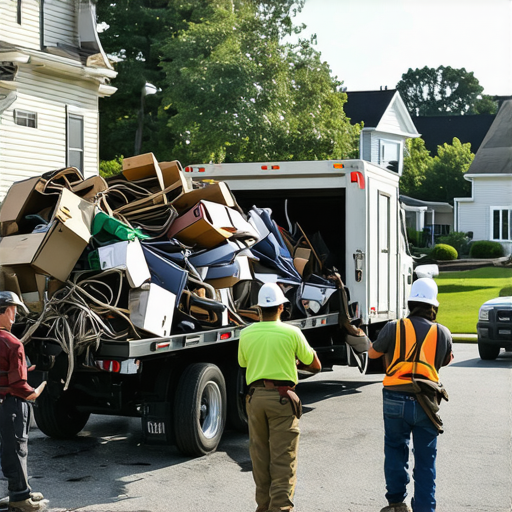
Dumpster Rentals Aurora services are often misunderstood by homeowners who view a container as an infinite void. In the professional waste management sector, we focus on cubing out a truck, which means maximizing every square inch of the 15-yard or 20-yard vessel. Air is the enemy of profit and efficiency. If you throw chairs and tables into a bin haphazardly, you are paying to transport Aurora air to the landfill. Professional Junk Removal technicians utilize a ‘Tetris’ methodology. We break down non-structural furniture to flat-pack the debris. We place heavy, high-density items like Appliance removal units or concrete at the bottom to maintain a low center of gravity for the transport vehicle. A 15-yard dumpster filled with loose household trash might only weigh 1.5 tons, but the same volume filled with tight-packed construction debris can exceed 6 tons. Understanding the weight-to-volume ratio is essential for avoiding overweight penalties at the Denver Arapahoe Disposal Site.
“Waste is merely a resource in the wrong place; professional removal is the science of putting it back where it belongs.” – Disposal Industry Maxim
The heavy steel of your basement
Appliance removal in Aurora basements requires an understanding of mechanical leverage and safety protocols. Old refrigerators and chest freezers are not just heavy. They are chemical liabilities. Pre-1994 units often contain CFCs or HCFCs that require specialized recovery before the steel can be recycled. When we perform a Garage Clean outs or basement extraction, we examine the unit for integrity. If a cooling coil is punctured during a reckless move, the technician is exposed to refrigerants, and the homeowner faces a potential hazmat situation. We use stair-climbing dollies with motorized tracks to ensure the 300-pound deadweight of a vintage freezer does not become a kinetic energy disaster on the basement stairs. The goal is a zero-impact extraction where the walls, stairs, and flooring remain pristine.
| Material Type | Average Weight (lbs/cu yd) | Decomposition Time | Recycling Potential |
|---|---|---|---|
| Loose Household Junk | 250 – 300 | 20 – 50 Years | High |
| Wet Cellulose (Paper) | 800 – 1,000 | 2 – 5 Months | High |
| Mixed Construction Debris | 1,000 – 1,500 | 50 – 500 Years | Moderate |
| Old Treated Lumber | 600 – 800 | 15 – 30 Years | Zero (Hazmat) |
Why your cheap hauler is a legal time bomb
Junk Removal is a regulated industry, yet many Aurora residents hire ‘curbside cowboys’ with a pickup truck and a dream. This is a massive liability error. Under the Resource Conservation and Recovery Act (RCRA), the generator of the waste—you, the homeowner—is responsible for that waste until it is legally disposed of at a licensed facility. If your ‘cheap’ hauler dumps your old basement couch and a crate of confidential files in a ditch near Cherry Creek, the authorities will trace it back to you. You are responsible for the cleanup costs and the fines. Professional Junk Removal Aurora firms provide a manifest or a weight ticket upon request. This document is your legal shield. It proves the chain of custody from your basement to the transfer station. We maintain high-limit liability insurance and workers’ compensation because moving a 400-pound piano up a flight of narrow stairs is a high-risk logistical maneuver.
The invisible tax of cubic volume
Garage Clean outs and basement overhauls are priced by the space occupied in the truck. However, the ‘Information Gain’ here is that weight often dictates the true cost. While many companies quote by the ‘fraction of the truck,’ the tipping fees at Aurora-area landfills are based on tonnage. A professional strategist looks at the load density. If a basement is filled with light, bulky items like empty cardboard boxes and plastic toys, the volume is high but the weight is low. Conversely, a pile of old magazines or floor tiles has low volume but extreme weight. We advise clients to separate these streams. Mixing heavy debris with light junk often results in a higher ‘mixed load’ fee at the transfer station. By segmenting the debris, we can divert recyclables to lower-cost facilities, passing the savings on to the homeowner. It is about logistical optimization, not just lifting heavy objects.
- Lead-acid batteries (Fire hazard and toxic leaching)
- Propane tanks (Explosion risk during compaction)
- Fluorescent light ballasts (Often contain PCBs)
- Unlabeled liquid chemicals (Unknown reactivity)
- Treated medical waste (Biohazard protocols required)
The science of the cleanout
Hoarder Clean Out aurora projects require more than just muscle. They require a psychological and logistical strategy. We categorize items into three streams: immediate disposal, resource recovery (recycling), and donation. In Aurora, we see a high volume of ‘legacy junk’—items kept because they might be useful ‘someday.’ This mental clutter manifests as physical blockages that prevent proper airflow in a basement, leading to mold growth. The carbon footprint of hauling low-grade plastics 500 miles often exceeds the impact of local, high-efficiency waste-to-energy incineration. This is why we prioritize local Aurora transfer stations that utilize modern sorting technology. We aim for a diversion rate of at least 60%, ensuring that your basement cleanout contributes to a circular economy rather than just a growing mound at the landfill.
“Effective waste management is the final step in responsible property stewardship; it requires precision, not just force.” – Solid Waste Association Guidelines
[IMAGE_PLACEHOLDER]
The final manifest of Aurora disposal
Junk Removal Aurora is the final stage of a logistical cycle. When the truck pulls away from your Aurora home, the work is only half finished. The load must be tipped, the materials must be sorted, and the hazardous components must be neutralized. Whether you are dealing with a Furniture Removal task or a full-scale Garage Clean outs, the objective is a clean slate. We provide the expertise to navigate Aurora’s specific municipal codes and disposal regulations. Do not let your basement become a liability. Use a strategist who understands the weight, the risk, and the science of removal. Your space is too valuable to be occupied by the ghosts of decades past. We clear the path so you can reclaim your home.
This post really highlights how critical it is to consider not just the visible debris but the hidden structural risks that accumulated junk can pose over time. I had a similar experience with an old basement loaded with newspapers and wet paper, and it was alarming to see the potential for floor joists to bow or even fail. Safety should always come first, which is why I appreciate the emphasis on structural assessments before removal. Having worked on some home renovation projects myself, I know that an overlooked load can create big problems down the line. I wonder how often homeowners realize that their clutter isn’t just a storage issue but a possible safety hazard? It seems like a comprehensive assessment could save a lot of trouble later. What are some signs homeowners should look for that indicate their basement might be at risk before professional help is called in?