The hidden physics of Aurora waste management
Every morning starts with the smell of diesel and hydraulic fluid. It is the scent of progress in a world that produces more than it can consume. I have spent twenty five years watching trucks pull into transfer stations with loads that defy logic. I have seen the way a poorly packed 15 yard dumpster can waste sixty percent of its potential volume. To the untrained eye, junk is just a pile of unwanted history. To a logistical strategist, it is a puzzle of density, weight, and environmental liability. Aurora junk removal is not just about lifting heavy objects. It is about understanding the cubic foot as a unit of currency and the landfill as a finite resource that must be managed with surgical precision.
The illegal dumping trap
Junk Removal Aurora and Dumpster Rentals Aurora services must operate within strict legal frameworks to prevent environmental catastrophes. Hiring unlicensed haulers leads to illegal dumping in local ditches. This results in severe fines for the original property owner because waste remains a legal liability until it reaches a certified scale and a tipping fee is paid. A business owner once tried to save 500 dollars by hiring a guy with a pickup truck from a social media ad. Two weeks later, the police called him because his company confidential files were found in a ditch. Your junk is your liability until it hits the scale. This is the reality of the waste industry. When you hire a professional for Furniture Removal or Appliance removal, you are paying for the legal transfer of that liability. The curbside cowboy skips the transfer station to maximize profit, leaving you exposed to the Resource Conservation and Recovery Act. We do not just lift. We inspect every single item because one hidden lead acid battery can contaminate an entire load and trigger a hazardous materials violation that costs thousands.
“Waste is merely a resource in the wrong place; professional removal is the science of putting it back where it belongs.” – Disposal Industry Maxim
The mechanics of a perfect truck pack
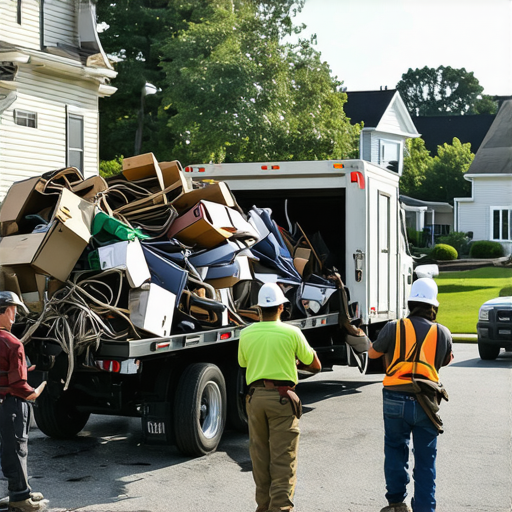
Junk Removal is a game of physical Tetris where air is the enemy. Every cubic inch of empty space in a truck represents a loss in efficiency and an increase in the carbon footprint of the haul. We look at a Garage Clean outs project and see geometric shapes. A refrigerator is a box. A couch is a rectangular prism. The goal is to eliminate the voids between these shapes. We call this cubing out the truck. If a crew leaves gaps, they are burning fuel to transport oxygen. That is a failure of logistics. We use heavy blankets and straps to compress soft items like mattresses against rigid structures like dressers. This increases the density of the load. High density means fewer trips to the Aurora transfer station. Fewer trips mean less wear on the tires and lower emissions. We calculate the structural load limits of residential stairs before moving a single piece of heavy furniture. If a piano is being removed, we assess the PSI exerted by the casters on the floorboards. One wrong move and a 800 pound instrument becomes a structural wrecking ball.
The hidden hazards in Aurora garages
Garage Clean outs often reveal materials that require specialized handling under state and federal law. Many homeowners do not realize that old paint, pesticides, and pool chemicals cannot go into a standard dumpster. These are classified as Household Hazardous Waste. When these liquids leak in the back of a packer truck, they can create chemical reactions that produce toxic fumes or fires. I have seen a truck bed start smoking because someone hid a pool chlorinator next to an old bottle of brake fluid. We train our teams to perform a sensory sweep of every garage. We look for the telltale signs of corrosion on metal containers. We check for the smell of sulfur or old gasoline. Appliance removal is equally complex. Old freezers and air conditioners contain refrigerants like Freon which must be recovered by a certified technician. Releasing these gases into the atmosphere is a federal offense. We ensure every unit is tagged and drained before it enters the scrap metal stream.
| Waste Category | Decomposition Time | Recycling Potential | Aurora Disposal Logic |
|---|---|---|---|
| Corrugated Cardboard | 3 Months | High | Must be kept dry and flattened |
| Untreated Wood Waste | 3 Years | Medium | Chipped for mulch or biofuel |
| High Density Plastics | 450 Years | Low | Sorted by resin identification code |
| Steel Appliances | 100 Years | Extreme | Shredded for secondary smelting |
| Drywall Gypsum | Variable | Low | Produces hydrogen sulfide in landfills |
The science of hoarder clean outs
A Hoarder Clean Out aurora is a biological and structural challenge that goes far beyond simple junk removal. It is an autopsy of a living space. We often find that the floor joists are bowing under the weight of forty years of newspapers that have absorbed ten years of basement humidity. Paper is heavy. Wet paper is a structural threat. When we enter a high volume hoard, we treat it like a hazmat site. We wear respirators to protect against mold spores and dried pest droppings. The logistical zoom here involves calculating the weight per square foot of the debris pile. If the pile is four feet high and consists of dense textiles or paper, the load on the floor can exceed 100 pounds per square foot. Most residential floors are only rated for 40 pounds of live load. We have to excavate the layers in a specific sequence to prevent a floor collapse. We also look for data overflow. In the physical world, this means identifying the vital documents buried under layers of trash. We do not just shovel everything out. We filter the debris to ensure that life savings or family heirlooms are not sent to the landfill by mistake.
“Effective solid waste management is the foundation of public health; without it, the modern city cannot function.” – Solid Waste Association of North America
The reality of Aurora dumpster rentals
Dumpster Rentals Aurora require a deep understanding of local zoning and permit laws. You cannot just drop a 20 yard bin on a public street without a permit from the city. The placement of the bin is a science in itself. If the truck driver places the bin on a soft asphalt driveway during a hot Aurora summer, the steel rollers will sink into the pavement. We use plywood outriggers to distribute the weight. We also have to account for the overhead clearance. A roll off truck needs at least 22 feet of vertical space to tilt the hoist and drop the container. Many people overlook low hanging power lines or tree branches. If the bin is overloaded, it becomes a safety hazard on the highway. We strictly enforce the fill line. Anything above the rim can catch the wind or shift during transport, leading to debris falling onto the road. This is why we insist on level loads. It is not just a rule. It is a matter of public safety and highway physics.
Why furniture removal breaks backs and bank accounts
Furniture Removal is often undervalued by the average consumer until they try to move a sleeper sofa down a narrow hallway. Modern furniture is often made of medium density fiberboard which is surprisingly heavy but structurally brittle. It is designed to be assembled once and never moved. When we remove these pieces, they often disintegrate. This creates a mess of sawdust and hardware. Older furniture is the opposite. It is made of solid oak or maple and is incredibly dense. A single wardrobe can weigh 300 pounds. Our crews use leverage and mechanical advantages like shoulder dollies to move these items without injuring themselves or damaging the property. We calculate the pivot point for every turn. If you miss the angle by an inch, you are looking at a drywall repair bill. We also consider the end of life for every piece. Solid wood furniture can be reclaimed. Particle board furniture is destined for the landfill because the resins used to hold the wood fibers together make it difficult to recycle.
The appliance removal protocol
Appliance removal is governed by the need for material recovery. A washing machine is a treasure trove of steel, copper, and aluminum. A microwave contains a high voltage capacitor that can hold a lethal charge long after the unit is unplugged. We treat appliances as electronic waste or scrap metal depending on their complexity. We remove the doors from refrigerators immediately to prevent them from becoming a trap for children or pets. We also check for mercury switches in older chest freezers. The goal is to move these items from a residential basement to a scrap processor with as little environmental impact as possible. This involves using specialized hand trucks that can climb stairs without scarring the wood. It is a slow, methodical process that requires patience and grip strength. We do not rush appliance removals. Rushing leads to dropped motors and cracked floor tiles.
A checklist for the prepared homeowner
- Identify all pressurized tanks including propane and fire extinguishers.
- Separate electronic waste like televisions and monitors from general trash.
- Ensure all liquids are sealed in leak proof containers for inspection.
- Clear a wide path from the junk pile to the driveway or curb.
- Check for bird or rodent nests in items stored in sheds or attics.
- Remove drawers from heavy furniture to reduce the weight of the initial lift.
- Flag items that are for donation versus items for the landfill.
The recycling myth versus the logistical truth
While most people think recycling is always better, the carbon footprint of hauling low grade plastics 500 miles often exceeds the impact of local high efficiency waste to energy incineration. This is a contrarian truth that the industry rarely discusses. In Aurora, we try to find the most localized solution for every material. If we can find a local wood chipper for yard waste, that is better than hauling it to a distant compost facility. We analyze the BTU potential of recovered wood waste. High quality scrap wood can be used as a fuel source in industrial kilns, providing a secondary life for what would otherwise be trash. We also look at the lifecycle of metal. Recycling aluminum saves 95 percent of the energy required to make new aluminum from ore. This is why we are so aggressive about sorting metals on the job site. Every soda can and aluminum siding scrap we recover is a direct win for the environment and the economy. Waste management is not a dirty job. It is a sophisticated logistical operation that keeps our cities clean and our ecosystems functional. When you choose a professional service, you are investing in the infrastructure of your community.
{“@context”:”https://schema.org”,”@type”:”Article”,”headline”:”Reduce, Reuse, Recycle: Aurora Eco-Friendly Waste Disposal”,”author”:{“@type”:”Person”,”name”:”Veteran Waste Management Strategist”},”publisher”:{“@type”:”Organization”,”name”:”Aurora Eco-Friendly Waste Disposal”},”mainEntityOfPage”:{“@type”:”WebPage”,”@id”:”https://example.com/aurora-waste-disposal”},”articleSection”:”Waste Management and Logistics”,”description”:”An expert guide to eco-friendly junk removal and dumpster rentals in Aurora, focusing on logistics, safety, and environmental compliance.”}
This post really highlights how critical proper waste management is, especially with all the complexities around hazardous materials and logistics. I was particularly struck by the explanation of cubing out trucks for maximum efficiency—it’s fascinating how much science is involved in what seems like a straightforward task. During a recent office renovation, we underestimated the volume of waste and ended up with multiple trips, which increased costs and emissions unnecessarily. It made me wonder—what innovative packing or technology solutions are emerging to optimize truck loading further? Also, I appreciate the focus on local solutions; I’ve seen similar efforts in my city to convert yard waste into biofuel, which seems like a smart way to reduce overall waste. Does anyone have experience with integrating such green technologies into their waste disposal routines?
This post really sheds light on how intricate and technical waste management has become, especially when considering the logistics and environmental safety aspects in Aurora. I was particularly interested in the section about efficient truck packing—it’s impressive how they meticulously optimize space to reduce emissions and fuel usage. My experience with local waste solutions has mostly been on backyard composting and yard waste chipping, but I’ve been curious about how urban areas integrate waste-to-energy processes effectively. With Aurora’s focus on local solutions, has anyone explored partnerships with biomass facilities or biofuel initiatives? It seems like a promising way to turn what we see as waste into a resource, aligning with the reuse philosophy discussed in the post. Also, the detailed approach to hazardous materials handling reminds me how vital consumer awareness is; many people are unaware that improperly disposed hazardous waste can cause significant environmental harm. What strategies do others recommend for community education on proper waste segregation and hazardous waste identification to prevent these risks?