The ghost in the garage
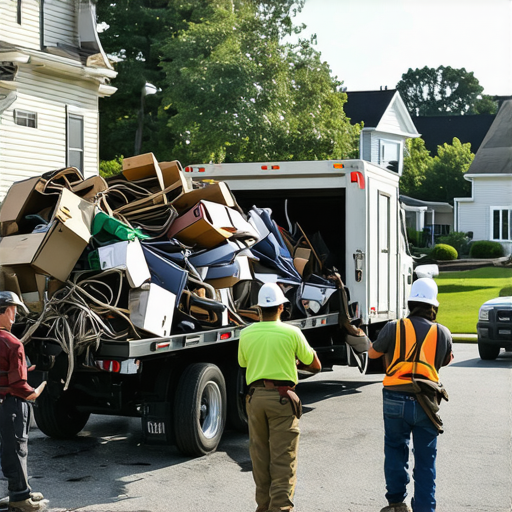
Garage clean outs in Aurora require a systematic approach to identify structural risks, hazardous materials, and salvageable assets before any heavy lifting begins. This process starts with an audit of load bearing zones to ensure that decades of accumulated weight have not compromised the integrity of the concrete slab or wooden shelving. I once cleared a house where the junk was not just stuff. It was a structural hazard. We found the floor joists were bowing under the weight of 40 years of newspapers that had absorbed ten years of basement humidity. The paper had turned into a solid, heavy block of cellulose that weighed thousands of pounds. Every step we took sounded like a gunshot as the wood groaned under the shift in pressure. This is the reality of waste. It is not just an eyesore, it is a physical force that acts upon your property. When you start your garage clean out, you are not just tidying. You are performing a logistical extraction. You must account for the density of the materials. A pile of old lumber has a different footprint than a stack of rusted engine blocks. You need to think about the cubic yardage. You need to think about the tip fees at the local transfer station. Most people see a mess, but I see a three man crew and a twenty yard bin. [image]
Why your cheap hauler is a legal time bomb
Professional junk removal Aurora services must provide proof of proper disposal because the original owner of the waste remains legally liable for where that material eventually lands. If you hire a guy with a rusted truck who offers a price that seems too good to be true, you are taking a massive risk. Your junk is your liability until it hits the scale.
“Waste is merely a resource in the wrong place; professional removal is the science of putting it back where it belongs.” – Disposal Industry Maxim
If those old tires or chemical jugs end up in an Aurora ditch, the authorities will look for identifying information. They find your old mail or a branded box and then you get the fine. It happens every week. You pay twice, once to the cowboy and once to the city. Legal disposal requires manifests. It requires tipping receipts from certified landfills or recycling centers. I have seen business owners lose their reputations because they tried to save a few hundred dollars on furniture removal. The cost of compliance is high, but the cost of a legal suit is higher. Always ask for the disposal site location before the truck leaves your driveway.
The physics of the fifteen yard bin
Dumpster rentals Aurora residents choose must be sized based on material density rather than just physical volume to avoid overweight penalties at the scale. A 15 yard dumpster can hold 15 cubic yards of material, but if you fill it with concrete or dirt, you will exceed the weight limit of the truck’s hydraulic lift. You cubing out the truck is a game of Tetris. You put the heavy, flat items on the bottom. You break down furniture to remove the air pockets. Wasted space is wasted money. If you are doing a hoarder clean out aurora project, the volume is often deceptive. Soft goods like clothes and blankets compress, but old magazines and books do not. You have to calculate the load. A standard 15 yard bin is roughly the size of four and a half pickup truck beds. If you have more than that, you need to scale up.
| Material Type | Weight per Cubic Yard (Lbs) | Disposal Method |
|---|---|---|
| Loose Household Trash | 250-300 | Landfill |
| Construction Debris | 400-500 | Transfer Station |
| Wet Yard Waste | 600-800 | Compost Facility |
| Concrete / Brick | 2000-3000 | Aggregate Recycler |
This table shows why you cannot just guess. Heavy materials require specialized bins. If you put three tons of concrete in a standard dumpster, the driver will leave it on your lawn. The truck cannot lift it. The tires would pop.
Items your hauler cannot legally touch
Safety regulations and the Resource Conservation and Recovery Act dictate that certain hazardous materials cannot be transported by standard junk removal crews. This is not about being difficult. It is about the chemistry of the load. A single lead acid battery can leak and create a toxic cloud if it contacts other household chemicals.
“Hazardous waste management is the most critical pillar of public safety in the modern industrial landscape.” – SWANA Safety Guidelines
We do not just lift, we inspect. Every. Single. Item. If we find a propane tank hidden in a pile of brush, the job stops. That is a bomb. Here is your checklist for things we cannot take:
- Propane tanks and pressurized cylinders
- Lead acid car batteries
- Wet paint and solvent thinners
- Asbestos containing insulation
- Pesticides and industrial herbicides
- Biohazardous waste or medical needles
- Gasoline and diesel fuel
If you have these items, you must contact the Aurora household hazardous waste program. They have the specialized gear to handle chemicals that can melt through a truck bed.
Appliance removal and the Freon trap
Modern appliance removal involves strict environmental protocols to prevent the release of ozone depleting substances like refrigerants into the atmosphere. You cannot just throw a fridge in a dumpster. It is a federal offense. The Freon must be recovered by a certified technician. Most Aurora landfills will reject a refrigerator if the compressor is still attached and not tagged as drained. When we handle appliance removal, we are looking at the weight and the mechanical components. An old washing machine is a dense block of steel and concrete counterweights. A dryer is mostly air but has sharp edges that can slice through leather gloves. The logistics of moving these out of a basement require straps, dollies, and at least two people who know how to pivot. If you try to do it alone, you risk the structural integrity of your stairs. Wood snaps. Backs break. The physics of a 300 pound fridge on a 30 degree incline are unforgiving. We calculate the center of gravity before the first movement. This is professional waste management. It is not just hauling. It is engineering in reverse.
The heavy cost of keeping everything
Hoarder clean out aurora scenarios often reveal that the accumulation of goods acts as a thermal mass that can trap moisture and accelerate the decay of the home. This is the data overflow of the physical world. When a garage is packed to the ceiling, air stops moving. Humidity rises. Mold takes hold. The cost of the junk removal is often cheaper than the cost of the structural repairs needed after the junk is gone. We look for the backdoor logistics. How do we get the mass out without damaging the door frames? We use floor protection. We use heavy duty respirators. The air in a stagnant garage is thick with dust and spores. It is a hazardous environment. You need a team that understands the mission. We clear the paths first. We establish a staging area. We sort into three streams: genuine waste, recyclable metals, and hazardous items. This efficiency saves you money on tipping fees. We do not just dump everything. We divert as much as possible to secondary markets. Your old metal shelves are worth more at a scrap yard than at a landfill. We pass those savings on. The garage becomes a workshop again. The diesel stays in the truck. The hydraulics do the work. The space is yours again.