The hazardous surprise in the backyard
Junk Removal Aurora services are essential for maintaining safety because hidden hazards like propane tanks, old chemicals, and structural instability often lurk within piles of household debris. Professional waste management ensures that hazardous materials are identified and diverted from standard landfills to prevent environmental contamination or physical injury during the hauling process.
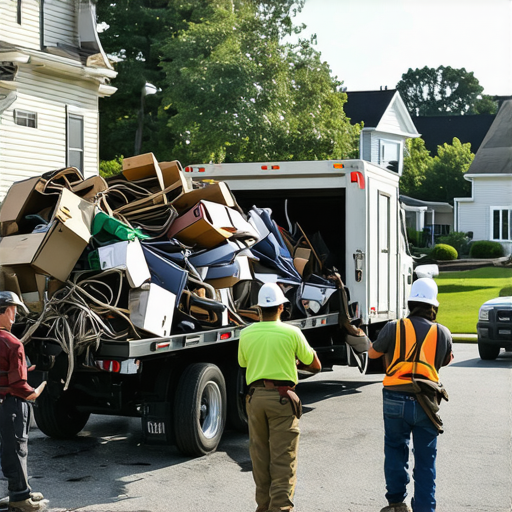
I watched a rookie almost lose his eyebrows because a customer hid a half-full propane tank inside a pile of harmless yard waste. We do not just lift. We inspect. Every. Single. Item. That day in Aurora taught that young man more about the Resource Conservation and Recovery Act than any textbook could. The heat was rising off the asphalt near the Aurora Transfer Station as we sorted through what looked like a simple pile of brush. Beneath the dried leaves lay a rusted 20-pound cylinder. If that had hit the hydraulic ram of the pack-out truck, the resulting explosion would have leveled the block. This is the reality of Junk Removal Aurora. It is not just about moving stuff from point A to point B. It is about the forensic analysis of a waste stream. We deal with Furniture Removal and Garage Clean outs every day, but the hidden chemistry is what keeps us awake. A lead-acid battery leaking in a pile of old clothes creates a fire hazard that most homeowners ignore. We see the tipping fees at the Denver Arapahoe Disposal Site as a necessary cost for safety. Every cubic yard we load is a calculation of weight, volume, and volatility. If you ignore the physics of the load, the load will eventually ignore your safety.
The hidden physics of furniture removal
Furniture Removal in Aurora requires an understanding of structural load limits and ergonomic physics to prevent property damage or personal injury. Professional junk haulers use specific lifting techniques and equipment to navigate heavy items like sectional sofas, armoires, and solid wood tables through narrow residential corridors without compromising the building’s integrity.
The floor snapped. It was a simple Furniture Removal job in a 1970s split-level home. The piece was a massive oak sideboard, likely weighing 400 pounds. Most people see a cabinet. I see a concentrated load of 50 pounds per square foot. When you drag that across a subfloor weakened by decades of Colorado dry rot, you are asking for a structural failure. We use polyethylene glides and forearm forklifts to distribute that weight. It is about load distribution. Moving a couch is not just strength. It is vector geometry. You have to calculate the pivot point of a nine-foot sofa as it rounds a corner near a glass light fixture. If your Junk Removal Aurora team does not talk about fulcrums, they are just amateurs with a truck. We look for the center of gravity before we even touch the item. This reduces the risk to our spines and your drywall. A Hoarder Clean Out aurora project often involves furniture that has become part of the structure itself, pinned down by layers of secondary debris. We have to excavate, not just lift. The pressure on the floor joists in these homes is often double what the original architects intended. We strip the weight in layers to avoid a sudden shift in the house’s center of mass.
The logistical nightmare of a garage clean out
Garage Clean outs involve the systematic categorization of mixed waste including household hazardous waste, recyclable metals, and general refuse. Efficient Junk Removal Aurora strategies prioritize the separation of volatile organic compounds and e-waste to comply with Colorado SB12-133 regulations which prohibit electronics in landfills.
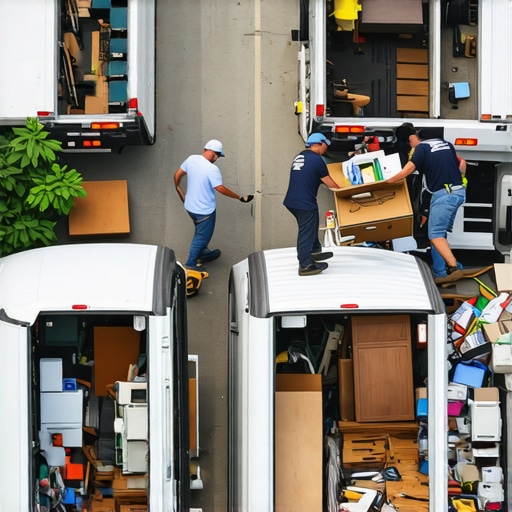
Air space is the enemy of profit. In the world of logistics, a 15-yard truck should be a solid block of material. When we perform Garage Clean outs, we play a high-stakes game of Tetris. You start with the heavy, flat items on the bottom to create a stable floor. Then you verticalize the Furniture Removal pieces. The Garage Clean outs are usually where we find the most illegal disposal attempts. People try to hide paint cans inside old buckets or bury motor oil under piles of scrap wood. The smell of hydraulic fluid and old gasoline is a constant companion. We have to be experts in material recovery. That old pile of rusted rebar? That is high-value scrap metal. The stacks of damp cardboard? That is a fire hazard that needs immediate diversion to a recycling facility. We calculate the cubic-yard density of every load. If we have too much air in the truck, we are wasting fuel and tipping fees. Every gap is filled with smaller items. It is a dense, heavy, and meticulously planned waste matrix. The narrow driveways in certain Aurora neighborhoods mean we cannot always get the truck close. That means more manual handling and higher risks. We mitigate this with staged loading zones. We bring the junk to the truck, categorize it on the driveway, and then load it with mathematical precision.
“Waste is merely a resource in the wrong place; professional removal is the science of putting it back where it belongs.” – Disposal Industry Maxim
[image_placeholder_1]
Why your old appliance is a chemical hazard
Appliance removal is a specialized waste management task because units like refrigerators and air conditioners contain refrigerants such as Freon or HFCs that require EPA-certified recovery. Professional Junk Removal Aurora experts ensure that compressors are handled correctly to prevent the release of ozone-depleting substances into the atmosphere.
The hum of a dead fridge is the sound of a potential environmental fine. When we handle Appliance removal, we are dealing with pressurized systems and heavy metals. A standard refrigerator from the 1990s contains enough refrigerant to cause significant atmospheric damage if the lines are cut by an untrained hauler. We check for mercury switches in old chest freezers. We look for polychlorinated biphenyls in the capacitors of vintage washing machines. It is a toxicological hunt. The sheer weight of these units is another factor. A cast-iron stove is a 500-pound beast that wants to crush fingers. We use stair-climbing dollies with ratchet straps. It is not about raw power. It is about mechanical advantage. The tipping fees for appliances in Aurora often include a surcharge for environmental processing. We pay that because the alternative is a legal liability that follows the homeowner. If that fridge ends up in a ditch, the serial number leads back to you. We ensure a transfer of liability. Once it hits our truck and we provide the disposal manifest, the risk is ours. We take that seriously. We track every unit from your basement to the final certified recycler. It is the only way to do business in a regulated world.
The reality of hoarder clean outs in Aurora
A Hoarder Clean Out aurora requires biohazard awareness and structural assessment to manage extreme volumes of accumulated household debris safely. These situations often involve pathogens, mold spores, and pest infestations, necessitating the use of Personal Protective Equipment and specialized disposal protocols.
I once cleared a house where the junk was not just stuff. It was a structural hazard. We found the floor joists were bowing under the weight of 40 years of newspapers that had absorbed ten years of basement humidity. This is the Hoarder Clean Out aurora experience. The atmospheric density of the home changes. The air is thick with particulate matter. We wear N95 respirators and Tyvek suits because we do not know what is in the next layer. It could be rodent droppings or black mold. We treat these jobs like a data overflow error in physical space. We have to create a logistical backdoor. We clear a path to the furthest point and work our way out. This is not about Junk Removal. It is about reclamation. We find legal documents, heirlooms, and hazardous waste all tangled together. The volume-to-weight ratio is insane. Wet paper is heavy. It is like hauling solid concrete. We have to monitor the axle weight of our trucks constantly. If we overload the truck, we risk a DOT violation. We use Dumpster Rentals Aurora services on-site to manage the overflow, but the sorting happens by hand. It is a slow, methodical dissection of a life. We focus on the diversion rate. Even in a hoard, there are materials that can be saved from the landfill. Material recovery is our ethical obligation.
The math behind dumpster rentals in Aurora
Dumpster Rentals Aurora costs are determined by volumetric capacity and tonnage limits, making it essential to understand displacement and material weight. Choosing between a 10-yard or 40-yard container depends on the density of your junk removal project and the local permit requirements for street placement.
People always underestimate the weight of construction debris. A 20-yard dumpster filled with asphalt shingles will exceed the weight limit of most trucks before it is even half full. That is the logistical trap of Dumpster Rentals Aurora. You think you have space, but you have already hit the tonnage ceiling. We advise clients on load leveling. You put the heavy concrete or dirt at the bottom in a thin layer. You do not pile it high in one corner. This causes weight distribution issues during the pickup. The truck’s hydraulic lift has a maximum breakout force. If you exceed it, the truck stays on the ground. You are then stuck with an overweight fee and a dry run charge. We look at the BTU potential of the wood waste we collect. If it is clean, it goes to a biomass facility. If it is treated, it goes to the landfill. The logistics of Dumpster Rentals Aurora also involve urban constraints. Narrow streets in the Highland Park area or Expo Park mean we need precision placement. We use wooden boards to protect the asphalt from the steel rollers. A 10-ton container will crack a driveway like an eggshell if you are not careful. It is about surface pressure. We calculate the pounds per square inch at the contact points. Safety is a mathematical certainty, not a guess.
| Material Type | Average Weight per Cubic Yard | Decomposition Time (Landfill) | Recyclability Potential |
|---|---|---|---|
| Mixed Household Junk | 250 – 300 lbs | 20 – 50 Years | Moderate |
| Construction Debris | 400 – 600 lbs | 50 – 100 Years | High (Metal/Wood) |
| Yard Waste | 150 – 400 lbs | 6 – 12 Months | Very High (Compost) |
| Old Appliances | Varies by Unit | 450+ Years | Very High (Steel) |
Why cheap haulers create expensive problems
Unlicensed junk removal operators often engage in illegal dumping, leaving the original owner legally liable for cleanup costs and environmental fines. Professional Junk Removal Aurora companies provide proof of disposal and carry liability insurance to protect the consumer from vicarious liability under CERCLA laws.
A business owner tried to save €500 by hiring a guy with a pickup truck from a social media ad. Two weeks later, the police called him because his company’s confidential files were found in a ditch. Your junk is your liability until it hits the scale. These curbside cowboys avoid tipping fees by dumping in Cherry Creek State Park or hidden alleys. They do not have workers’ compensation. If they break their back on your stairs during a Furniture Removal, they will sue you. We have commercial general liability insurance. We have pollution liability coverage. This is the cost of doing business correctly. We provide a waste manifest. This document tracks the chain of custody. It proves that your household debris was disposed of at a permitted facility like the Aurora Transfer Station. The carbon footprint of illegal dumping is massive because the city then has to send separate crews to clean it up. We optimize our routes using GPS telematics to reduce fuel consumption. We are not just haulers. We are stewards of the local Aurora environment. The financial risk of hiring an amateur far outweighs the savings. One EPA fine for hazardous waste mismanagement can reach tens of thousands of dollars per day. Do the math. The professional option is the only sustainable option.
“Modern waste management is a race between the volume of consumption and the capacity of recovery technology.” – Solid Waste Association of North America (SWANA)
Items Your Hauler Cannot Legally Touch
- Lead-Acid Batteries and Lithium-Ion Cells
- Unused Explosives or Ammunition
- Pressurized Gas Cylinders (unless empty and certified)
- Biohazardous Medical Waste and Sharps
- Liquid Paint, Solvents, and Chemical Thinners
- Radioactive Materials (Smoke Detectors with Americium-241)
- Asbestos-Containing Materials (ACM)
The environmental cost of the dump
While most people think recycling is always better, the carbon footprint of hauling low-grade plastics 500 miles often exceeds the impact of local, high-efficiency waste-to-energy incineration. Junk Removal Aurora experts evaluate the net environmental impact of different disposal routes to ensure the most eco-friendly outcome for household debris.
The circular economy is a great theory, but the logistics are brutal. We analyze the material flow. If we pick up a load of Appliance removal scrap, we know exactly which shredder it is going to. We know the recovery rate of the ferrous metal. We avoid landfill gas emissions by diverting organics. The methane produced by rotting yard waste in a landfill is 25 times more potent than carbon dioxide as a greenhouse gas. That is why we take it to a composting facility in Adams County. We understand the leachate collection systems at the DADS landfill. We know how the liners work. Our job is to keep the toxins out of the groundwater. This is why we are so strict about Garage Clean outs. One gallon of used motor oil can contaminate a million gallons of fresh water. We see the Aurora water table as something we are paid to protect. Our heavy-load trucks are equipped with spill kits. We are prepared for the chemical reality of the job. Every Furniture Removal project is an opportunity to keep treated wood out of the incinerator. Every Junk Removal Aurora job is a logistical puzzle with environmental stakes. We don’t just dump. We manage. We are the front line of urban sanitation. The physics of the truck and the chemistry of the load are our daily bread. We lift with our legs, but we think with environmental manifests.