A business owner tried to save money
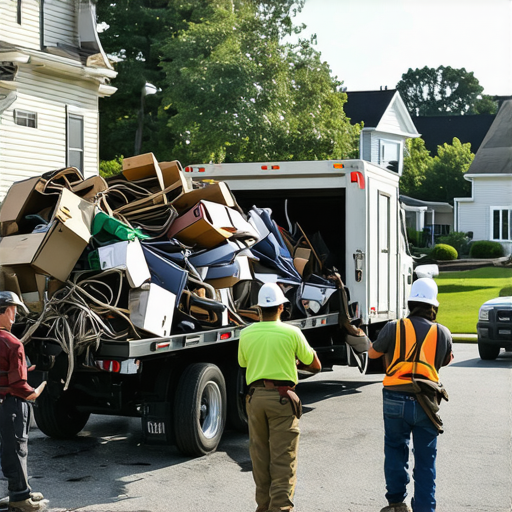
A business owner tried to save 500 dollars by hiring a guy with a pickup truck from a social media ad. Two weeks later, the police called him because his company confidential files and three old server racks were found in a ditch near the Fox River. Your junk is your liability until it hits the scale and you receive a certified tipping receipt. In the professional world of Junk Removal Aurora, we call this the chain of custody. When you hire an unvetted hauler, you are not just getting rid of trash. You are gambling with environmental fines and potential identity theft. I have spent twenty-five years watching the hydraulics of my 15-yard trucks compress everything from Victorian armoires to modern server towers. I smell the diesel and the hydraulic fluid every morning. It is the scent of logistics. If you see a hauler who does not ask about the contents of your boxes, run. They are likely going to dump your old electronics in a forest preserve to avoid the per-pound hazardous waste fees. We do not just lift. We inspect. Every. Single. Item. Because one lithium-ion battery hidden in a pile of cardboard can turn a 40,000-dollar truck into a fireball on the Interstate 88. This is the reality of waste management in the modern age. It is about mass, density, and legal compliance. It is about the science of the load.
The shadow of the landfill
Junk Removal Aurora protocols dictate that e-waste must be diverted from municipal solid waste streams to prevent heavy metal contamination. The Illinois Electronic Products Recycling and Reuse Act explicitly forbids the disposal of computers, monitors, and printers in landfills. When you request a Garage Clean out, every item is categorized by its material recovery value and its toxicity level. My team looks at a pile of debris and calculates the cube. We look for wasted air. If I see a 15-yard bed filled with loosely tossed chairs, I see a failure. We break down the furniture. We stack the flat-panel TVs vertically with foam separators. We treat Appliance removal like a surgical operation because the refrigerant in those old fridges is a regulated substance. The physics of cubing out a truck is a Tetris game where the stakes are fuel efficiency and axle weight limits. We operate within the strict confines of the Resource Conservation and Recovery Act. This federal law governs how we handle everything from the lead-acid batteries in your old UPS backup to the mercury switches in your 1970s thermostat. Waste is not just garbage. It is a resource out of place.
“Waste is merely a resource in the wrong place; professional removal is the science of putting it back where it belongs.” – Disposal Industry Maxim
Why the curb is a crime scene
Furniture Removal in Aurora often leads to illegal dumping when residents leave upholstered items on the parkway without a bulky item permit. This attracts scavengers who strip the metal and leave the hazardous foams behind. In Aurora, the city code is clear about the timing and volume of curbside placement. If you are doing a Hoarder Clean Out aurora, you cannot simply pile 40 years of history on the grass. The weight alone would crush the sod and potentially damage the city’s sewer lines if it rains. We calculate the structural load limits of your home before we move a single heavy piece. If we are taking a piano out of a second-story apartment, we are looking at the shear strength of the stair treads. We are looking at the pivot points in the hallway. A 800-pound upright piano is a kinetic energy disaster waiting to happen if the crew does not understand the center of gravity. We use heavy-duty straps and floor protection because your home is an asset, not a loading dock. Most people think about the heavy lifting, but they forget the physics of the movement. Every step is a calculation of torque and friction. We do not just move things. We manage mass through space with precision.
The mercury ticking in the basement
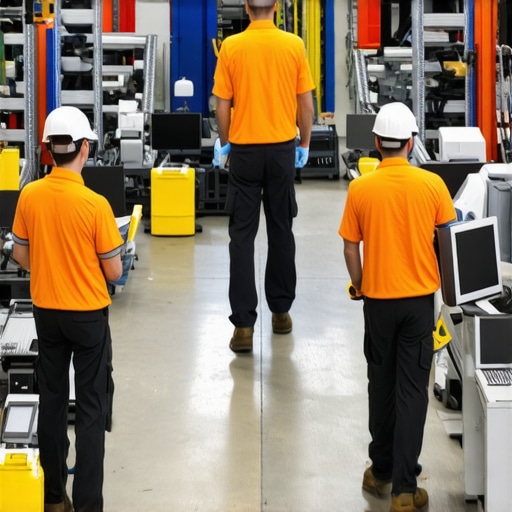
Appliance removal involves more than just muscle because older refrigerators and air conditioners contain CFCs or HCFCs that require EPA Section 608 certification for handling. When we perform Garage Clean outs, we often find old chest freezers hidden under piles of lawn equipment. These are chemical time bombs. If the cooling coils are punctured during a careless removal, the gas escapes into the atmosphere. This is why we use specialized dollies that keep the unit upright. We do not tilt appliances beyond a 45-degree angle if we can help it. It is about preserving the integrity of the system until it reaches a certified recovery facility. The same logic applies to E-Waste Disposal. An old CRT monitor is a pressurized vacuum tube. If it cracks, it implodes. Then you have glass shards coated in toxic phosphors flying across the room. We wear Level 3 puncture-resistant gloves and eye protection. We do not take shortcuts because a shortcut in this industry usually leads to the emergency room or a court summons. The chemical leaching of lead-acid batteries is another nightmare. We find them in old toy cars, power tools, and backup systems. If they leak on your concrete floor, they leave a permanent caustic scar. We neutralize the area and use secondary containment bins. This is the difference between a professional and a guy with a truck.
| Disposal Method | Compliance Level | Environmental Impact | Total Risk Factor |
|---|---|---|---|
| Curbside Abandonment | Zero | High Leaching Risk | Maximum Legal Liability |
| General Landfill | Partial | Methane Generation | Moderate Regulatory Risk |
| Certified Recycling | Full | Material Recovery | Zero Liability |
| Waste-to-Energy | High | Carbon Offset | Low Risk |
The heavy price of cheap disposal
Dumpster Rentals Aurora might seem like a cost-effective solution for Junk Removal, but hidden fees for overweight loads and prohibited items can double your initial quote. When you rent a 10-yard bin, you are tempted to fill it with concrete or dirt. But most rental agreements have a weight cap of two tons. A few cubic yards of wet soil will blow past that limit in minutes. Then the truck arrives, tries to lift the bin, and the hydraulic bypass kicks in. The driver leaves the bin on your driveway, and you are stuck with a 500-dollar bill for a dry run. This is why full-service removal is often cheaper. We calculate the weight as we load. We know the density of drywall versus the density of pine shelving. We distribute the weight over the axles of our trucks to stay under the 26,000-pound GVWR limit. This prevents us from getting stopped at the weigh stations and keeps our insurance premiums manageable. People do not realize that every piece of junk has a mathematical footprint. A sofa is not just a sofa. It is 150 pounds of wood, foam, and fabric occupying 60 cubic feet of truck space. We charge by the volume because that is how the landfills charge us, but we monitor the weight because that is how the Department of Transportation monitors us. It is a balancing act of volume and mass.
The ghost in the garage
Garage Clean outs often reveal hazardous household waste like old paint, pesticides, and used motor oil which cannot be placed in a Dumpster Rental Aurora. These items require a trip to a specialized facility like the one in Naperville or the regional collection events in Kane County. While most people think recycling is always better, the carbon footprint of hauling low-grade plastics 500 miles often exceeds the impact of local, high-efficiency waste-to-energy incineration. We have to be honest about the lifecycle of trash. Sometimes, the most ethical thing to do with a contaminated piece of particle board is to send it to a modern landfill with a methane capture system. Recycling is not a magic wand. It is an industrial process that requires energy and water. We look at your junk and decide the most efficient path. If we find high-quality steel, it goes to the scrap yard. If we find old growth redwood, it goes to a salvager. If we find a 1990s television, it goes to a de-manufacturer who will strip the copper and the gold from the circuit boards. We are the gatekeepers of the waste stream. We decide what gets a second life and what gets buried for a thousand years.
“The goal of waste management is not to hide our consumption, but to account for it with technical precision.” – SWANA Technical Manual
- Lithium-ion batteries from laptops or power tools
- Fluorescent light tubes containing mercury vapor
- Aerosol cans that are not completely empty
- Liquid paints and solvent-based thinners
- Propane tanks and fire extinguishers
- Tires with or without rims
- Biohazardous materials or medical waste
The structural reality of hoarding
Hoarder Clean Out aurora projects are not just about clutter; they are structural engineering challenges where compressed layers of paper and textiles can exceed the floor load capacity of a residential home. I once cleared a house where the junk was not just stuff. It was a structural hazard. We found the floor joists were bowing under the weight of 40 years of newspapers that had absorbed ten years of basement humidity. The paper had turned into a solid, heavy mass resembling wet concrete. We had to shore up the basement with jacks before we could safely remove the stacks from the floor above. This is the level of detail we bring to every job. We are not just tossing things into a bin. We are assessing the safety of the environment. In hoarding situations, there is often a risk of mold and pest infestation. We use industrial air scrubbers and PPE because the dust disturbed during a clean out can contain hantavirus or histoplasmosis. This is not a job for a teenager with a pickup truck. It requires a specialized understanding of bio-aerosols and physical load dynamics. We move carefully. We move methodically. We clear the path from the back of the house to the front, ensuring we always have an emergency exit. It is a tactical operation. When we finish, the house can breathe again. The joists settle. The air clears. The liability vanishes. This is the science of junk removal.