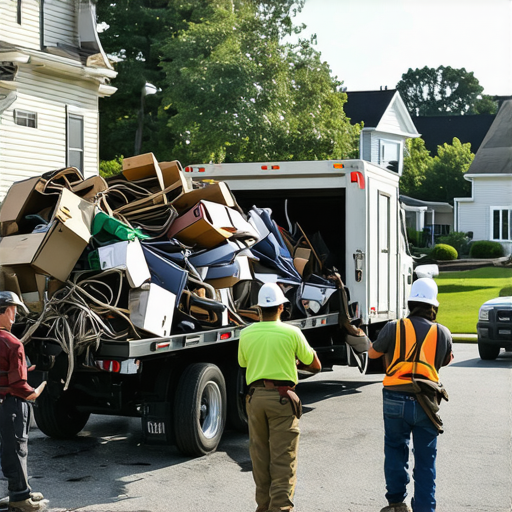
Smell that? That is the scent of 15W-40 diesel oil and the sharp, metallic tang of oxidized iron. My world is measured in cubic yards, tipping fees, and the precise physics of weight distribution. I have spent a quarter century watching the ebb and flow of consumer waste in Aurora, and nothing tells a story of failed New Year resolutions quite like a rusted treadmill. In this industry, we do not just move boxes. We manage logistics, assess environmental risks, and execute the tetris of the load to ensure every inch of the truck bed is utilized. If you leave air gaps, you are losing money. If you ignore the weight limits of a residential stairwell, you are looking at a structural liability. We operate on the front lines of waste management where the density of the debris dictates the strategy of the day.
Experience has taught me that caution is the only way to survive. I watched a rookie almost lose his eyebrows because a customer hid a half-full propane tank inside a pile of harmless yard waste. We do not just lift, we inspect every single item. This is especially true with exercise equipment. People think a home gym is just steel and plastic. They forget about the lead-acid batteries in the consoles, the hydraulic fluid in the shock absorbers, and the high-tension springs in the resistance bands. In Aurora, the logistics of removal are compounded by the local topography and the strict regulations at the Denver Arapahoe Disposal Site. You cannot just toss a Peloton into a ditch. You need a manifest, a plan, and the physical capacity to handle the load.
The hidden geometry of fitness machines
Disposing of old exercise equipment in Aurora requires a deep understanding of volumetric weight, metal scrap value, and municipal e-waste regulations. Most residents fail to realize that a standard treadmill exceeds the weight limits for curbside pickup, necessitating a professional team with heavy-duty dollies and high-capacity hydraulic lift gates to safely transport the units to the correct facility.
When we pull up to a house in Aurora for a garage clean out, the exercise equipment is usually buried under layers of seasonal decor and forgotten furniture. The treadmill is the worst offender. It is a logistical nightmare wrapped in a steel frame. A mid-range NordicTrack weighs roughly 250 pounds. That weight is not centered. It is concentrated in the motor housing at the front. If you try to lift that without knowing the center of gravity, you will blow out a disc or crush a toe. We use high-tensile nylon straps to secure the deck before we even think about moving it. The belt is often coated in silicone or paraffin wax, making it a slip hazard if the unit is tilted at the wrong angle. This is the zooming reality of junk removal. It is about the friction coefficient of a rubber tread against a polished concrete garage floor.
Aurora disposal laws and heavy iron
Navigating the legal landscape of waste disposal in Colorado means adhering to specific guidelines regarding the separation of ferrous metals from electronic waste components found in modern gyms. Failure to comply with these local ordinances can result in significant fines for the hauling company and the property owner, as hazardous materials like capacitors must be stripped before the steel enters the recycling stream.
“Waste is merely a resource in the wrong place; professional removal is the science of putting it back where it belongs.” – Disposal Industry Maxim
In the city of Aurora, the waste stream is tightly monitored. When we handle appliance removal or furniture removal, we are looking at the potential for material recovery. Exercise bikes are gold mines for scrap steel, but the electronic consoles are classified as e-waste under the Resource Conservation and Recovery Act. We have to dismantle the units. The copper wiring in the motor has a different market value than the powder-coated steel of the frame. We calculate the tipping fees at the transfer station based on these variables. If a truck is loaded with mixed debris, the cost per ton skyrockets because the facility has to sort it manually. We solve that problem at the point of origin by loading the truck with surgical precision.
| Equipment Type | Average Weight (lbs) | Primary Material | Disposal Difficulty |
|---|---|---|---|
| Treadmill | 220-300 | Steel/Electronics | High |
| Stationary Bike | 100-150 | Steel/Plastic | Medium |
| Weight Bench | 50-80 | Cast Iron/Vinyl | Low |
| Elliptical | 180-250 | Alloy/Electronics | High |
The hazardous truth of basement gyms
Removing heavy gym gear from a basement involves calculating the structural load limits of the stairs and the turning radius of tight hallways to prevent property damage. Professional haulers must use protective floor runners and specialized lifting techniques to navigate the vertical challenges inherent in Aurora residential layouts, ensuring the safety of both the crew and the home structure during the extraction process.
The basement is where the real logistics happen. I have seen floor joists in older Aurora homes bowing under the weight of 1980s-era universal gyms. These machines were built to last, but they were never meant to be moved. The cast iron plates are usually rusted to the guide rods. We have to use penetrating oil just to break the pieces apart. Every drop of that oil is a potential stain on the customer’s carpet. We use heavy-duty plastic sheeting and absorbent mats. The process is slow. It is methodical. The physics of a 45-pound plate falling from waist height will crack a foundation slab. We treat every piece of iron like a live round. We do not take chances with gravity.
Why your treadmill is a mechanical nightmare
The internal components of a motorized treadmill include heavy-duty magnets, copper windings, and lead-soldered circuit boards that require specialized handling at certified recycling centers. These machines are not simple scrap, they are complex assemblies of disparate materials that cannot be processed in a standard landfill without risking the leaching of heavy metals into the local groundwater supply of the Aurora basin.
Think about the motor. It is a dense block of copper and magnets. If you throw that in a dumpster rental Aurora, you are wasting a valuable resource. We pull those motors. We harvest the copper. The frame is high-grade steel that can be melted down and repurposed. However, the belt is the problem. Most treadmill belts are a composite of rubber, PVC, and fabric. They do not break down. Here is a contrarian point for you. While everyone screams about recycling, the reality is that the carbon footprint of hauling low-grade plastics and rubber composites 500 miles to a specialized plant often exceeds the impact of local, high-efficiency waste-to-energy incineration. Sometimes, the most ethical thing to do is to find the nearest facility that can turn that waste into BTU potential rather than burning diesel to move it across state lines.
“Sustainable waste management requires a rigorous commitment to the hierarchy of reduce, reuse, and reclaim, ensuring that only the truly inert reaches the landfill.” – SWANA Guidelines
Smart alternatives for unwanted weights
Donating or reselling functional exercise equipment reduces the strain on local landfills and provides affordable fitness options for the Aurora community. Before scheduling a junk removal Aurora service, homeowners should assess the condition of their items to determine if they qualify for local charity programs or specialized sports equipment resellers who can extend the lifecycle of the machinery.
Not everything we touch is trash. During a hoarder clean out aurora, we often find high-end equipment buried under piles of newspapers. If the motor runs and the frame is true, we look for a second life for that machine. The local Aurora thrift stores and community centers are often at capacity, so we have a network of secondary markets. But if the gear is broken, it is our responsibility to ensure it does not end up in an illegal dump site. I have seen the damage those curbside cowboys do. They take the customer’s money, drive to a quiet road near Cherry Creek, and dump the load to avoid the $80 tipping fee. Your junk is your liability until it hits the scale. If the police find your name on a piece of mail inside that junk, you are the one getting the citation.
- Items Your Hauler Cannot Legally Touch:
- Open containers of gasoline or motor oil
- Biohazardous materials or medical waste
- Lead-acid batteries that are leaking or cracked
- Unsealed pressurized tanks like propane or oxygen
- Industrial chemicals and volatile solvents
- Asbestos-containing materials found in old insulation
The heavy cost of keeping everything
The accumulation of unused heavy equipment in residential spaces creates a significant safety hazard and decreases the usable square footage of the property. Clearing out old exercise gear, appliances, and broken furniture restores the functional utility of the home while eliminating the dust, pests, and fire risks associated with long-term storage of bulky, composite materials.
We recently did a garage clean outs job where the owner had four different treadmills. None of them worked. They were taking up two full parking spaces. The weight had actually caused the concrete to spall and crack over time due to the moisture trapped beneath the heavy frames. Once we cleared the space, the homeowner could finally use the garage for its intended purpose. The logistics of that job required a 20-yard dumpster and a three-man crew. We had to winch the heaviest unit out because the wheels had seized. It was a symphony of metal on metal. But at the end of the day, the truck was cubed out. The load was secured. The customer was free of the burden. That is the science of junk removal. It is about restoring order to a world that naturally trends toward chaos and clutter. We provide the muscle and the mind to make it happen.
Wow, this post really hits on the complexity of disposing of heavy and potentially hazardous gym equipment in Aurora. I’ve personally encountered similar challenges when trying to clear out an old basement gym, especially with the heavy cast iron plates and rusted parts. The importance of understanding the internal components, like lead-soldered circuit boards and copper wiring, really struck me. It’s not just about hauling it away but ensuring the process complies with local laws, which can be a headache without proper knowledge. I also appreciate the emphasis on donating or reselling equipment still in working condition, as it’s a sustainable approach that benefits the community. Has anyone found effective ways to partner with local charities or secondhand stores that handle larger or heavier equipment? I’m curious how others manage the logistics when dealing with big, bulky workout machines—any tips or experiences to share? This insight about load calculation and proper lifting techniques is invaluable for anyone facing similar decluttering projects.