The yard waste hazard hidden under the leaves
Professional junk removal in Aurora requires identifying hazardous materials like pressurized tanks and chemical contaminants before they enter the waste stream. A professional crew ensures that every cubic yard of debris is screened for safety compliance, preventing explosive incidents at transfer stations and ensuring that the environmental footprint of the disposal process remains within legal parameters for Colorado waste management.
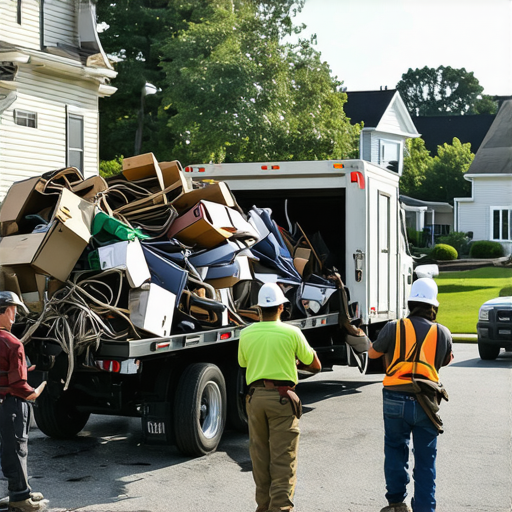
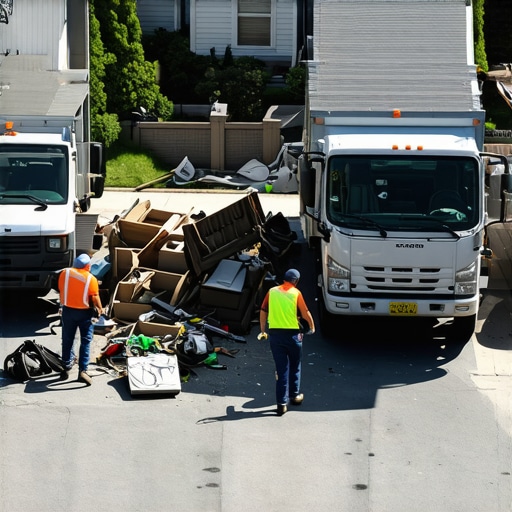
I watched a rookie almost lose his eyebrows because a customer hid a half-full propane tank inside a pile of ‘harmless’ yard waste. We don’t just lift. We inspect. Every. Single. Item. It was a Tuesday in the Murphy Creek neighborhood. The sun was hitting the asphalt hard. We were clearing a massive pile of spruce limbs and overgrown shrubbery. My guy, Sarah, grabbed a pitchfork and dug into the base of the pile. A hiss of escaping gas cut through the sound of the idling diesel engine. Some weekend warrior had buried a rusted 20-pound propane cylinder at the bottom of a compost pile. If that had hit the hydraulic ram of our pack-body truck, the result would have been a shrapnel event that the local news would have covered for a week. This is why the curbside cowboys with a pickup truck and a dream are a liability. They do not know the chemistry of decomposition. They do not understand that yard waste creates heat. They do not realize that a sealed container in a heat-generating organic pile is a bomb. Every load we take from an Aurora property undergoes a rigorous screening. We look for the sheen of leaked motor oil. We smell for the acrid scent of old pesticides. We check the weight of every bag to ensure no one snuck a lead-acid battery into the grass clippings. In the logistics of waste, what you do not see is what kills your profit margin and your crew.
“Waste is merely a resource in the wrong place; professional removal is the science of putting it back where it belongs.” – Disposal Industry Maxim
The brutal math of the Aurora transfer station
Waste disposal costs in Aurora are dictated by the tonnage and material density of the load being tipped at facilities like the Denver Arapahoe Disposal Site. Managing these costs requires a deep understanding of cubic-yard density and the specific gravity of materials like concrete, wet soil, or loose organic debris to avoid massive surcharges at the scale house.
The truck is a 15-yard beast. It has a gross vehicle weight rating of 19,500 pounds. When we pull onto the scale at the Tower Road facility, the math begins. If we have a load of mixed yard trash that is saturated from a sudden Colorado afternoon downpour, the weight doubles. Water is the enemy of the logistics manager. A dry cubic yard of pine needles weighs about 100 pounds. A wet one? You are looking at 400 pounds easily. If you do not account for this in your quote, you are paying the landfill to take the rain. We calculate the displacement of every item. A sectional sofa is 200 cubic feet of wasted air unless you know how to break the frame. We use the Tetris method. Heavy items like old refrigerators go at the front, over the axle. Lighter yard waste is packed into the voids. We aim for a density of 350 pounds per cubic yard for mixed loads. This is the sweet spot. It keeps the center of gravity low for the drive down I-70. It ensures we do not exceed the structural load limits of the truck bed. If you see a hauler with a sagging rear bumper, they are a danger to every driver in Aurora. They are redlining their equipment and risking a catastrophic failure of the hydraulic lines. Efficiency is not just about speed. It is about the physics of the haul.
The hidden danger of the hoarder clean out aurora
Hoarder clean outs in Aurora present significant structural hazards because the extreme weight of accumulated materials often exceeds the design capacity of residential floor joists. Identifying these risks requires a technical assessment of the property’s load-bearing elements before a single pound of debris is moved to prevent structural collapse during the extraction phase.
| Material Type | Decomposition Time | Density (Lbs/Cu Yd) | Disposal Difficulty |
|---|---|---|---|
| Untreated Wood | 2-3 Years | 300 | Low |
| Asphalt Shingles | 300 Years | 2,500 | High |
| Polyurethane Foam | Infinite | 50 | Medium |
| Ferrous Metals | 50-100 Years | 1,000 | Low (Recyclable) |
| Lithium Batteries | 100+ Years | Varies | Extreme (Hazmat) |
I once cleared a house where the junk wasn’t just ‘stuff.’ It was a structural hazard. We found the floor joists were bowing under the weight of 40 years of newspapers that had absorbed ten years of basement humidity. The paper had turned into a solid, heavy block of cellulose. It weighed more than concrete. In these scenarios, you cannot just start tossing things out. You have to understand the ‘data overflow’ of the physical space. Every stack of magazines is a lever. If you pull the wrong one, the whole stack can shift and pin a technician against a load-bearing wall. We use structural shoring if we suspect the integrity of the floor is compromised. We do not just see a pile of old clothes. We see a medium for mold spores and a playground for rodents that have chewed through the electrical insulation. A hoarder clean out is an autopsy of a lifestyle. It requires respirators, Tyvek suits, and a logistical plan that accounts for the fact that the narrow hallways of an Aurora ranch-style home were never meant to transport a literal ton of saturated paper. We track the cubic volume of every room. We create a path of egress first. Safety is the primary metric. The junk is secondary.
Why your garage became a graveyard for appliances
Appliance removal in Aurora involves the specialized handling of hazardous refrigerants and heavy metals that are regulated under the Resource Conservation and Recovery Act. Professional removal services must capture CFCs and HCFCs to prevent atmospheric damage while navigating the physical constraints of removing 300-pound units from residential basements.
- Lead-acid batteries from old lawnmowers
- Propane tanks and pressurized canisters
- Fluorescent light ballasts containing PCBs
- Paints, solvents, and industrial thinners
- Asbestos-containing materials from old pipe insulation
- Untreated medical waste or sharps
- Biohazardous materials and heavy animal waste
The operational reality of a garage clean out is usually a story of forgotten projects. People buy a new chest freezer and leave the old one to rot. That old freezer is a chemical time bomb. The compressors are filled with oils and refrigerants that cannot be vented into the Aurora air. We use specialized dollies. We use ramps that can handle the 500-pound concentrated load of a vintage range. We do not drag. Dragging destroys the client’s epoxy floor. It creates friction heat. We lift. We use mechanical advantage. The goal is to move the mass from the point of origin to the truck bed with zero impact on the surrounding structure. We see a lot of furniture removal in Aurora too. The modern ‘disposable’ furniture is the worst. It is made of particle board and glue. If it gets damp, it loses all structural integrity. You try to lift a dresser and it literally disintegrates in your hands. This is why we wrap items before we move them. It is not just about scratches. It is about keeping the item from falling apart and causing an injury. The logistics of the garage are about the exit strategy. We clear the path. We stage the items. We load by weight. It is a choreographed dance of heavy lifting.
“Professional waste management is the final defense against environmental degradation in the local community.” – Solid Waste Association of North America
The legal trap of the curbside cowboy
Illegal dumping and improper disposal of commercial waste in Aurora can lead to significant legal liabilities for the original property owner under the principle of cradle-to-grave responsibility. Hiring an unlicensed hauler who disposals of items in local ditches or non-permitted sites leaves the customer vulnerable to fines and environmental cleanup costs mandated by state law.
Your junk is your liability until it hits the scale. I have seen it a dozen times. A business owner hires a guy with a rusty trailer because he was 50 dollars cheaper. That guy takes the money and dumps the whole load in a culvert near the Cherry Creek spillway. The police find a piece of mail with the owner’s name on it. Now, that business owner is facing a five-figure fine and a court date. In 2026, the tracking of waste is more digital than ever. Landfills in the Aurora area use plate readers and cameras. If your ‘hauler’ isn’t on the manifest, you are the one the EPA comes looking for. We provide a paper trail. We show you the tip slip from the transfer station. We show you the recycling certificates for the e-waste. This is the difference between a professional service and a guy with a truck. We manage the risk. We know the local ordinances. For example, the narrow streets in some parts of Aurora mean you cannot just drop a 20-yard dumpster. You need a permit from the city. You need reflective markers. You need a live-load truck that can get in and out in thirty minutes. We provide that speed because we have the logistics planned out before we even put the key in the ignition. The ‘cheap’ option is often the most expensive mistake a homeowner can make.
The bottom line is simple. Junk removal is not about hauling. It is about engineering. It is about knowing that the carbon footprint of hauling low-grade plastics 500 miles often exceeds the impact of local, high-efficiency waste-to-energy incineration. We choose the disposal site based on the material. Wood waste goes to a facility that can turn it into mulch or fuel. Metal goes to the scrap yard. Everything else is compacted to save space in our landfills. We are the stewards of the Aurora waste stream. We take that responsibility seriously. When we finish a yard trash removal, the ground is raked. The pavement is swept. The air smells like pine instead of rot. That is the mark of a veteran logistics manager. We leave the space better than we found it. We move the weight. We manage the waste. We protect the client. This is the science of the pack. This is the reality of junk removal in 2026. Every load is a mission. Every truck is a laboratory. We don’t just clear space. We restore order to the physical world. One cubic yard at a time. The hydraulics hiss. The engine growls. The load is secure. We move on to the next site. That is the job. That is the life.