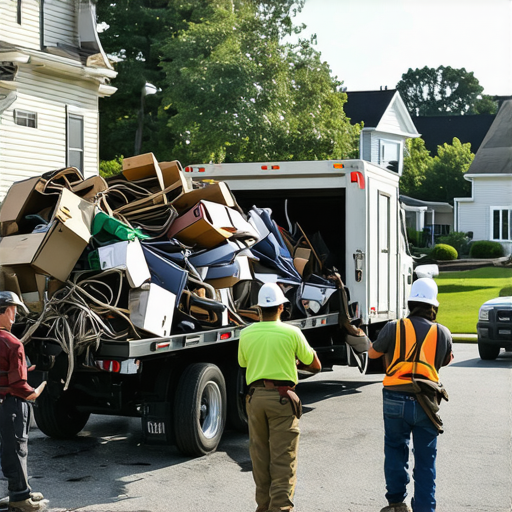

The textile crisis in our backyards
Textile waste represents a massive logistical burden in Aurora because fabrics do not compress easily in standard waste streams. Old clothes often end up in landfills where synthetic fibers like polyester take 200 years to decompose. Professional Junk Removal Aurora services prioritize diversion to keep these materials out of the ground. A business owner tried to save €500 by hiring a guy with a pickup truck from a social media ad. Two weeks later, the police called him because his company’s confidential files were found in a ditch. Your junk is your liability until it hits the scale. I have seen this scenario play out dozens of times in the hauling industry. When you toss a bag of clothes, you are not just getting rid of fabric. You are managing a volumetric unit that occupies specific cubic yardage in a truck. In Aurora, the logistics of soft goods disposal requires a tactical approach to avoid unnecessary tipping fees. Fabric density is a deceptive metric. A single bag of denim weighs significantly more than a bag of polyester gym wear, yet they occupy the same spatial footprint. This spatial inefficiency is what we call dead air in the industry. Efficient Junk Removal is about eliminating that dead air. We look at the load and calculate how to stack heavy furniture on top of soft goods to maximize compression. This reduces the number of trips to the transfer station. Every trip saved is a reduction in diesel consumption and hydraulic wear on the fleet. The environment benefits when the logistics are tight. Aurora residents often treat closets as storage lockers for forgotten history. When those closets overflow, the temptation to just dump everything into a dumpster rental is high. However, textiles require a different path. Natural fibers like cotton and wool have a completely different chemical lifecycle than synthetic blends. If you mix them with general construction debris during Garage Clean outs, you ruin the potential for fabric recovery. The fibers become contaminated with drywall dust or glass shards. Once contaminated, those clothes are destined for the landfill. This is a failure of waste management logic. We aim for a high diversion rate. This means we want the majority of your load to go anywhere but the dump. It takes more work to sort, but it preserves the local Aurora ecosystem. The smell of the Aurora transfer station is a reminder of what happens when sorting fails. It is a mix of rotting organic matter and the sharp tang of industrial waste. We work to keep textiles out of that mix. Professional haulers understand the physics of the load. We know that a 15-yard truck can only handle so much weight before the suspension groans. Clothes are rarely the weight limit, but they are always the volume limit. Managing that volume is the difference between a profitable job and a logistical disaster.
“Waste is merely a resource in the wrong place; professional removal is the science of putting it back where it belongs.” – Disposal Industry Maxim
Local Aurora disposal routes that actually work
Finding the right outlet for textiles in Aurora depends on the quality of the fabric and the current demand at regional recovery centers. Local charities often take wearable items, but the true logistical challenge lies in the unwearable scraps that require industrial shredding. Use Junk Removal Aurora for high volume purges. Most people assume that any donation center will take their old socks and torn shirts. This is a fallacy. Donation centers spend thousands of dollars annually on tipping fees to dispose of the junk people leave at their doors. It is a hidden tax on their mission. If the clothes are stained, torn, or threadbare, they need textile recycling, not a donation bin. In Aurora, we have specific channels for these materials. Industrial wipers are a major secondary market for old cotton shirts. The fabric is cut into rags for auto shops and manufacturing plants. This extends the life of the fiber. Another route is the shredding of mixed synthetics for carpet padding or insulation. This is where the chemistry of the clothes matters. Polyester is essentially a petroleum product. When it is shredded, it maintains its insulating properties. We track these diversion paths because they impact the total carbon footprint of the removal job. The Hoarder Clean Out aurora projects we handle often involve mountains of clothes that have been compressed by years of weight. These are often unusable for donation because of mold or pest infiltration. In these cases, we must follow strict biohazard protocols. Fabric absorbs moisture and odors. In a hoarding situation, the clothes become a sponge for the environment. They become heavy and hazardous. We wear PPE and use specialized containment bags. This is not just about lifting; it is about health safety. The Resource Conservation and Recovery Act governs how we handle various waste streams, and while clothes are generally non-hazardous, the conditions they are stored in can change their legal status. If a closet is full of moldy fabric, it cannot go into a standard recycling stream. It must be treated as contaminated municipal solid waste. This is the reality of the industry that most curbside cowboys ignore. They throw it all in the back of a rusted truck and hope for the best. We plan for the worst.
| Material Type | Decomposition Time | Best Aurora Route |
|---|---|---|
| Cotton Fabrics | 1-5 Months | Composting or Rags |
| Wool Products | 1-5 Years | Textile Recovery |
| Polyester/Nylon | 200+ Years | Chemical Recycling |
| Leather Goods | 20-40 Years | Resale or Specialized |
The logistics of a clean closet
Managing a closet purge in Aurora requires an understanding of volume-to-weight ratios to ensure the most cost-effective disposal method is used. Small loads can go to local drop-off points, but massive cleanouts require a Dumpster Rentals Aurora or a full-service junk crew. When we arrive at a site for a Furniture Removal or a closet clear-out, we immediately assess the cubing potential. Cubing out a truck means filling every available inch of the cargo hold. Clothes are the filler. They go in the gaps between the sofa and the dresser. This prevents the load from shifting during transit. A shifting load is a dangerous load. I have seen trucks tip on sharp turns because the cargo wasn’t secured properly. The physics of junk removal is unforgiving. We use the soft bags of clothes as buffers. It is a strategic use of waste. However, if the client has 50 bags of clothes, that is a different story. That is a dedicated textile run. We calculate the fuel cost against the tipping fee at the specialized Aurora recovery center. If we can bypass the landfill, we save money and the client gets a better rate. Most people do not realize that landfills charge by the ton. Clothes are light, so the cost per bag is low, but the space they take up is high. This is why many municipal services have limits on how many bags you can put on the curb. They are protecting their own logistics. When you hire a professional service, you are paying for the bypass of these limits. We handle the Appliance removal at the same time, which balances the load weight. A fridge provides the weight, the clothes provide the volume. It is a perfect logistical balance. We also look for hidden hazards. People hide things in old clothes. I once watched a rookie almost lose his eyebrows because a customer hid a half-full propane tank inside a pile of harmless yard waste and old jackets. We don’t just lift; we inspect. Every. Single. Item. This is the hallmark of a professional Aurora crew. We are looking for batteries, aerosols, and chemicals that could spark a fire in the back of the truck. Fabric is highly flammable. A fire in a junk truck is a nightmare. It is hard to extinguish and creates toxic smoke. Safety is our primary metric of success.
- Wet lead-acid batteries hidden in laundry piles
- Pressurized containers or old fire extinguishers
- Biohazardous medical waste or used needles
- Wet paint cans that have not been solidified
- Unsealed asbestos materials from old renovations
“The efficient management of solid waste is a cornerstone of public health and environmental stewardship in modern urban centers.” – SWANA Guidelines
Why a professional crew beats the DIY scramble
Engaging a professional hauling service in Aurora eliminates the legal and physical risks associated with large-scale waste disposal and textile management. DIY efforts often result in multiple trips to the dump, wasted fuel, and potential fines for improper sorting at the transfer station. The DIY approach seems cheaper until you factor in the value of your time and the cost of truck wear. A standard passenger vehicle is not designed to haul 500 pounds of old fabric and discarded household items. The suspension takes a beating. The interior gets ruined by dust and odors. Then there is the gate fee. Most Aurora landfills have a minimum charge. If you go with a half-empty truck, you are paying a massive premium per pound. We consolidate. We bring the 15-yarder and we fill it to the brim. This is the economy of scale in action. Furthermore, we understand the local ordinances. Aurora has specific rules about what can be placed on the curb and when. If you miss the window, your junk sits out and gets wet. Wet clothes are twice as heavy and ten times as hard to recycle. They become a breeding ground for bacteria. Our crews move fast. We can clear a Garage Clean outs in two hours that would take a homeowner two weekends. We have the dollies, the ramps, and the muscle memory. We know how to navigate narrow hallways without taking chunks out of the drywall. We know how to handle a Hoarder Clean Out aurora with the sensitivity and efficiency it requires. These jobs are often emotional for the client. We stay focused on the logistics. We see the path forward when the client only sees a mountain of problems. The goal is a clean slate. A clean space leads to a clean mind. We facilitate that transition by being the technical experts in the room. We don’t just move stuff; we solve spatial puzzles. The final destination of your items is our responsibility. We take that seriously. We track our diversion rates because it matters to the Aurora community. We want to be able to say that 70 percent of what we hauled today did not end up in a hole in the ground. That is the gold standard of modern waste management. We are moving toward a circular economy where every old shirt has a new purpose. Whether it becomes insulation, a cleaning rag, or new fiber, it stays in the system. That is the future of Junk Removal.