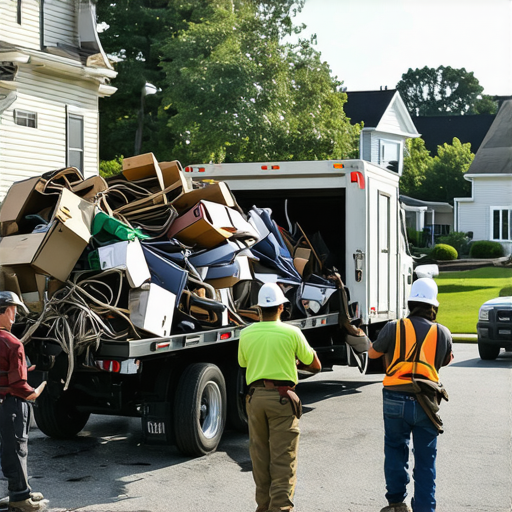
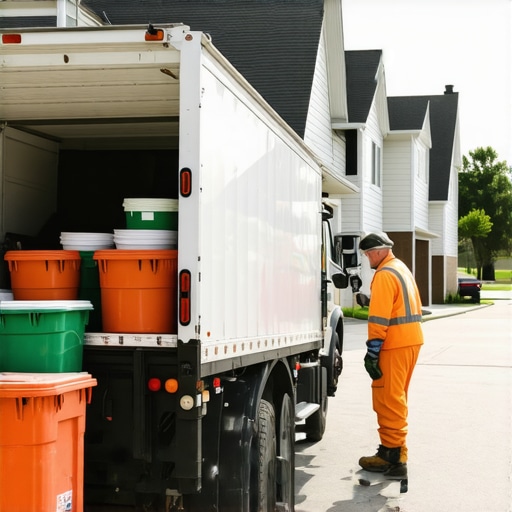
I watched a rookie almost lose his eyebrows because a customer hid a half-full propane tank inside a pile of yard waste. We do not just lift. We inspect. Every single item. That moment defined my approach to waste management in Aurora. If you think junk removal is just about tossing bags into a truck, you are part of the problem. Your junk is your liability until it hits the scale. In this business, ignorance leads to fires, fines, and environmental degradation. This is the reality of the hauling world. We deal with the remnants of lives and the chemical ghosts of home improvement projects. My job is to ensure those ghosts do not haunt the local ecosystem or the safety of my crew.
The chemical reality of 2026 paint disposal
Paint disposal in Aurora requires distinguishing between latex and oil-based products to avoid environmental fines. Latex paint must be solidified with absorbent material before landfill entry. Oil-based paints are hazardous waste and require transport to a licensed facility. These rules ensure groundwater protection and landfill stability. If you pour liquid paint into a trash bin, you are creating a toxic spill waiting to happen. The hydraulic press in the garbage truck will burst those cans. Then the street gets a new, permanent coat of whatever color you were tired of. In 2026, the City of Aurora has tightened the grip on these materials. You cannot simply walk away from a stack of old cans. You need a strategy that involves chemistry and compliance.
“Waste is merely a resource in the wrong place; professional removal is the science of putting it back where it belongs.” – Disposal Industry Maxim
Why your garage is a liability site
Garage clean outs often reveal forgotten hazardous materials that threaten residential safety and property value. Common items like old fertilizers, pool chemicals, and pesticide bottles can leak and react over time. Identifying these substances before the hauling crew arrives prevents dangerous chemical reactions during transport. I have walked into garages where the fumes were thick enough to sting the eyes. People treat their garage as a purgatory for things they do not want to deal with. They wait until the floor is invisible. By then, the bottom layer of cardboard has fused with the concrete because of a slow leak from an old brake fluid container. This is not just a cleaning task. It is a hazardous materials mitigation project. You need to understand the volume and the weight. A standard two-car garage can hold five tons of debris if stacked to the ceiling. That is ten thousand pounds of potential hazards. Junk removal aurora specialists look for these indicators before they touch a single box. We check for the stains on the floor. We look for the bulging lids. We prepare for the worst because the worst is what usually happens when you ignore a garage for a decade.
The logistics of a hoarder clean out aurora
Hoarder clean out aurora projects require specialized logistical planning to manage extreme volumes and potential structural hazards. These jobs involve high-density packing where air space is non-existent. Handling these sites involves sorting through years of accumulated materials to separate recyclables from true waste. This is the Tetris of the waste industry. You are dealing with compaction. When newspapers sit in a basement for twenty years, they absorb moisture. They become dense blocks of cellulose. A stack that looks like it weighs fifty pounds actually weighs two hundred. If you do not account for that weight, you will snap the axles on your trailer. I have seen it happen. The air in these homes is often thick with particulate matter. We wear respirators. We work in shifts. This is a data overflow error in physical space. We have to clear the backdoor first. We establish a staging area. We do not just grab and go. We categorize. Metal goes to the scrap yard. Electronics go to the e-waste center. The rest goes to the transfer station. It is a slow, methodical process of reclaiming square footage from the grip of entropy.
| Material Type | Aurora Disposal Method | 2026 Estimated Cost |
|---|---|---|
| Latex Paint | Solidification/Landfill | $5 – $10 per gallon |
| Oil-Based Paint | HHW Facility | $15 – $30 per gallon |
| Old Appliances | Certified Recycling | $40 – $100 per unit |
| Furniture | Transfer Station | $20 – $50 per item |
Local ordinances and the tipping floor
Aurora municipal waste codes prohibit the disposal of liquid waste and uncertified electronics in standard residential bins. The tipping floor at the local transfer station is a high-stakes environment where inspectors monitor every load for prohibited items. Violating these codes results in immediate surcharges and potential legal action against the homeowner. When we pull up to the scale, the operator is looking for the tell-tale signs of a bad load. They look for the sheen of oil. They look for the screen of a cathode ray tube. If we get caught with those in the middle of a pile of wood waste, our permits are at risk. That is why we are picky. If a customer tries to hide a refrigerator under a pile of drywall, we find it. Appliance removal is a science of its own. You have to capture the freon. You have to remove the doors. You cannot just dump it in a ditch and hope for the best. The Colorado Department of Public Health and Environment does not play games with these regulations. We follow the RCRA guidelines to the letter. If you want it gone, you have to do it by the book.
“The Resource Conservation and Recovery Act (RCRA) creates the framework for the proper management of hazardous and non-hazardous solid waste.” – EPA Regulatory Summary
The weight of appliance removal
Appliance removal involves managing heavy metal volumes and hazardous refrigerants that require specialized handling equipment. Most modern refrigerators contain cooling agents that must be recovered by a certified technician before the unit can be scrapped. Failure to follow these recovery protocols can lead to significant atmospheric damage and heavy fines. Think about the physics. A vintage chest freezer weighs more than three hundred pounds. If you try to move that down a set of basement stairs without the right dolly, you are going to put a hole in the wall or a hole in yourself. We use straps. We use ramps. We use the mechanical advantage of the truck’s lift gate. We do not just use brute force. We use geometry. Once the appliance is on the truck, it has to be secured. A loose stove is a kinetic weapon on the I-225. We tie it down with heavy-duty ratchets. We ensure the load is balanced. Too much weight on the rear of the truck makes the steering light. This is the kind of detail the curbside cowboys ignore. They throw it in the back of a pickup and hope the bungee cords hold. We do not hope. We know.
Dumpster rentals aurora vs the full service crew
Dumpster rentals aurora provide a self-paced disposal solution but require the user to manage all logistical sorting and physical labor. Full-service junk removal teams handle the heavy lifting, sorting, and immediate transport of materials to the correct facilities. Choosing between these options depends on the volume of debris and the physical capability of the resident. If you rent a 20-yard dumpster, you are the one doing the Tetris. You have to make sure you do not exceed the weight limit. If you fill a bin with concrete, the truck will not be able to lift it. Then you are stuck paying for a bin you cannot move. You also have to worry about neighbors dumping their trash in your rented bin overnight. I have seen people wake up to find their dumpster full of someone else’s old sofa. When you hire a crew, that is not your problem. We show up. We load. We leave. The debris is gone in an hour instead of sitting in your driveway for a week. [IMAGE_PLACEHOLDER] It is about the value of your time and the integrity of your driveway. A heavy dumpster can crack old asphalt or pavers. We use wood blocks to protect the surface, but the risk is always there.
The physics of the pack
Achieving maximum cubic-yard density is the primary goal of professional junk removal to minimize transport costs and fuel consumption. Every cubic inch of empty air in the truck is wasted money and unnecessary carbon emissions. Professional loaders utilize the pack to ensure the heaviest items are low and the load is tightly integrated. We start with the flat items. Tables and plywood go against the walls. Then we fill the middle with the odd-shaped items. We use smaller bags of debris to fill the gaps between the furniture. This is how you cube out a truck. If you just toss things in, you will be full in twenty minutes but only have three tons of weight. If you pack it right, you can fit double that. It is the difference between making two trips or one. In Aurora, with traffic on Havana Street or Colfax Avenue, you do not want to be making extra trips. You want to hit the scale once. You want to be efficient. You want to be done.
Items Your Hauler Cannot Legally Touch
- Lead-acid automotive batteries
- Unlabeled chemical containers
- Pressurized gas cylinders like propane or oxygen
- Ammunition and explosives
- Biohazardous waste or medical needles
- Radioactive materials like old smoke detectors in bulk
- Asbestos-containing materials without abatement certification
The next time you look at that pile in the garage, do not just see a mess. See a logistical challenge. See a chemical puzzle. If you handle it wrong, it costs you. If you handle it right, you get your space back without the headache of a city fine or a trip to the emergency room. Junk removal is a trade of precision. It is about knowing the difference between what can be saved and what must be destroyed. It is about keeping the city of Aurora clean, one cubic yard at a time. We are the ones who stand between the landfill and the illegal dump site. We are the ones who know exactly where every gram of your waste ends up. That is the professional standard. Anything less is just a guy with a truck.