
The invisible weight of Aurora history
Hoarder Clean Out Aurora services require a tactical approach to mass-volume extraction and psychological site management. A professional recovery starts with a structural assessment to ensure the floor load capacity has not been exceeded by decades of accumulated materials. Local regulations in Aurora dictate how varied waste streams must be separated before transport to the Denver Arapahoe Disposal Site or similar regional facilities. I once cleared a house where the junk wasn’t just stuff. It was a structural hazard. We found the floor joists were bowing under the weight of 40 years of newspapers that had absorbed ten years of basement humidity. Every stack was a solid block of cellulose. Moving it wasn’t just labor. It was a demolition project where one wrong pull could bring the ceiling down. The physics of mass accumulation are unforgiving. When organic matter like paper or cloth sits in a stagnant environment, it becomes a hydroscopic sponge. It pulls moisture from the air. This increases the weight by thirty percent. A stack of magazines that weighed fifty pounds when dry now weighs sixty five. Multiply that across a three bedroom ranch in Aurora and you have a recipe for floor collapse. This is why we don’t just send guys with a truck. We send a crew that understands structural integrity and load distribution. We start from the top and work down. We create clear paths of egress. Safety is not a suggestion. It is the only way to survive a site like this.
Physics of the Aurora load out
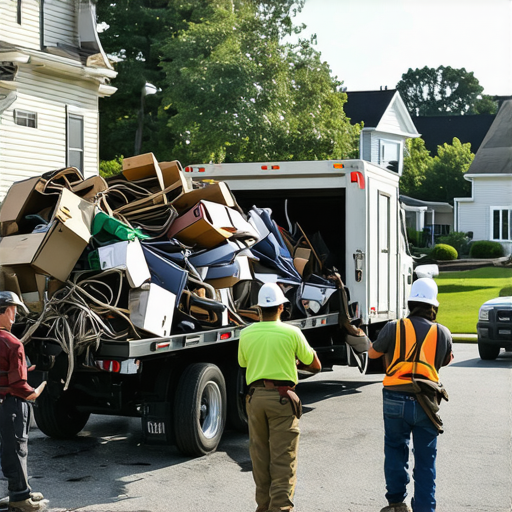
Junk Removal Aurora operations depend entirely on the volumetric efficiency of the truck pack, known in the industry as cubing out. To maximize the 15 to 20 cubic yards of a standard dump body, heavy items like old appliances must form the base layer while soft goods fill the interstitial voids. This minimizes air space and prevents the load from shifting during transport to the transfer station. The diesel engines in our heavy duty trucks are tuned for torque, not speed. They need to haul ten thousand pounds of debris through the residential streets of Aurora without straining the hydraulic lifts. We look at a pile of furniture and see a puzzle. That sofa doesn’t go in flat. It goes in on its end. The hollow spaces inside cabinets are filled with smaller debris. We eliminate the air. Air is expensive. You pay for the space you use, and my job is to make sure that space is dense. If I am hauling air, I am losing money and wasting fuel. The carbon footprint of a poorly packed truck is a logistical sin. We calculate the center of gravity for every load. A top heavy truck is a rollover risk on the highway. We keep the dense materials, like concrete or tile from a bathroom rip out, on the floor of the bed. We stack the lighter furniture on top. This is the science of the haul.
“Waste is merely a resource in the wrong place; professional removal is the science of putting it back where it belongs.” – Disposal Industry Maxim
Hidden hazards in a saturated environment
Appliance removal and electronic waste handling in hoarded homes involve navigating chemical leaks and pressurized vessels. Old refrigerators often contain R-12 or R-22 refrigerants that must be recovered by a certified technician to comply with EPA Section 608. In Aurora, simple disposal is illegal for these items due to the high risk of ozone depletion and groundwater contamination. We find things people forget they have. A car battery under a pile of clothes. A half used bottle of muriatic acid behind a stack of old TVs. These are the items that start truck fires. When the compactor blade hits a hidden lithium ion battery, the result is a thermal runaway that can consume a forty thousand dollar vehicle in minutes. We inspect every layer. We don’t just scoop. We sort. The process is slow but necessary. We categorize the debris into four main streams: recyclables, hazardous waste, donated goods, and true landfill trash. Most people think everything is trash. They are wrong. High grade scrap metal has value. Clean cardboard has value. Even old clothes can be shredded for insulation. The goal of a professional Aurora crew is to achieve a high diversion rate. We want to keep as much as possible out of the landfill.
The heavy cost of keeping everything
Furniture Removal in Aurora homes often reveals damage to the subfloor and drywall that has been hidden for years. Large sectional sofas and heavy oak wardrobes can weigh several hundred pounds, requiring specialized dollies and harness systems to navigate narrow hallways without causing further structural impact. The sheer mass of a hoarded home creates its own microclimate. Dust mites, mold spores, and rodent dander become concentrated. We wear P100 respirators not because we are afraid of smells, but because the particulate matter in these homes is toxic. The air is thick with history and decay. When we move a piece of furniture that hasn’t seen the light of day since 1994, we are often looking at a colony of organisms that have thrived in the dark. This is why professional clean outs are a health necessity. The ammonia levels from pet waste in a hoarded environment can reach levels that cause permanent lung damage. We use industrial fans to scrub the air while we work. We don’t just clear the space. We make it breathable again.
| Metric | Cubic Yard Pricing | Weight Based Pricing |
|---|---|---|
| Primary Factor | Total Volume Occupied | Actual Tonnage at Scale |
| Best For | Household Furniture, General Junk | Construction Debris, Dirt, Concrete |
| Cost Predictability | High for the Customer | Low until the Truck is Weighed |
| Aurora Standard | Common for Residential Calls | Required for Industrial Sites |
Local disposal laws and the RCRA
Junk Removal must follow the Resource Conservation and Recovery Act standards to ensure that toxic materials do not enter the municipal waste stream. Aurora residents must be aware that certain items require a manifest for disposal, particularly when dealing with commercial quantities of chemicals or medical waste. The law is clear about where your junk goes. If a hauler dumps your old paint cans in a forest, the EPA will trace them back to you. Your junk is your liability until it hits the scale at a licensed facility. We provide a paper trail. We show you exactly where every pound of your property went. Transparency is the only defense against the legal traps of the waste industry. Many people hire the cheapest guy with a trailer. That guy doesn’t have a commercial insurance policy. He doesn’t have a permit to haul hazardous materials. When he gets caught, you are the one the city comes after. We handle the paperwork. We handle the permits. We handle the risk.
“Effective solid waste management is the foundation of public health; without it, the urban environment cannot sustain itself.” – SWANA Technical Manual
Dumpster rentals versus full service crews
Dumpster Rentals Aurora options provide a stationary solution for DIY projects, but they lack the labor efficiency of a full service junk removal crew. A 10 yard dumpster has a weight limit that is easily exceeded by heavy materials like roofing shingles or dirt, leading to significant overage fees at the local transfer station. When you rent a bin, you are the labor. You have to lift every heavy sofa. You have to carry every box of old books. For a hoarder clean out, this is often impossible for the homeowner. The physical toll is too high. A full service crew can clear in four hours what would take a homeowner four weekends. We bring the muscles. We bring the strategy. We know how to pack a bin so that no space is wasted. A bin sitting in your driveway for two weeks is an invitation for neighbors to dump their own trash in it. Suddenly, you are paying to dispose of someone else’s mattress. Our trucks come, they load, and they leave. The job is done in a single day. The relief that provides to a family in crisis is immeasurable.
- Lead acid batteries from vehicles or backup power systems.
- Propane tanks and pressurized cylinders.
- Wet paint, solvents, and industrial thinners.
- Biohazardous materials and medical sharps.
- Asbestos containing materials from old renovations.
Environmental math of material recovery
While most people think recycling is always better, the carbon footprint of hauling low grade plastics 500 miles often exceeds the impact of local, high efficiency waste to energy incineration. In Aurora, we prioritize local processing centers that minimize the distance the debris travels, reducing the overall environmental impact of the clean out project. We look at the BTU potential of the load. Some things are better burned for power than they are recycled. High grade wood waste from old furniture can be turned into mulch or fuel pellets. Metals are melted down and reborn. The goal is a circular economy. We are the gatekeepers of that cycle. Every time we divert a ton of metal from the landfill, we save the energy required to mine new ore. It is a game of numbers. We track our diversion rates. We want that number to be as high as possible. It is good for the planet and it is good for business. Landfill tipping fees are rising. It is cheaper to recycle than it is to bury. The economics of the industry are finally aligning with the ethics of the environment.
Recovery steps for local properties
Garage Clean outs are the first phase of a full property recovery, as they provide the necessary staging area for sorting the contents of the main living spaces. In Aurora, the fluctuating temperatures can cause garage stored items to degrade rapidly, turning a simple storage space into a graveyard of ruined electronics and pest infested textiles. We start by clearing the perimeter. We create a zone for keep, a zone for donate, and a zone for trash. We use high visibility tape to mark these areas. Organization is the antidote to the chaos of a hoarded home. Once the garage is clear, we move to the basement. The basement is usually where the heaviest items are. We use stair climbing dollies to move old washing machines and heavy sleepers. We never work alone. We use a buddy system. One guy on the top, one guy on the bottom. Communication is key. We call out every move. The floor snapped once under a heavy load, but we were ready. We had reinforced the path. That is the difference experience makes. We anticipate the failure points before they happen.