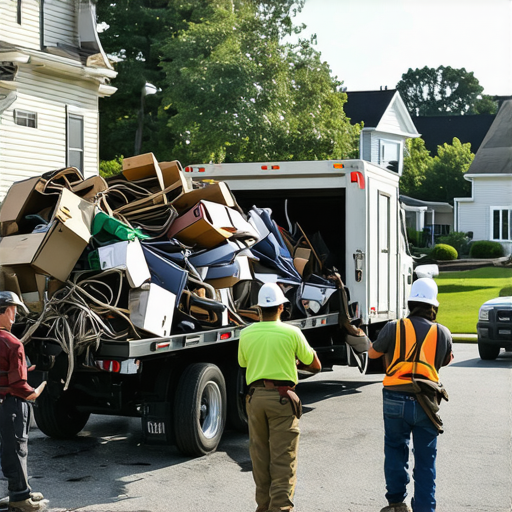

The structural autopsy of a cluttered life
Hoarder clean out aurora projects in 2026 are not merely about cleaning. They are forensic logistical operations where structural hazards, biological contaminants, and insurance liability intersect. I once cleared a house where the junk was not just stuff. It was a structural hazard. We found the floor joists were bowing under the weight of 40 years of newspapers that had absorbed ten years of basement humidity. The paper had become a solid block of cellulose and mold, weighing thousands of pounds more than the original architecture intended. This is the reality of extreme recovery. Every layer removed reveals a new logistical failure. The air in these spaces smells of diesel, stale rot, and the sharp tang of hydraulic fluid from the liftgate. When we pull a 15 yard container into a driveway on Tower Road, we are not just looking at a pile of trash. We are calculating the cubic yard density and the potential for the floor to snap under the weight of a two man crew. The logistics of the load are a science. We call it truck tetris. If you leave air space in the truck, you are losing money on every mile. Every cubic inch must be packed with the precision of a cargo vessel. The local Aurora tipping fees are rising, and the only way to stay profitable is to maximize the weight to volume ratio while adhering to the strict Resource Conservation and Recovery Act guidelines.
“Waste is merely a resource in the wrong place; professional removal is the science of putting it back where it belongs.” – Disposal Industry Maxim
Insurance coverage for hoarder clean out aurora cases
Insurance claims for a hoarder clean out aurora project in 2026 depend on the distinction between gradual neglect and sudden accidental loss. Most Aurora property insurance policies exclude damage caused by mold, vermin, or long term moisture, yet they may cover fire hazards or pipe bursts hidden beneath the debris. The adjusters look for the point of origin. If a refrigerator fails and leaks into a pile of clothes, the appliance removal and the surrounding junk removal might be part of the claim. If the house is simply full of 20 years of mail, that is on the owner. We document every square inch with high definition sensors before we move a single chair. This protects the homeowner from liability claims and ensures the insurance company sees the exact state of the structural load before remediation starts. In 2026, the Aurora municipal code has tightened. You cannot just leave this stuff on the curb. The city will fine you per day for nuisance violations. We coordinate with the adjusters to prove that the hoarder clean out aurora is a necessary step in mitigating further loss to the structure.
The chemical leaching of legacy junk
Hazardous waste removal within a garage clean outs operation requires the identification of lead acid batteries, mercury switches, and outdated pesticides. These items represent a significant environmental liability and cannot enter the general waste stream at the Denver Regional Landfill. When a battery casing cracks, the sulfuric acid leaches into the concrete. This is not just a stain. It is a chemical burn that can weaken the slab. We treat these zones like hazmat sites. The EPA has clear rules on the transport of these materials. If you hire a guy with a pickup truck, and he dumps those batteries in a ditch near Cherry Creek, the serial numbers or associated mail in that junk can lead the authorities right back to your front door. Your junk is your liability until it hits the scale and a manifest is signed. We focus on the BTU potential of recovered materials. Wood waste that is dry can be diverted to biomass plants. Metals go to the scrap yard. The rest, the true residue, is what we send to the landfill. This is how we maintain a high diversion rate.
| Material Type | Disposal Method | Aurora 2026 Priority |
|---|---|---|
| Ferrous Metals | Scrap Recycling | High Recovery |
| E-Waste | Certified Tech Recovery | Mandatory |
| General Household Junk | Landfill/Incineration | Low Priority |
| Bio-Hazard Material | Specialized Incineration | Critical Safety |
Aurora dumpster rentals and the street permit nightmare
Dumpster rentals aurora require a deep understanding of municipal right of way permits and pavement load limits. If you place a 20 yard bin on a public street in a neighborhood like Seven Hills without a permit, the Aurora Public Works department will issue a citation within 24 hours. The physics of a loaded dumpster are unforgiving. A bin full of shingles or concrete can weigh ten tons. Without proper wood planking beneath the steel rollers, that bin will sink into the asphalt on a hot July afternoon. This is why junk removal aurora services often prefer live load trucks. We pull up, we load, and we leave. There is no bin sitting on your driveway for a week. There is no risk of neighbors sneaking their own trash into your rented container overnight. We manage the cubic yardage on the fly. This avoids the wasted air space problem. If you rent a 30 yard bin and only fill it halfway, you are paying to transport the Colorado air. That is a logistical failure we do not tolerate.
- Lithium-ion batteries (Massive fire risk in trucks)
- Pressurized tanks like propane or oxygen
- Liquid paints and thinners
- Asbestos containing materials from old insulation
- Industrial grade chemicals or solvents
The physics of heavy load appliance removal
Appliance removal involves more than just muscle. It is a study in mechanical advantage and structural load limits. A 1970s era chest freezer in a basement is a 300 pound block of steel and Freon. Moving that up a flight of residential stairs requires a stair climbing dolly and an understanding of pivot points. If the technician does not calculate the swing radius on a landing, the appliance will put a hole through the drywall or, worse, snap a banister. We also have to consider the refrigerant recovery laws. In 2026, the fines for venting HCFCs into the atmosphere are astronomical. Every fridge we pull in Aurora is tagged and drained by a certified tech before the steel is baled. This is the difference between a professional crew and a couple of guys looking for beer money. We look at the BTU output of the old motors and the recycling value of the copper coils. It is all about the numbers on the back end.
“The Resource Conservation and Recovery Act (RCRA) creates the framework for the proper management of hazardous and non-hazardous solid waste, ensuring that today’s junk does not become tomorrow’s environmental disaster.” – Solid Waste Association of North America
Material recovery and the diversion rate math
Furniture removal is the most common task in a hoarder clean out aurora, but it is the most difficult to process efficiently. Modern disposable furniture is often made of particle board and formaldehyde resins. This material has almost zero recovery value. It cannot be mulched because of the glues, and it has poor BTU potential for incineration. We look for real wood. We look for metals. When we clear a garage clean outs site, we are sorting at the source. The goal is to minimize the tipping fee. In the waste industry, the scale house is where the profit is made or lost. If we bring a mixed load, we pay the highest rate. If we bring a clean load of sorted cardboard or metal, the rate drops. This is why we are obsessed with the tetris of the truck. We are not just hauling. We are material processors on wheels. The Aurora 2026 waste plan mandates a 40 percent diversion rate for commercial haulers. We hit that by knowing exactly where every piece of junk removal goes before it even leaves your property.
Reading this detailed breakdown of hoarder clean out logistics in Aurora really highlights how complex and multifaceted these projects are. It’s not just about clearing a space; it’s a forensic operation involving structural safety, environmental hazards, and legal compliance. I especially appreciated the emphasis on documenting every inch with high-def sensors—something I hadn’t considered before but makes perfect sense to avoid liability and insurance issues. From your experience, what are some common pitfalls homeowners overlook that can complicate insurance claims or safety protocols during such clean-outs? I’ve encountered situations where insufficient documentation led to delays and unexpected costs, so proactive planning seems essential. Also, I wonder how the city’s tighter municipal codes have changed the daily operations for cleanup crews—are there new permits or restrictions that significantly impact scheduling and logistics?