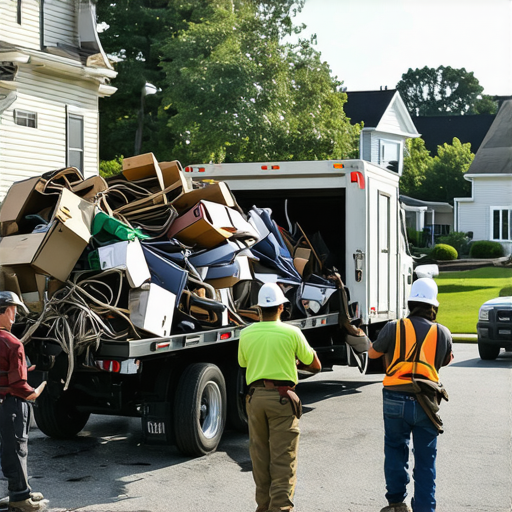

The structural weight of a lifetime
Aurora residents facing hoarding situations must prioritize safety, structural integrity, and legal disposal. A professional clean out involves site assessment, volume estimation, and hazardous material identification. Local ordinances require specific handling of e-waste and chemicals to prevent environmental fines and landfill contamination. I once cleared a house where the junk wasn’t just stuff. It was a structural hazard. We found the floor joists were bowing under the weight of 40 years of newspapers that had absorbed ten years of basement humidity. The paper turned into a solid, damp block of cellulose. It weighed three times what dry paper does. We had to shore up the basement with jacks before we could even start the haul. That is the reality of extreme hoarding. The smell of diesel and hydraulic fluid is a constant in my life, but nothing compares to the scent of compacted, decaying organic matter trapped under a layer of vintage furniture. When we approach a hoarder clean out in Aurora, we are not just movers. We are logistical surgeons. We evaluate the cubic yard density of every room. We calculate the static load on the floorboards. If you have a stack of magazines five feet high, you are looking at nearly 150 pounds per square foot. Most residential flooring is rated for 40 pounds per square foot of live load. This is a recipe for a catastrophic floor failure.
“Waste is merely a resource in the wrong place; professional removal is the science of putting it back where it belongs.” – Disposal Industry Maxim
The anatomy of a high-density Aurora hoarding site
Aurora hoarding clean outs require identifying structural risks, biohazards, and salvageable materials within a distressed property. Professional teams evaluate the load-bearing capacity of floors before removing massive accumulations. This process ensures the safety of the residents while following local waste management protocols for furniture and appliance disposal. When a house reaches a certain saturation point, the internal atmosphere changes. Humidity gets trapped. Dust mites multiply by the billions. We see e-waste hidden in the most unlikely places. A discarded CRT television from 1995 contains roughly four to eight pounds of lead. If that sits in a damp Aurora basement for a decade, the glass can leach. We do not just toss things. We categorize. We use the Tetris method of truck loading. A 15-yard dump truck has a footprint of roughly 12 feet by 8 feet. If you load it haphazardly, you are hauling 30 percent air. Air is expensive. We stack the heavy, flat items like old doors and tabletops along the walls of the truck. We crush hollow items. We fill the voids with smaller debris. This is how we keep your Junk Removal Aurora costs manageable. Every cubic inch of that truck bed represents a tipping fee at the transfer station. If we waste space, we waste your money. We also have to be wary of the structural load limits of residential stairs. Carrying a cast-iron radiator down a flight of stairs that has been weakened by termite damage or rot is a high-risk operation. We use specialized equipment, like motorized stair climbers and heavy-duty ramps, to mitigate these risks. This is the level of detail required for a professional garage clean out or a whole-home restoration.
Volumetric pricing versus the weight of the world
Junk removal costs in Aurora are primarily determined by the volume occupied in the truck and the weight of the debris. Heavy items like concrete or wet plaster increase tipping fees at local transfer stations. Understanding the difference between cubic yardage and tonnage helps residents budget for large clean outs. People often ask why a pile of old drywall costs more to remove than a pile of old chairs. It comes down to the scale. Most landfills in the Aurora area charge by the ton. A truck full of furniture might only weigh 1.5 tons, but a truck half-full of shingles or concrete can easily hit 5 tons. This is where the logistics manager’s obsession with density becomes a benefit. We have to balance the load. If we put too much weight over the rear axle of our truck, we risk a blowout or a fine from the Department of Transportation. We use a precise science of load distribution. We place the heaviest materials over the axles and the lighter items in the center. This ensures a safe transit to the Aurora transfer station. Dealing with appliance removal is another logistical puzzle. A refrigerator contains refrigerants like Freon or HFCs. You cannot just dump these. The Clean Air Act requires that these chemicals be recovered by a certified technician. If a curbside cowboy tells you he can take your fridge for twenty bucks, he is likely venting those gases into the atmosphere behind a local warehouse. That is a federal offense. Your junk is your liability until it hits the official scale and you receive a disposal receipt.
| Material Type | Average Weight per Cubic Yard | Typical Decomposition Time |
|---|---|---|
| Mixed Household Junk | 250 – 300 lbs | 20 – 50 years |
| Construction Debris | 400 – 600 lbs | Indefinite |
| Green Yard Waste | 300 – 500 lbs | 6 – 12 months |
| Dense Concrete/Dirt | 2,000+ lbs | Never |
Hazardous reality behind the drywall
Identifying hazardous materials is a mandatory step in any Aurora junk removal project to prevent environmental contamination and legal liability. Items such as lithium batteries, old paints, and chemical cleaners require specialized disposal paths. Professional haulers screen every load to comply with the Resource Conservation and Recovery Act standards. I have seen rookies lose their eyebrows because a customer hid a half-full propane tank inside a pile of harmless yard waste. We do not just lift. We inspect. Every single item. This is especially vital in hoarder clean outs where chemicals might have leaked and reacted over decades. Ammonia and bleach under a kitchen sink can create chloramine gas if the containers fail. We wear Respirators with P100 filters when entering high-density hoarding sites. We are looking for the four characteristics of hazardous waste defined by the EPA: ignitability, corrosivity, reactivity, and toxicity. Many Aurora homes contain old lead-acid car batteries in the garage. These are 99 percent recyclable, but if they are cracked, they are a major environmental hazard. We use specialized bins for transport to ensure no acid leaks into our trucks or onto your driveway. This is the difference between a professional junk removal service and a guy with a trailer. We follow the RCRA guidelines to the letter because the penalties for improper hazardous waste disposal can reach tens of thousands of dollars per day.
“The Resource Conservation and Recovery Act (RCRA) is our nation’s primary law governing the disposal of solid and hazardous waste. Proper management is not optional; it is a legal requirement for the protection of human health and the environment.” – EPA Compliance Handbook
Aurora transfer stations and the tipping fee trap
Local disposal in Aurora involves navigating municipal transfer stations and private landfills with varying fee structures. Tipping fees are calculated based on the material type and total weight of the load. Residents must be aware of restricted items and peak hours to avoid extra surcharges during a clean out. In the Aurora region, we deal with specific local realities. The wind off the plains means that every load must be tarped perfectly. If a single piece of plastic flies off a truck on the way to the landfill, it is a heavy fine. We also have to manage the timing. If we hit the transfer station at 4:00 PM, we might be sitting in a line of forty trucks, burning diesel and wasting time. We plan our routes to hit the scales during off-peak hours. This efficiency is passed on to the customer. When we talk about dumpster rentals Aurora, residents need to know about permit requirements. You cannot just drop a 20-yard roll-off container on a public street without a permit from the city. These permits often require reflective marking and specific placement to ensure emergency vehicles can pass. We handle these logistics so you do not have to. We also understand the specific diversion goals of the local waste management district. We aim for a high diversion rate, meaning we try to keep as much material out of the landfill as possible. Metals go to the scrap yard. Clean wood goes to the mulcher. E-waste goes to a certified R2 recycler. This is not just because it is good for the earth. It is because it often costs less to recycle these materials than to bury them in a landfill.
- Lithium-ion batteries (Massive fire risk)
- Pressurized tanks (Propane, oxygen, helium)
- Biohazardous waste (Medical needles, blood)
- Liquid chemicals (Gasoline, wet paint, pesticides)
- Radioactive items (Old smoke detectors in bulk)
The hidden physics of junk logistics
The physics of moving a heavy object out of a cluttered Aurora home is a matter of levers and force distribution. When we perform furniture removal, we are looking for the center of gravity. An old upright piano can weigh 800 pounds. If you tilt it the wrong way on a ramp, it becomes a runaway freight train. We use multi-point harness systems and high-friction flooring to maintain control. This is even more complex in a hoarder clean out aurora scenario where the path to the door is narrow and the floor is uneven. We often have to create a path of travel using sheets of plywood to distribute the weight of our dollies. This prevents us from breaking floor tiles or sinking into soft spots in the subfloor. We also consider the BTU potential of the waste we collect. In some regions, waste-to-energy plants incinerate junk to create electricity. While some think recycling is always better, the carbon footprint of hauling low-grade plastics 500 miles often exceeds the impact of local, high-efficiency waste-to-energy incineration. We stay informed on these data points to provide the most ethical disposal options for Aurora residents. Our goal is a clean space and a clear conscience for the homeowner. We handle the heavy lifting, the chemical screening, and the logistical Tetris. The floor snapped once during a job in a neighboring town. It was a warning shot. Since then, we never underestimate the weight of a hidden collection. We treat every clean out with the precision of a construction project and the compassion required for a sensitive life transition. This is the master engine of junk removal. We take the chaos and turn it into a manifest of sorted, weighed, and properly disposed materials.