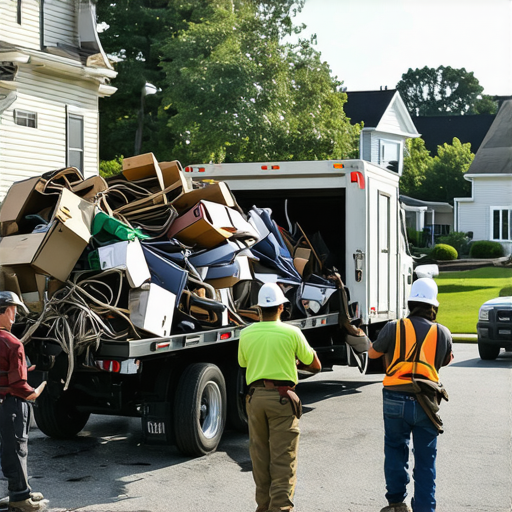

The Logistics of Living History: Navigating Hoarder Clean Out in Aurora
The smell of stale paper and hydraulic oil is the scent of progress. I have spent twenty-five years staring at mountains of accumulation that would break a normal person. I have seen the floor joists of 1920s bungalows in Aurora bowing under the weight of forty years of newspapers that had absorbed ten years of basement humidity. I once cleared a house where the junk was not just stuff. It was a structural hazard. We found the weight had actually compressed the internal wall studs by nearly an inch. That is the reality of waste management. It is about physics and density. When you hire a cheap hauler from a social media ad, they do not see the risk of a lead-acid battery leaking into your subfloor. They do not calculate the cubic yard density of a load to ensure the truck’s axles do not snap. Your junk is your liability until it hits the scale at the transfer station. In Aurora, the 2026 disposal regulations have only tightened the screws on who can haul what. This is not a weekend project. This is a tactical recovery operation.
The physics of the mountain
Hoarder clean out aurora requires understanding the physical density of the load and the structural integrity of the property. Professional crews assess the weight-to-volume ratio to prevent floor collapses. Managing these risks involves specialized equipment, PPE, and a strict adherence to local disposal ordinances in 2026. When we walk into a Level 5 hoarding situation, the first thing I look for is the angle of repose. This is the steepest angle at which a pile of granular material remains stable. For junk, that angle is dangerously unpredictable. A pile of old magazines can slide like a glacier. It can crush a technician in seconds. We look at the ‘tetris’ of the space. Every cubic foot of air is wasted money. My job is to maximize the density of the truck. If I am hauling air, I am losing profit. If I am hauling over-compacted wet debris, I am risking a fine at the Kane County weigh station. We calculate the bulking factor, which is the increase in volume of the material once it is disturbed from its packed state. A room that looks like it holds ten yards will often expand to fifteen yards once it hits the truck bed. This is why flat-rate quotes from amateurs always end in a mid-job price hike. They do not understand the math of expansion.
Aurora disposal laws for 2026
Disposal regulations in Aurora for 2026 emphasize material diversion and hazardous waste mitigation. Households must separate electronic waste and chemicals from general debris before it reaches the transfer station. Failure to follow these mandates results in significant tipping fee surcharges and potential legal liability for the property owner. The city has moved toward a high-efficiency waste-to-energy model. This means the incinerators are picky. You cannot toss a lithium-ion battery into a general dumpster anymore. That is a fire hazard that can burn a collection truck to the ground in minutes. We follow the Resource Conservation and Recovery Act (RCRA) guidelines to the letter. Every load we pull out of an Aurora garage is inspected for prohibited items. If we find hidden asbestos floor tiles or lead-based paint cans, the entire load is flagged. The legal chain of custody is paramount. You need a manifest that proves your waste was disposed of at a licensed facility like the Orchard Hills Landfill or a specialized recycling center in West Chicago. If your junk ends up in a ditch along Eola Road, the authorities will trace it back to you through your mail or documents. Your liability does not end at your curb. It ends at the scale house.
“Waste is merely a resource in the wrong place; professional removal is the science of putting it back where it belongs.” – Disposal Industry Maxim
The dumpster rental trap
Dumpster rentals Aurora residents often choose fail to account for permit requirements and driveway load limits. Placing a 20-yard bin on a hot asphalt driveway in July can cause thousands in structural damage. Professionals use protective planking and manage the logistics of live-loading to avoid these common residential hazards. Many families think a dumpster is the easy fix. They do not realize that a 20-yard bin filled with wet construction debris or dense household hoarding can weigh over five tons. The point-load pressure on those metal rollers will slice through your driveway like a knife through butter. Then there is the permit issue. In many Aurora neighborhoods, you cannot leave a bin on the street without a specific city permit and reflective marking. A live-load service is almost always better. We bring the truck, we fill it in two hours, and we leave. No eyesore. No neighbor complaints. No permits. We also eliminate the ‘midnight contributor.’ That is the neighbor who sees your empty dumpster and decides it is the perfect place for their old mattress and tires at 3:00 AM. You end up paying for their disposal fees. It is a logistical nightmare that we solve by simply moving the material immediately.
Garage clean outs as a tactical operation
Garage clean outs in Aurora often reveal the most hazardous materials, including volatile chemicals and heavy metals. Organizing these spaces requires a systematic approach to identifying recyclable metals versus landfill-bound waste. Effective garage clearing improves property value and eliminates hidden fire risks from stored combustibles. The garage is where the ‘curbside cowboy’ fails. They see a pile of old paint and think they can just hide it under some cardboard. I see a chemical spill waiting to happen. We categorize everything. We pull out the scrap metal, which has a recovery value. We separate the old tires, which require a specific recycling fee per unit. We identify the old lawn chemicals that have sat so long the containers are brittle. The garage is also where we find the most ‘dead air.’ Old shelving, half-broken workbenches, and empty boxes take up massive volume. We break everything down. We use reciprocating saws to dismantle oversized items so we can cube out the truck. A well-loaded truck looks like a solid block of material. If I can see the floor of my truck through the gaps in the junk, my team has failed the Tetris test. We aim for 95 percent density on every haul. This keeps costs down and efficiency up.
| Disposal Metric | Residential Grade | Industrial Grade | Recovery Potential |
|---|---|---|---|
| Cubic Yard Weight | 150-300 lbs | 500-1000 lbs | Low |
| Tipping Fee (Est) | $65-$95 | $110+ | High |
| Volume Expansion | 25% | 10% | Medium |
The ghost of the machine
Appliance removal involves handling refrigerants like Freon and heavy metals that are environmentally damaging if released. Aurora families must ensure that old refrigerators and air conditioners are decommissioned by certified technicians to comply with EPA Clean Air Act standards. When we pull an old freezer out of an Aurora basement, we are not just lifting weight. We are managing a pressurized system of chemicals. If you puncture a cooling coil, you are releasing ozone-depleting substances. We have the gear to move these 300-pound monsters without destroying your door frames or your back. We use specialized appliance dollies with treaded tracks for stairs. It is about leverage and center of gravity. Most people think they can move a washing machine with a friend. They forget that a top-loader has a concrete counterweight that can shift and throw you down a flight of stairs. We treat every appliance as a potential hazmat situation. We strip the cords for copper recovery and ensure the rest goes to a shredder that captures the gasses. This is the difference between a junk man and a waste strategist. One takes your money; the other protects your environment and your legal standing.
“The management of solid waste is a public health necessity that requires precision, engineering, and a commitment to the long-term safety of the community.” – SWANA Technical Guide
Checklist of forbidden materials
Before you call for a hoarder clean out aurora, you must identify these items. We cannot legally transport them in a standard haul.
- Lithium-Ion Batteries: These are high-density fire risks.
- Propane and Pressurized Tanks: Even if they feel empty, they are explosive hazards.
- Wet Paint and Solvent: These must be solidified with sawdust or kitty litter first.
- Biohazardous Waste: This includes medical needles and animal remains often found in hoarding sites.
- Ammunition and Explosives: We require a police escort for the disposal of old munitions.
- Asbestos-Containing Materials: Pipe insulation and old floor tiles require specialized abatement.
Furniture removal and the structural load
Furniture removal is the most common request but requires the most physical caution to avoid property damage. Modern particle board furniture often collapses during transit, while vintage oak pieces present extreme weight challenges. Managing these removals involves systematic dismantling and heavy-lift logistics. People underestimate the weight of a sleeper sofa. It is a 250-pound steel mechanism wrapped in wood and fabric. If you try to move that through a narrow Aurora hallway without knowing the pivot points, you will put a hole in the drywall. We use the ‘Goldilocks’ approach. We do not want to move things whole if they are just going to be destroyed, but we also do not want to create a mess of a thousand pieces. We use shoulder dollies and furniture sliders to move heavy armoires. This protects the hardwood floors from gouging. The cheap furniture of today, that flat-pack stuff, is actually more dangerous when it breaks. It snaps into sharp, jagged pieces that can slice through a glove in a second. We treat every piece of furniture as a logistical puzzle. We measure the clearances. We check the weight. We load the heavy items at the front of the truck over the axle to maintain vehicle stability. This is the science of the load. Every piece has a place.
The heavy cost of keeping everything
The carbon footprint of hauling low-grade plastics 500 miles often exceeds the impact of local, high-efficiency waste-to-energy incineration. While most people think recycling is always better, the logistical reality is more complex. In Aurora, we prioritize local recovery to minimize the diesel burn. Every mile our trucks travel adds to the cost and the environmental impact. When we perform a hoarder clean out, we are trying to undo years of inefficient accumulation. We are restoring the flow of the property. A cluttered house is a stagnant system. We bring the movement. We bring the resolution. Families in Aurora need to understand that 2026 is the year of accountability. You cannot just hide your waste anymore. You need a partner who understands the tipping fees at the Environmental Recycling and Disposal center. You need someone who knows the difference between a 15-yard and a 20-yard load by sight. You need the expertise that comes from thousands of tons of experience. The floor snapped once under my feet. I never let that happen again. We check the joists. We check the loads. We clear the space. We do it right because in this industry, a mistake is not just a mess. It is a disaster.