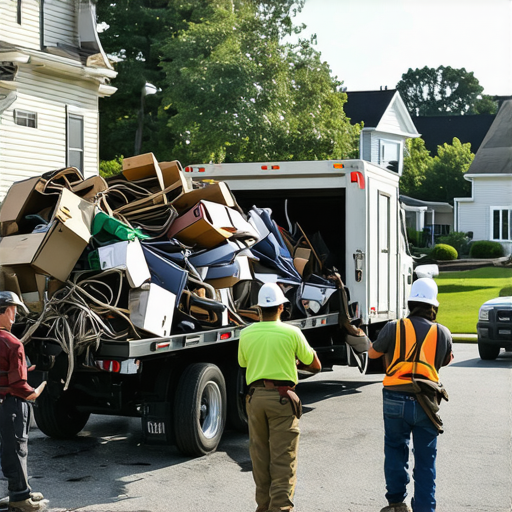

The structural threat of stacked cellulose
Hoarder clean out Aurora projects require a deep understanding of weight distribution and structural integrity because accumulated materials like paper and textiles absorb moisture from the Illinois humidity. These collections can weigh thousands of pounds and create significant downward pressure on residential floor joists. A professional team must assess the load before the first box is moved to prevent a localized collapse. I once cleared a house where the junk was not just stuff. It was a structural hazard. We found the floor joists were bowing under the weight of 40 years of newspapers that had absorbed ten years of basement humidity. The paper had turned into a solid, moldy block of leaden weight. We had to shore up the basement with jacks before we could safely extract the load. This is the reality of waste management. It is not just about lifting. It is about physics. Every cubic foot of space in an Aurora home can hold roughly thirty pounds of loose debris. When that debris is compressed by decades of gravity, that number triples. You are no longer dealing with a garage clean out. You are dealing with a logistical recovery operation. The floor snapped. We heard it. We paused. This is why amateurs fail. They do not see the math of the pile. They only see the trash.
“Waste is merely a resource in the wrong place; professional removal is the science of putting it back where it belongs.” – Disposal Industry Maxim
The math of the fifteen yard bin
Determining the correct dumpster rentals Aurora size involves calculating the total volume of the hoard and the specific gravity of the primary materials involved. A 15-yard dumpster is often the sweet spot for Aurora driveways but requires expert packing to avoid air pockets that waste money. You must cube out the truck. This means placing flat items on the bottom and heavy appliances at the front. Junk removal Aurora crews use a tetris method. We break down furniture. We stomp down soft goods. We maximize the density of every load. The goal is to reach the weight limit exactly as the volume limit is met. If you hit your weight limit with the bin only half full, you are paying for empty air on the next trip. If you overfill it, the driver cannot legally tarp the load. The Illinois Department of Transportation is strict on the Fox River bridges. A single loose piece of plywood can cost a company thousands in fines. We do not take those risks. We pack with precision. We use every inch of the steel box. This is how we keep costs down and safety up.
| Material Type | Typical Weight per Cubic Yard | Disposal Difficulty Level |
|---|---|---|
| Loose Household Trash | 250 lbs | Low |
| Compacted Newspapers | 1,000 lbs | High |
| Construction Debris | 1,500 lbs | Medium |
| Wet Yard Waste | 600 lbs | Medium |
| Old Appliances | 300 lbs per unit | High |
Legal hazards of the amateur haul
Furniture removal and junk removal Aurora services must adhere to strict environmental protection standards to avoid secondary liability for the property owner. Your junk is your liability until it hits the scale and a manifest is signed. Hiring a person with a truck who lacks a commercial license is a gamble. If they dump your old sofa in a Kane County forest preserve, the authorities will find your mail in the cushions. They will knock on your door. Professional junk removal provides a paper trail. We use licensed transfer stations in West Chicago and Batavia. We pay the tipping fees. We follow the Resource Conservation and Recovery Act. This act governs how we handle everything from old cathode ray tube televisions to the chemical sludge in the bottom of a hoarder pile. We do not skip steps. The law is there for a reason. It prevents lead and mercury from entering the Fox River watershed. When you hire professionals, you are buying legal peace of mind. You are ensuring that your old life does not become a new environmental crime.
Biohazards in the domestic waste stream
Hoarder clean out Aurora operations frequently uncover biological risks including rodent droppings, mold spores, and expired medications that require specific PPE. We wear N95 masks at a minimum. Sometimes we wear full Tyvek suits. The air inside a closed hoard is thick with particulates. One disturbed stack of magazines can release millions of spores into the lungs of an unprotected worker. We also watch for sharps. Diabetics often lose track of needles in the clutter. A single needle stick can end a career. We use puncture resistant gloves. We use long handled rakes. We never reach where we cannot see. This is the difference between a cleaning lady and a waste specialist. We treat the hoard like a hazmat site because it often is one. The smell of ammonia from cat urine is not just unpleasant. It is a respiratory irritant. We ventilate the space. We use industrial fans. We make the environment workable before we move the first ton of material.
- Wet Paint or Solvents
- Automotive Lead Acid Batteries
- Propane Tanks and Pressurized Cylinders
- Tires with Steel Rims Still Attached
- Large Quantities of Unbound Asbestos
- Medical Waste and Biohazard Containers
- Electronic Waste like CRT Monitors
Aurora waste disposal permits and local logic
Navigating the local ordinances for a garage clean out or appliance removal in Aurora requires knowledge of the specific municipal bulky item schedule. The city has rules. Some items go to the curb. Most items in a hoard do not. You cannot put fifty bags of trash on the curb and expect the city to take them. They will leave them there. They will fine you. We bypass the municipal system by using private transfer stations. We know the hours of the Orchard Hills Landfill. We know which stations take e-waste for free and which ones charge by the pound. Aurora has historic districts where the streets are narrow. A 20-yard roll-off will block the road. You need a permit from the city to put a bin on the street. Or you need a live load service. This is where we keep the truck running and load it in under two hours. It is fast. It is efficient. It avoids the permit headache. It keeps the neighbors happy. It keeps the project moving. Speed is a safety factor. The less time we spend in a hazardous structure, the better.
“Proper waste management is the first line of defense in urban public health; it is the invisible infrastructure of a functional city.” – Solid Waste Association of North America (SWANA)
The afterlife of an old appliance
Appliance removal is more than just heavy lifting; it is a process of reclamation where refrigerants must be recovered according to EPA Section 608. You cannot just throw a fridge in a dumpster. It contains freon. That freon destroys the ozone. We use certified technicians to drain the gases. Then we scrap the metal. A washing machine is mostly steel. It has value. We separate the metals from the general trash. This is called diversion. We want to keep as much out of the landfill as possible. High diversion rates are the mark of a pro. We look for copper. We look for aluminum. We look for anything that can be melted down and reused. This reduces the tipping fee at the dump. It saves the customer money. It saves the planet. While most people think recycling is always better, the carbon footprint of hauling low-grade plastics 500 miles often exceeds the impact of local, high-efficiency waste-to-energy incineration. We choose the most efficient path for every item. We do not just dump. We distribute.
The heavy cost of keeping everything
The financial reality of hoarding remediation is dictated by the total weight of the collection and the labor hours required for safe extraction. People underestimate the volume. They think it is a few truckloads. It is usually ten. Each truckload has a cost. There is the fuel. There is the labor. There is the tipping fee. There is the insurance. We price by the fraction of the truck. If you fill a quarter, you pay for a quarter. In a hoarding situation, we almost always fill the whole truck. Multiple times. The process is slow. We have to sort through the trash to find valuables or documents. We found a wedding ring in a pile of old milk cartons once. We found a stack of cash inside a hollowed out book. We look for these things. We do not just shovel. This takes time. Time is money. But losing a family heirloom is more expensive. We balance speed with care. We get the job done. The house is empty. The air is clear. The diesel smell fades as we drive away. The tetris is complete. The load is secure. Another property recovered. Another hazard neutralized. The physics of waste management never lies. We just manage the truth of the pile.