
The invisible weight of a lifetime
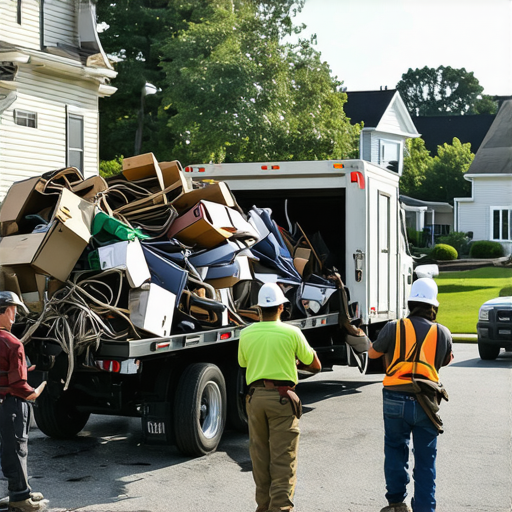
Hoarder Clean Out Aurora requires specialized logistics to handle extreme volume while maintaining safety. Finding support for loved ones involves identifying structural hazards, mold contamination, and fire risks. Professional junk removal teams utilize high-capacity trucks and proper PPE to clear residential spaces without damaging the building foundation or health.
I once cleared a house where the junk wasn’t just stuff. It was a structural hazard. We found the floor joists were bowing under the weight of 40 years of newspapers that had absorbed ten years of basement humidity. The air smelled of diesel from our trucks and the sickly sweet scent of fermenting cellulose. Every step on those stairs was a calculated risk. The physics of hoarding is a study in static load. When paper becomes a solid block, it exerts hundreds of pounds per square foot. This is why you do not just hire a neighbor. You hire a strategist who understands the load limits of a suburban Aurora home. We look at the joists. We check for load-bearing failure. We understand that a clean out is an engineering project disguised as a cleaning job.
Aurora landfill protocols and the ethics of disposal
Junk Removal Aurora services must adhere to Illinois EPA standards regarding solid waste management. Transfer stations like the Groot facility on Butterfield Road manage the diversion of recyclable materials from landfills. Effective disposal involves sorting wood, metal, and masonry to maximize the diversion rate and minimize tipping fees for homeowners in the Kane County area.
The logistics of waste in Northern Illinois are complex. You cannot simply throw everything into a hole. We track the tipping fees at the Orchard Hills Landfill. We monitor the diversion rates at local transfer stations. Professional hauling means knowing that your heavy metal waste goes to a different stream than your organic debris. If you mix your pressure-treated lumber with your scrap iron, you are creating a sorting nightmare that raises costs for everyone. The science of putting waste where it belongs is the only way to keep our local water tables safe from leaching chemicals. We see the impact of illegal dumping in the Fox River. It starts with one person trying to save twenty dollars. It ends with lead and mercury in the local ecosystem. We prevent that through strict manifest tracking.
“Waste is merely a resource in the wrong place; professional removal is the science of putting it back where it belongs.” – Disposal Industry Maxim
The math of the fifteen yard bin
Dumpster Rentals Aurora provide the volumetric capacity needed for large scale residential clearing projects. A standard fifteen yard dumpster holds approximately four to five pickup truck loads of debris. Calculating the density of your waste is vital to avoid overweight penalties at the scale house which often exceed the initial rental price.
Density is the silent killer of budgets. A dumpster full of drywall weighs significantly more than a dumpster full of empty cardboard boxes. We use volumetric pricing because it is the only fair way to account for the space a load occupies in the truck. If I fill a 15-yard truck with old mattresses, the weight is low but the volume is maxed. I cannot put anything else in that truck. That is called cubing out. If I fill the same truck with concrete, the truck will hit its gross vehicle weight rating before the bed is even a quarter full. We call that weighing out. Professional logistics managers must balance these two factors every single day. We look at a garage clean out and see a puzzle. The heavy items go on the floor over the axles. The light items go on top. We eliminate air pockets. Air is the most expensive thing to haul. We do not charge to haul air.
| Material Type | Decomposition Time (Estimated) | Diversion Potential |
|---|---|---|
| Corrugated Cardboard | 2-3 Months | High (90%+) |
| Untreated Pine Wood | 1-3 Years | High (Mulching) |
| Standard Aluminum Cans | 80-200 Years | Extreme (Infinite) |
| Low-Density Polyethylene | 500-1000 Years | Low (Chemical Burn) |
| Glass Bottles | 1 Million Years | Medium (Weight Cost) |
Hazardous reality beneath the kitchen sink
Appliance removal and household hazardous waste disposal require strict adherence to the Resource Conservation and Recovery Act. Items like old refrigerators contain ozone-depleting refrigerants that must be recovered by certified technicians. Aurora residents must separate paints, solvents, and pesticides to prevent volatile organic compounds from entering the soil.
I watched a rookie almost lose his eyebrows because a customer hid a half-full propane tank inside a pile of harmless yard waste. We do not just lift. We inspect. Every. Single. Item. The chemical reality of a kitchen clean out is terrifying. You have bleach mixed with ammonia based cleaners. If those bottles break in the back of a packer truck, you create chloramine gas. That is a lethal logistical error. We treat every under-sink area as a potential hazmat zone. We verify labels. We check for leaks. If we find an unlabeled container, it goes into a secondary containment bin. This is the difference between a haul and a professional remediation. We understand the BTU potential of recovered wood, but we also understand the toxicity of lead-acid batteries. One battery can contaminate an entire load of recyclable metal. We pull them out. We isolate the risk.
- Lithium-ion batteries (Extreme fire risk)
- Propane tanks or pressurized cylinders
- Aerosol cans with residual product
- Lead-based paint chips or wet paint cans
- Fluorescent light tubes containing mercury
- Old gasoline or automotive fluids
- Biohazardous materials or medical waste
Why the neighborhood guy is a liability trap
Junk Removal professionals provide insurance and workers compensation that protect the homeowner from legal claims. Hiring an unlicensed hauler exposes the property owner to lawsuits if an injury occurs on-site or if the waste is found at an illegal dump site. Your liability as a generator of waste lasts until the final disposal receipt is issued.
A business owner tried to save 500 dollars by hiring a guy with a pickup truck from a social media ad. Two weeks later, the police called him because his company’s confidential files were found in a ditch. Your junk is your liability until it hits the scale. This is a fact of waste law. If that guy with the truck hurts his back on your stairs, you are the one paying the medical bills. We carry a million dollars in general liability. We have workers comp. We have a DOT number. We operate in the light of the law. The curbside cowboys operate in the shadows. They dump in the forest preserves to avoid the 75 dollar a ton tipping fee. When the local authorities find your name on a piece of mail in that pile, you are the one getting the fine. It is not worth the risk. The price of professional disposal includes the price of your peace of mind.
“The Resource Conservation and Recovery Act ensures that the generator of waste remains responsible for its ultimate fate, regardless of who hauls it.” – EPA Regulatory Overview
The precise science of furniture breakdown
Furniture Removal in Aurora involves the systematic disassembly of large items to optimize truck space. Modern composite furniture often has lower structural integrity than antique solid wood, requiring different handling techniques during a clean out. Breaking down sofas and desks reduces the volumetric footprint and allows for more efficient loading.
Modern disposable furniture is a plague on the logistics industry. It is made of sawdust and glue. If you look at it wrong, it snaps. But when it is whole, it takes up 40 cubic feet of space. We carry saws, drills, and mallets. We turn a massive sectional sofa into a flat stack of components. This is how we save our customers money. We don’t just throw a whole couch in the truck and call it a day. We strip the fabric if it is soiled. We separate the metal springs from the wooden frame. We recover the steel. Steel is heavy, but it is valuable. The wood goes to the brush pile. By the time we are done, that 40 cubic feet of furniture is 10 cubic feet of dense material. That is the tetris of the load. Every cubic inch we save is money back in the pocket of the Aurora family we are helping. We are not just movers. We are volume reduction specialists.
E-waste and the circuit board graveyard
Garage Clean outs frequently uncover piles of obsolete electronics that require specialized recycling paths. Illinois law prohibits electronics like televisions, monitors, and computers from being placed in landfills. These items contain heavy metals like cadmium and hexavalent chromium that necessitate a closed-loop recycling process.
The garage is where electronics go to die. We find CRT monitors from the nineties buried under piles of damp cardboard. Those monitors are glass boxes filled with lead. If they break, the lead dust becomes airborne. We handle e-waste with gloves and masks. We transport it to specialized Kane County recycling events or certified e-waste processors. While most people think recycling is always better, the carbon footprint of hauling low-grade plastics 500 miles often exceeds the impact of local, high-efficiency waste-to-energy incineration. We look for the most efficient path. Sometimes that means the local metal scrapper. Sometimes it means the high-tech shredder in Chicago. We track the market prices for copper and gold. Your old motherboard is a tiny mine of precious metals. We make sure those metals go back into the supply chain instead of the ground.
The logistics of empathy in local cleanouts
Finding support for loved ones during a hoarder clean out involves balancing emotional needs with physical safety. The process must be methodical to avoid overwhelming the individual while still meeting the deadlines for property restoration or sale. Clear communication and a predefined disposal plan are essential for success.
We don’t just see junk. We see the history of a life. When we do a clean out in Aurora, we are often working with families who are at their breaking point. The logistics are the easy part. The empathy is the hard part. We set clear goals. We say we will clear the hallway today. That is a tactical objective. We don’t look at the whole house at once. That leads to paralysis. We move one box at a time. We sort for valuables. We find the lost wedding rings and the old photos buried under the mountains of clutter. We are the bridge between a dangerous environment and a safe home. We bring the trucks, the bins, and the muscle. But we also bring a plan. A clean out is not an event. It is a process. We manage that process from the first cubic yard to the final sweep of the floor. The dust settles. The trucks roll away. The space returns. That is the mission.