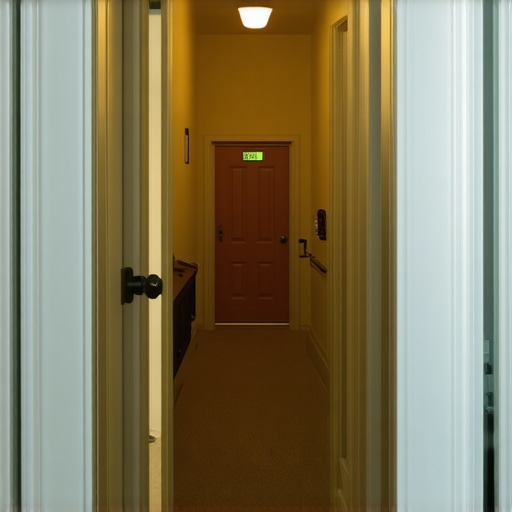
I once cleared a house where the junk wasn’t just stuff. It was a structural hazard. We found the floor joists were bowing under the weight of 40 years of newspapers that had absorbed ten years of basement humidity. In Aurora, the temperature swings from sub-zero winters to humid summers turn hoarded paper into a literal sponge. That weight doesn’t just sit there. It pushes. It warps. It turns a home into a tomb before the first spark even hits a frayed wire. My boots crunched on shattered glass and petrified organic matter. The smell of hydraulic fluid from the truck outside was the only thing keeping me grounded as we mapped the egress points. The owner had less than six inches of clearance in the main hallway. If a fire started in the kitchen, that hallway would have become a furnace with no escape. This is not just cleaning. This is a tactical extraction to restore life safety codes in a residential environment.
The physics of a blocked exit
A blocked fire exit in a hoarding situation creates a lethal bottleneck where seconds determine survival. In Aurora, residential codes require clear paths of at least 36 inches to allow emergency responders entry and residents egress. Furniture removal and junk removal experts prioritize these zones to mitigate immediate life safety risks. When a room reaches a certain density of combustible material, the flashover point occurs significantly faster than in a standard living space. We look at the British Thermal Units (BTUs) of the materials present. A stack of dry-rotted sofas and magazines represents a massive energy potential. If those items obstruct a window or a door, they do not just block the way. They feed the fire exactly where you need to be moving. Our team focuses on the primary and secondary egress routes first. We identify the structural load limits of the stairs. We calculate the volume of debris to ensure we do not overload the truck axles while maintaining a rapid pace of removal. Speed is the priority when a home is one spark away from a catastrophe.
“Waste is merely a resource in the wrong place; professional removal is the science of putting it back where it belongs.” – Disposal Industry Maxim
Why your garage clean outs fail the density test
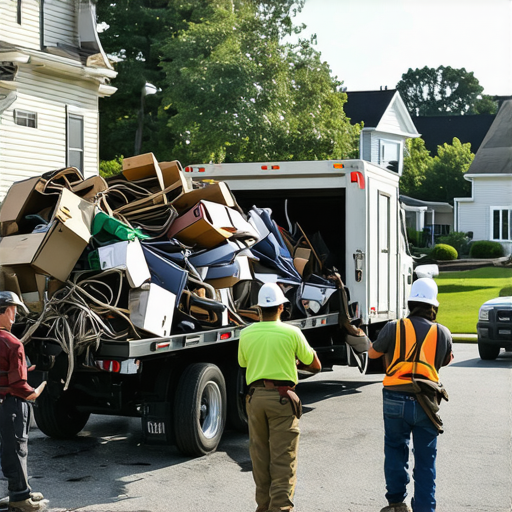
Garage clean outs often fail because homeowners underestimate the cubic yardage of mixed debris. Efficient junk removal Aurora services calculate load density by stacking heavy items like appliance removal units at the bottom and lighter furniture removal pieces on top. This maximizes truck space and reduces the number of trips required. Air is the enemy of a logistics manager. If I see a truck bed with gaps between the boxes, that is wasted money and wasted time. We practice what we call the Tetris Method. This involves breaking down cardboard, nesting smaller items inside larger hollow containers, and ensuring the load is level. In Aurora, wind speeds can be high, so an uneven load is a safety risk during transport to the transfer station. We use heavy-duty poly tarps and ratchet straps that have a break strength of at least 3,000 pounds. A garage is often the staging ground for a hoarder clean out Aurora project, but it quickly becomes a graveyard of half-finished projects and hazardous chemicals that require specialized handling.
The hidden weight of furniture removal
Furniture removal requires assessing structural integrity before movement to prevent injury or property damage. Old particle board furniture absorbs moisture and becomes brittle, often shattering during extraction. Professional junk removal teams use dollies and straps to distribute weight across load-bearing floor sections, especially in multi-story Aurora homes. Real wood like oak or mahogany is heavy, but it is predictable. The modern medium-density fiberboard (MDF) used in cheap furniture is a nightmare. Once it gets damp in a Fox Valley basement, it loses all structural bond. You go to lift a wardrobe and the bottom falls out. This creates a mess of sawdust and glue that is difficult to sweep and can irritate the lungs. We wear N95 respirators or P100 masks depending on the level of mold and dust. We also track the weight. A standard 15-yard dumpster has a weight limit. If you fill it entirely with water-logged MDF and old mattresses, you will exceed the 4-ton limit and face heavy overage fees at the scale.
| Material Type | Disposal Method | Relative Cost per Ton |
|---|---|---|
| General Household Junk | Transfer Station | Moderate |
| E-Waste (TVs, CPUs) | Recycling Center | High |
| Clean Fill (Dirt/Brick) | Specialized Landfill | Low |
| Appliances (Freon) | EPA Certified Handler | Premium |
Aurora transfer stations and the reality of tipping fees
Aurora transfer stations charge based on weight and material type, making sorting essential for cost control. Dumpster rentals Aurora residents use often carry strict weight limits because of local road weight restrictions. Heavy debris like concrete or roofing shingles must be separated from general household junk removal items to avoid massive surcharges. I have spent thousands of hours at the scales on High Street. The attendants know my trucks. They know that if I have a load of mixed municipal solid waste, it is packed tight. The tipping fee is the gatekeeper of the industry. If you do not understand the difference between a 10-yard and a 20-yard dumpster in terms of weight capacity, you are going to lose your shirt. A 20-yard dumpster can hold a lot of furniture, but if you fill it with dirt from a landscaping project, the truck won’t even be able to lift it. The hydraulics will hiss and fail. In Aurora, we also have to account for the seasonal changes in waste volume. Spring cleaning leads to longer lines at the transfer station, which increases our hourly labor costs. Efficiency in loading is the only way to keep prices stable for the customer.
“The Resource Conservation and Recovery Act (RCRA) creates the framework for the proper management of hazardous and non-hazardous solid waste.” – EPA Regulatory Summary
Appliance removal and the hazard of refrigerants
Appliance removal involves strict adherence to environmental laws regarding Chlorofluorocarbons (CFCs) and Hydrofluorocarbons (HFCs). In Aurora, illegal disposal of refrigerators or air conditioners can result in significant EPA fines because of the ozone-depleting substances contained within the cooling coils. Professionals must verify that units are drained by certified technicians. You cannot just throw a fridge in a hole. The compressor contains oil and refrigerant that must be recovered. We see people try to bypass this by cutting the lines themselves. That is a federal crime and a local environmental disaster. When we handle appliance removal in Aurora, we secure the doors with duct tape or zip ties to prevent any chance of a child or pet getting trapped. We use specialized appliance dollies with stair-climbing treads. A standard refrigerator can weigh 300 pounds. A commercial-grade freezer can hit 600 pounds. If you do not have the right leverage, you will destroy the customer’s hardwood floors or snap a tendon. We calculate the center of gravity before the first tilt. It is physics, not just muscle.
- Lead-acid batteries (found in old cars or backup power systems)
- Propane tanks (even if they feel empty)
- Aerosol cans that are not completely depleted
- Oil-based paints and chemical solvents
- Biohazardous waste or medical sharps
- Fluorescent light tubes containing mercury
The heavy cost of keeping everything
The psychological weight of a hoarded home is matched only by the physical tonnage of the debris. Junk removal services often act as the first step in a behavioral health intervention by creating a safe living environment. In Aurora, we collaborate with local code enforcement to ensure properties remain habitable and do not face condemnation. While most people think recycling is always better, the carbon footprint of hauling low-grade plastics 500 miles often exceeds the impact of local, high-efficiency waste-to-energy incineration. This is a hard truth. Sometimes, the most ecological thing you can do with contaminated, moldy junk is to send it to a modern, lined landfill or a waste-to-energy plant where it can be converted into electricity for the local grid. We focus on high-value recovery first. Scrap metal, clean cardboard, and untreated wood. The rest is about volume reduction. Every cubic inch we save in the truck is a cubic inch of diesel saved on the road. We are logistics experts who happen to carry heavy things. We see the flow of materials from the living room to the sorting floor to the final disposal site. It is a cycle that keeps the city of Aurora clean and the residents safe from the fire hazards that hide in the shadows of clutter.