The anatomy of a structural load hazard
Hoarder clean out Aurora operations require a forensic understanding of structural integrity and load-bearing limits to prevent floor collapse during debris removal in 2026. Professional crews in Illinois must identify high-density materials like saturated paper and aged textiles that exceed the original engineering specifications of residential flooring systems.
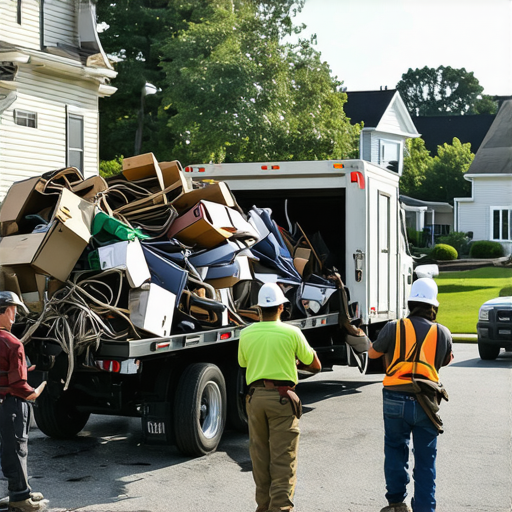
The truck hummed. It was a Tuesday in Aurora, near the old industrial corridor where the houses are solid but the foundations are tired. I once cleared a house where the junk wasn’t just stuff. It was a structural hazard. We found the floor joists were bowing under the weight of 40 years of newspapers that had absorbed ten years of basement humidity. The paper had turned into a solid block of cellulose, weighing nearly 200 pounds per cubic foot. Every step we took sounded like a gunshot from the wood grain snapping under the pressure. This is the reality of severe hoarding. It is not about a messy room. It is about the physics of mass and the inevitable failure of building materials. When you deal with junk removal in Aurora, you are dealing with the legacy of the Midwest, high humidity, varying temperatures, and the slow decay of organic matter trapped under piles of plastics. We do not just walk in and grab bags. We calculate the center of gravity of the pile. We look for the mold spores that thrive in the microclimates created between the wall and the stack. In 2026, the standards for recovery have shifted. We no longer just haul to a landfill. We categorize by material density and potential for reuse or hazardous waste mitigation. The smell of hydraulic fluid from the liftgate is the only thing that masks the scent of wet rot. Logistics is the only way out of a mess this deep.
“Waste is merely a resource in the wrong place; professional removal is the science of putting it back where it belongs.” – Disposal Industry Maxim
The physics of the fifteen yard bin
Junk removal Aurora logistics revolve around the volumetric efficiency of the fifteen yard dumpster, which is the gold standard for residential clean outs due to its footprint and weight capacity. These containers allow for precise sorting of heavy appliances and furniture removal while maintaining compliance with local street permit regulations.
Space is the most expensive commodity in a waste management truck. When a customer sees a pile, they see memories. I see air. My job is to eliminate the air. We use a technique called cubing out. You place the heavy, flat items like old mattresses or dismantled furniture removal pieces at the bottom. Then you layer. You fit the smaller debris into the gaps. If you leave a gap the size of a basketball, you are losing money. In Aurora, the cost of tipping fees at regional transfer stations has climbed. You cannot afford to haul air. The hydraulic systems on a modern packer truck can crush a wooden sofa into a third of its size, but you have to be careful. If you mix the wrong materials, you ruin the recycling stream. We look at a garage clean out as a Tetris puzzle. If the pieces do not lock, the load shifts. A shifting load is a dangerous load on the I-88. We aim for a density of at least 350 pounds per cubic yard for mixed residential waste. Anything less is a failure of logistics. [image_placeholder] The process requires a disciplined approach to movement. We do not move an item twice. It goes from the pile to the truck in one motion. Efficiency is the only way to keep the costs down for the homeowner while maintaining the safety of the crew.
Why Aurora transfer stations have strict intake rules
Local Aurora waste disposal protocols are governed by the Resource Conservation and Recovery Act and specific Illinois environmental mandates that prohibit the mixing of hazardous household waste with general municipal loads. Transfer stations on Sard Road and nearby facilities enforce strict inspections to prevent groundwater contamination and landfill fires.
The scale house operator is the judge of your day. If you roll up with a hidden stash of lead-acid batteries or half-empty cans of oil-based paint, they will turn you around. It is not just about being difficult. It is about the chemistry of the landfill. When you compact a load that contains hidden chemicals, the pressure can rupture containers. This creates a leachate cocktail that can bypass liner systems. In Aurora, we have to be particularly careful about the soil quality near the Fox River. We do not take chances. We inspect every pile for the tell-tale signs of hazardous materials. This includes old CRT monitors from the 1990s which contain pounds of lead or the lithium batteries found in modern toys. These batteries are the nightmare of the industry. One punctured lithium cell can ignite a fire that burns at 1,000 degrees inside the truck. That is why we do not allow curbside cowboys to handle these jobs. They dump, they run, and the community pays the price. Our crews are trained to spot the hazard before it hits the hopper. We maintain a manifest for every load. We know where it came from and exactly where it is going.
| Material Type | Weight per Cubic Yard | Decomposition Time | Disposal Strategy |
|---|---|---|---|
| Wet Cellulose/Paper | 400-600 lbs | 2-5 Years | Compost/Landfill |
| Mixed C&D Debris | 350-500 lbs | 50+ Years | C&D Recycling |
| Softwood Furniture | 150-250 lbs | 10-15 Years | Biomass Fuel |
| Low-Density Plastic | 50-100 lbs | 450+ Years | Chemical Recycling |
The hidden chemical cocktail under the sink
Appliance removal and household hazardous waste management in Aurora require specialized handling of refrigerants, heavy metals, and caustic cleaning agents to meet 2026 environmental safety standards. Identifying these substances early in a hoarder clean out prevents toxic exposure to the occupants and the remediation team.
The kitchen is often the most dangerous room in a hoarder clean out. It is not because of the clutter, but because of what is hidden in the dark, damp spaces. We find cleaners from three decades ago. The labels have peeled off. The plastic bottles have become brittle and are weeping liquid. When you mix bleach with ammonia-based cleaners, you create chloramine gas. It is lethal. My crews wear respirators not just for the dust, but for the chemistry. We also deal with appliance removal where the old units still contain Freon. You cannot just cut the lines. The EPA will fine you thousands of dollars for a single violation. We use recovery pumps to extract the refrigerant before the metal is recycled. This is the part of junk removal Aurora residents rarely see. They see the truck drive away, but they do not see the three hours of sorting and hazardous material processing that happens at the yard. We are the filter between the home and the environment. If we fail, the toxins end up in the local water table. We take that responsibility personally. Every gallon of old oil and every rusted can of solvent is tracked and disposed of through certified partners who specialize in high-temperature incineration or chemical neutralization.
The math of the cubic yard
Calculating junk removal costs in Aurora depends on a precise weight-to-volume ratio that accounts for the specific gravity of the debris and the logistical overhead of the extraction. Accurate estimates in 2026 rely on digital scanning of the pile to determine the necessary fleet size and tipping budget.
Pricing is not a guess. It is a formula. We look at the total volume in cubic yards, then we apply a density multiplier. A pile of old blankets is different from a pile of shingles. One takes up space, the other breaks the axle. Many customers ask about dumpster rentals Aurora options versus a full-service crew. The difference is the labor and the speed. If you rent a bin, you are paying for the metal to sit on your driveway. If you hire a crew, you are paying for the rapid liquidation of the problem. We calculate the turn-around time. In a hoarder clean out Aurora project, the time on site is the biggest variable. If we have to sort through items for sentimental value, the cost increases because the truck is idle. An idle truck is a decaying asset. We use 15-yard and 20-yard bins because they are the most maneuverable in the tight driveways of the older Aurora neighborhoods. Anything larger risks cracking the concrete or hitting the low-hanging power lines. The math must be perfect. We factor in the fuel, the insurance, the tipping fees, and the wear on the hydraulics. When we give a quote, it is based on the reality of the load, not a whim.
The logistics of a compassionate exit
Hoarder clean out Aurora services must balance the technical requirements of waste management with the psychological needs of the resident to ensure a successful and permanent property remediation. Professional coordinators in 2026 use phased removal strategies that reduce trauma while maintaining the momentum of the physical cleanup.
The human element is the hardest part of the load. You are not just hauling junk, you are hauling a life. We call it a compassionate exit. You cannot just go in with a shovel and a bad attitude. You have to understand that every item was kept for a reason, even if that reason is no longer valid. We work in stages. Stage one is the obvious trash. The empty food containers, the rotted paper, the broken glass. Stage two is the heavy lifting. The appliance removal and the furniture removal. Stage three is the deep cleaning. By the time we get to the furniture, the resident has usually adjusted to the change. We do not use the word junk in front of the client. We use the word inventory. It changes the dynamic. It makes it a business transaction rather than a personal attack. This sensitivity is what separates a professional crew from a random guy with a trailer. We have seen it all. We have found wedding rings in piles of literal garbage and stock certificates inside old magazines. We look for the value so the client doesn’t have to. It is about restoring the space to a livable condition without destroying the person in the process.
“Professional waste management is the bridge between the chaos of the past and the utility of the future.” – Solid Waste Association Guidelines
Items the state won’t let us touch
Federal and state laws prohibit junk removal Aurora companies from transporting certain hazardous materials without specific permits for biohazards or radioactive substances. Understanding these limitations is essential for homeowners to arrange for specialized disposal services through the proper municipal channels.
There are limits to what my trucks can carry. It is not a lack of will, it is a matter of law. If we are caught with prohibited materials, our commercial licenses are revoked. It is that simple. We provide a checklist to every client before we arrive. This prevents the awkward situation where we have to leave a pile behind. Beyond that, the environmental impact of these items requires specialized facilities that are not the standard landfill. For example, old smoke detectors contain Americium-241, a radioactive isotope. You cannot just throw those in a 20-yard bin. They must be handled through specific channels. The same goes for medical waste. If we find needles or biohazards, we stop. We have to. The risk of a needle stick to my crew is a risk I will not take. We bring in the bio-remediation specialists for those items. We are heavy-load experts, not doctors. Here is the list of items that require a different phone call:
- Unlabeled chemical drums or industrial solvents
- Pressurized cylinders like propane or oxygen tanks
- Biohazardous waste including used medical supplies
- Radioactive materials including certain antique clocks and detectors
- Explosives, ammunition, or active pyrotechnics
- Large quantities of loose asbestos or friable insulation
- Lead-acid batteries that are leaking or severely corroded
The heavy cost of keeping everything
The financial and structural consequences of deferred junk removal in Aurora escalate exponentially as the volume of debris begins to impact the mechanical systems and the building envelope of the home. Early intervention with dumpster rentals Aurora or professional crews prevents the total loss of the real estate asset.
The house always wins if you do not maintain it. I have seen properties in Aurora that had to be condemned because the junk blocked the airflow to the HVAC system, causing the entire house to rot from the inside out with black mold. The cost of a clean out is a fraction of the cost of a foundation failure. While most people think recycling is always better, the carbon footprint of hauling low-grade plastics 500 miles often exceeds the impact of local, high-efficiency waste-to-energy incineration. We have to be honest about the end-of-life for these materials. Not everything can be saved. Most of it shouldn’t be. The goal is to return the home to a state of utility. When the truck pulls away and you can see the floor for the first time in twenty years, the air changes. The tension in the house drops. That is the reward. It is not just about the tipping fees or the volume. It is about the recovery of a human environment. We take the load so you do not have to. The logistics of the cleanup are the first step in the logistics of a new life. We ensure the materials are handled with the respect the law demands and the efficiency the industry requires. The 2026 standards for waste management are strict, but they are there for a reason. We follow them to the letter. Every load. Every time. No exceptions.