The crushing weight of the physical past
Hoarder clean out Aurora projects require a shift in perspective from simple tidying to a high-stakes logistical recovery operation. Success depends on understanding waste density, load-out physics, and the environmental impact of abandoned materials. In Aurora, the high humidity can turn a stack of old newspapers into a 200-pound block of hazardous cellulose, making junk removal Aurora a matter of safety as much as aesthetics.
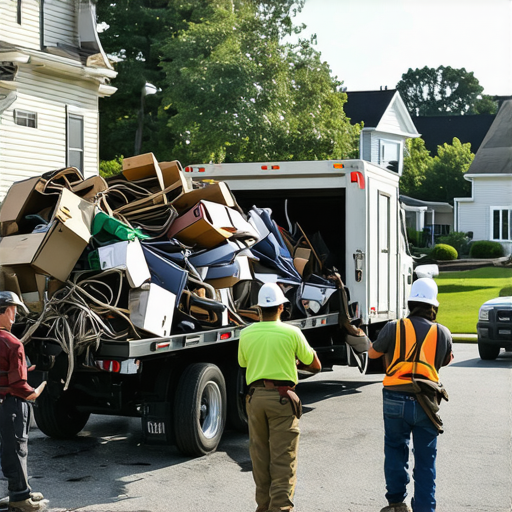
I once cleared a house where the junk wasn’t just stuff. It was a structural hazard. We found the floor joists were bowing under the weight of 40 years of newspapers that had absorbed ten years of basement humidity. The air smelled of damp newsprint and diesel from our idling 15-yard truck. This wasn’t a cleanup; it was a structural intervention. We had to install temporary jack posts in the basement before we could even begin the furniture removal process. If we had simply started tossing items, the shifting center of gravity could have collapsed the kitchen floor. This is the reality of extreme hoarding. It is not a weekend chore. It is a battle against gravity and time. When you are standing in the center of a room where the junk removal needs are measured in tons rather than bags, the first thing to break isn’t the floor, it is your spirit. You need a strategy that treats the hoard like a logistics puzzle, not a moral failure.
“Waste is merely a resource in the wrong place; professional removal is the science of putting it back where it belongs.” – Disposal Industry Maxim
Tactical victory through the exit path strategy
Maintaining momentum during a hoarder clean out aurora requires establishing a clear egress corridor to ensure safety protocols and efficient volume movement. By prioritizing the removal of bulky items near doorways, you create the logistical flow necessary to maintain a high diversion rate and prevent worker fatigue or injury during the process.
Think like a logistics manager, not a homeowner. Your first tip for staying motivated is to clear the path to the door. This is about the physics of the load. If you have to climb over a mountain of old clothes to reach a broken refrigerator, you will burn out in twenty minutes. Clear a five-foot wide path from the furthest point of the room to the exit. This creates a visual win. It also allows you to move appliance removal tasks to the top of the list. Big items take up the most cubic yardage in a truck. Seeing that space open up is a psychological shot of adrenaline. It changes the room from a trap into a workspace. In neighborhoods like Pigeon Hill or near the Fox River, where houses are packed tight, the logistics of where you put the dumpster rentals Aurora becomes vital. You need that path clear so the junk removal Aurora crew can cycle in and out without wasted motion. Every step saved is energy preserved for the deeper layers of the hoard.
The one yard win and the power of volume
Visual progress in garage clean outs is best measured by cubic yardage removed rather than hours worked to keep the psychological momentum high. Focus on filling a 20-yard dumpster or a removal truck to its maximum density, which provides a tangible metric of success that prevents the overwhelming sensation of a stagnant pile.
Your second tip is to stop looking at the room and start looking at the truck. We call this cubing out. When we arrive for a junk removal job, we don’t see a mess, we see 15 cubic yards of potential space. If you are doing this yourself, use a dumpster rental Aurora service and make it your goal to fill the bottom three feet of that steel box by noon. The sound of a heavy piece of furniture removal hitting the bottom of a roll-off dumpster is the sound of progress. It is a loud, metallic punctuation mark on your effort. Do not spend time sorting mail yet. That is a trap. Go for the high-volume, low-value items. Old mattresses, broken plastic shelving, and empty boxes. These items are the fluff of a hoard. They take up space but have zero utility. By removing them, you reveal the actual floor. Once you see the floor, the project becomes manageable. You are no longer drowning; you are just cleaning.
Hazardous pitfalls and the technical reality of waste
Identifying hazardous waste like lead-acid batteries, pressurized tanks, and biohazards is essential for regulatory compliance under the Resource Conservation and Recovery Act. Failing to separate these items during a hoarder clean out aurora can lead to landfill rejection, environmental fines, and significant fire risks during the transportation phase.
| Material Category | Decomposition Time | Disposal Difficulty | Disposal Cost (Estimated) |
|---|---|---|---|
| Untreated Wood | 10-15 Years | Low | Standard Tipping Fee |
| High-Density Plastics | 450+ Years | Medium | Recycling Premium |
| Lithium-Ion Batteries | Infinite (Toxic) | Extreme | Hazardous Waste Fee |
| Household Appliances | 20-50 Years | High | Per-Unit Surcharge |
| Mattresses | 80-100 Years | Extreme | Volume-Based Fee |
Tip number three is to educate yourself on what you are actually touching. Knowledge is power. When you understand that a half-full can of old oil-based paint is a chemical liability, you stop viewing it as just more junk. You start viewing it as a puzzle to be solved. This keeps the mind engaged. In Aurora, the local transfer stations have strict rules about what can hit the tipping floor. If you hide a propane tank in a pile of yard waste, you are creating a bomb. I have seen trucks catch fire because a homeowner thought they could sneak a battery into the junk removal pile. Do not be that person. Use a checklist to stay motivated by checking off the hazardous items you have safely set aside. It turns a scary task into a professional inventory process.
- Refrigerants and Freon-based appliances (requires certified extraction)
- Aerosol cans and pressurized fire extinguishers
- Wet lead-acid or lithium-ion batteries
- Industrial solvents and unlabelled chemical drums
- Medical waste and biohazardous materials
- Tires (often restricted to 4 per load in Aurora)
The financial incentive of the tipping floor
Managing disposal costs through source separation and material recovery allows for budget optimization during large-scale junk removal Aurora projects. Understanding the difference between weight-based fees and volume-based pricing helps you stay motivated by financial savings and reduced environmental impact through higher diversion rates.
Tip four is to track your savings. Every pound you donate or recycle is a pound you don’t pay for at the landfill. Landfills in the Aurora area charge by the ton. If you are doing a garage clean out, and you separate the scrap metal from the general trash, you are effectively putting money back in your pocket. Metal recyclers might even pay you for that old copper piping or the rusted-out engine block. When you see the hoard as a potential revenue stream or at least a way to avoid high tipping fees, your motivation shifts. You aren’t just moving trash; you are managing a budget. A 20-yard dumpster rental Aurora has a weight limit. If you go over that limit because you threw in heavy concrete or dirt, the overage fees will sting. Stay motivated by being the smartest operator on the block. Efficient loading, where you nest smaller items inside larger ones to eliminate air pockets, is a skill. Mastering that skill makes the work feel like a game of high-stakes Tetris rather than back-breaking labor.
“Modern waste management is the frontline of environmental defense; we do not just move the mess, we mitigate the legacy of overconsumption.” – Solid Waste Association of North America (SWANA)
Environmental recovery as a mission
Diversion rate optimization turns a hoarder clean out aurora into a sustainability project that preserves local landfill capacity. By focusing on upcycling and textile recovery, you ensure that junk removal efforts contribute to a circular economy rather than simply relocating the problem to a waste-to-energy facility or a sanitary landfill.
The final tip is to find a higher purpose for the items. While most people think recycling is always better, the carbon footprint of hauling low-grade plastics 500 miles often exceeds the impact of local, high-efficiency waste-to-energy incineration. However, Aurora has excellent local options for textile recycling and furniture restoration. When you realize that the old dining table from your furniture removal pile could be refinished and used by a family in need, the work becomes a mission. You are a recovery specialist. You are extracting value from a sea of neglect. This mindset is the ultimate firewall against burnout. You aren’t just cleaning a house near the Phillips Park Zoo; you are restoring a piece of the community. Every truckload that goes to a specialized recycler instead of the Orchard Road landfill is a win for the local ecosystem. Keep that goal in mind when the dust gets thick and your back starts to ache. You are the thin line between a neighborhood eyesore and a reclaimed home.