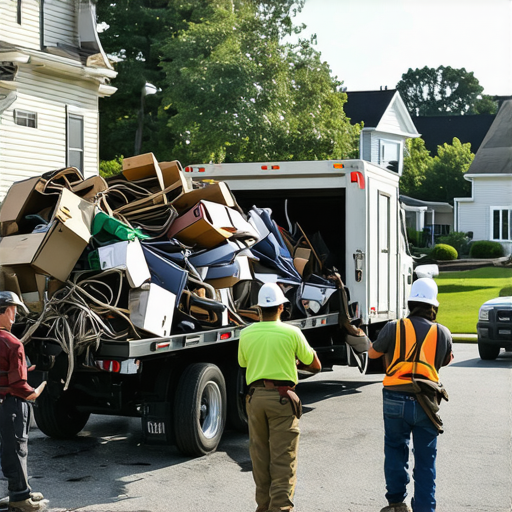

The hidden physics of a heavy haul
Hoarder clean out Aurora services require a strategic approach to logistical management and human psychology to ensure safety and efficiency. Successful removal depends on understanding waste stream diversion, structural load limits, and the precise cubic yardage of the debris field. Effective communication serves as the primary tool for mitigating site risks.
The floor snapped. I once cleared a house where the junk wasn’t just stuff. It was a structural hazard. We found the floor joists were bowing under the weight of 40 years of newspapers that had absorbed ten years of basement humidity. The ink had leached into the wood. The cellulose fibers were practically a part of the subfloor now. In Aurora, the high desert humidity usually keeps things dry, but a broken pipe in a hoarding situation creates a petri dish of black mold and structural rot. You don’t just walk into a scene like that with a shovel. You walk in with a structural engineer and a respirator. Your junk is your liability until it hits the scale at the Denver Arapahoe Disposal Site or a local transfer station. If the load is poorly managed, you are looking at pneumatic failure on the truck or a collapse of the residential stairs. Every cubic yard counts. Every pound matters. We calculate density before we ever touch a box. If a stack of National Geographics is three feet high, it exerts a downward pressure that most residential flooring isn’t designed to handle for decades. We are talking about dead loads versus live loads. A hoarder house is a static dead load that has reached its critical failure point.
“Waste is merely a resource in the wrong place; professional removal is the science of putting it back where it belongs.” – Disposal Industry Maxim
The heavy cost of keeping everything
Junk removal Aurora projects often face challenges regarding volume estimation and the specific tipping fees associated with mixed municipal solid waste. Professional haulers must account for the logistical tetris required to minimize wasted air space in the truck. Efficient loading reduces the carbon footprint and the final invoice.
Furniture removal is not just about strength. It is about geometry. When we pull a sectional sofa out of an Aurora basement, we are fighting against the architectural constraints of the building. Most modern furniture is built with low-grade particle board that has a high resin content. This makes it heavy but structurally brittle. If you tilt it wrong, it snaps. We see this with garage clean outs all the time. People store old appliances and heavy furniture in the garage, thinking it is safe. Over time, the moisture from the concrete floor wicks into the wood or the metal. Rust forms on the bottom of a refrigerator. When we go to move it, the base might literally stay on the floor while the rest of the unit lifts. This is why we use specialized appliance dollies with strap-and-crank systems. We aren’t just moving an object. We are managing a failing structural mass. The physics of the haul dictates that we keep the center of gravity low. If we cub out a truck with heavy appliances on top of light boxes, we risk a tip-over during transport on the E-470 or I-225.
Safety as the primary communication priority
Respectful communication during a hoarder clean out Aurora involves prioritizing the safety of the occupants while clearly explaining the logistical necessity of debris removal. Focus on identifying trip hazards, fire risks, and biohazard concerns. This approach shifts the conversation from losing possessions to gaining a safe living environment.
Language is a tool as much as a crowbar. When I speak to a homeowner in Aurora about their hoard, I don’t use the word junk. I use the word material. I talk about volume. I explain that the 15-yard dumpster sitting in the driveway has a weight limit. If we exceed that limit, the hydraulic lift on the truck won’t be able to pull it onto the rails. This is a hard logistical fact. By framing the conversation around the physical limits of the equipment, we remove the emotional weight of the items. We talk about the Resource Conservation and Recovery Act. We talk about why we cannot take lead-acid batteries or old cans of oil-based paint. It is not that we don’t want to help. It is that the law prohibits it. This transparency builds trust. It shows that we are professionals following a code, not just guys with a truck looking to dump things in a ditch.
The phased extraction strategy
Successful clean outs rely on a phased approach that categorizes items by disposal requirements and recovery potential. This strategy ensures that hazardous materials are separated from general waste immediately. Clear communication about this process helps the resident understand that the removal is controlled and methodical rather than chaotic.
We start with the easy wins. We clear the hallways first. This is for egress. If a fire starts, everyone needs to get out. That is a safety fact. Then we move to the hazardous surprises. I watched a rookie almost lose his eyebrows because a customer hid a half-full propane tank inside a pile of yard waste. We don’t just lift. We inspect. Every. Single. Item. We look for the tells. A heavy box that shouldn’t be heavy usually means hidden scrap metal or old chemicals. We use a Markdown Table to track our progress and the types of materials we encounter. This helps the client see the progress in cold, hard numbers.
| Disposal Category | Aurora Landfill Rules | Logistical Complexity |
|---|---|---|
| Household Trash | Standard tipping fees | Low (High volume) |
| E-Waste | Specialized recycling required | High (Hazardous) |
| Heavy Furniture | Bulk item surcharge | Medium (Heavy lift) |
| Hazardous Waste | Prohibited at standard sites | Critical (Legal risk) |
The hidden chemistry of appliance removal
Appliance removal in Aurora requires specific knowledge of refrigerant handling and metal recovery protocols to prevent environmental contamination. Many older units contain Freon or other ozone-depleting substances that must be captured by a certified technician. Failure to follow these rules results in significant municipal fines.
When we pull an old chest freezer out of a garage, we are looking at a potential environmental crime if it leaks. The coils are fragile. The compressor is heavy. If you drag it across the driveway, you might rupture a line. That is why we use skates. We glide the heavy loads. We also look for the hidden hazards in appliances. Old stoves often have mercury switches. Microwave ovens have high-voltage capacitors that can hold a charge long after the unit is unplugged. This is the zooming logic of the professional. We don’t see a kitchen; we see a collection of technical challenges. We see potential BTUs for a waste-to-energy plant or high-grade copper for the scrap yard.
Items your hauler cannot legally touch
Understanding the legal limitations of junk removal Aurora services is essential for a smooth clean out process. Municipal and federal laws dictate what can be transported in a standard dumpster or hauling truck. Proactively identifying these items prevents work stoppages and legal liabilities for the homeowner.
- Ammunition and explosives
- Propane tanks and pressurized cylinders
- Biohazardous waste or medical needles
- Lead-acid car batteries
- Wet paint and chemical solvents
- Industrial grade pesticides
If we find these items, we don’t just leave them. We provide the client with the contact information for the Aurora Household Hazardous Waste program. We explain that while we are heavy-load specialists, we are not licensed hazmat transporters. This distinction is vital. It protects our crew and it protects the client’s property from being labeled a contaminated site. Your junk is your liability until it hits the scale. We ensure the liability transfer is clean and documented.
The ghost in the garage
Garage clean outs often reveal forgotten items that have degraded over time, presenting unique disposal challenges. From rotted tires to leaking motor oil, the garage is the primary site for hazardous accumulation. A professional approach involves sorting these materials at the source to prevent cross-contamination in the truck.
The garage is where the most dangerous stuff hides. It is the backdoor of the home. In Aurora, people store snowblowers with old gas still in the tank. They store bags of fertilizer that have absorbed moisture and turned into a caustic slurry. We approach a garage like a forensic site. We clear the perimeter. We create a staging area. We use a 20-yard dumpster for the bulky items, but we keep a separate area for the recyclables. This isn’t just because we like the environment. It is because recycling centers often have lower tipping fees than landfills for clean wood or metal. It makes financial sense. We save the client money by being meticulous with the sorting. We cub out the truck by putting the densest items on the bottom and the light items on top to fill the voids. No air space. That is the rule. We don’t haul air.
“Modern waste management is the silent backbone of urban health; without the logistical experts, the city stops.” – SWANA Technical Paper
The heavy cost of the curbside cowboy
Hiring unlicensed junk removal Aurora workers poses a significant legal risk to homeowners and business owners alike. If your debris is found illegally dumped, the original owner is held responsible for the cleanup costs and municipal fines. Professional haulers provide manifests and receipts to prove legal disposal.
A business owner tried to save 500 dollars by hiring a guy with a pickup truck from a social media ad. Two weeks later, the police called him because his company’s confidential files were found in a ditch. This is the reality of the industry. The low bid is often the highest risk. A professional outfit has insurance. We have a DOT number. We have accounts at the transfer stations. We pay the tipping fees because we are part of the local economy. We know the guys at the gate. We know which landfills are reaching capacity and which ones are taking specific materials like concrete or tires. When you hire a professional, you are buying the peace of mind that your debris won’t end up in a local creek or blocking a fire hydrant. We take the load, and we take the responsibility.
Managing Aurora transfer station permits
Local disposal in Aurora requires knowledge of the specific operating hours and material restrictions of regional transfer stations. Each site has different rules for residential versus commercial loads, and some require pre-authorization for large-scale hoarding clean outs. Proper planning prevents wasted trips and extra fuel costs.
The narrow streets of some Aurora neighborhoods mean a 20-yard dumpster is a permit nightmare. You need a live-load truck. We pull up, we load, we leave. No permits. No blocking the neighbors. No complaints to the HOA. We time our runs to avoid the peak hours at the landfill. If you get stuck in a line of forty trucks at the scale, you are burning diesel and losing time. We are Logistics Managers. We map the route. We check the bridge weight limits. We ensure the truck is under the legal GVWR (Gross Vehicle Weight Rating). If we are overweight, we are looking at a fine that could eat the profit of the entire job. We weigh the truck empty, and we weigh it full. The difference is the truth of the job. That is the science of the haul.