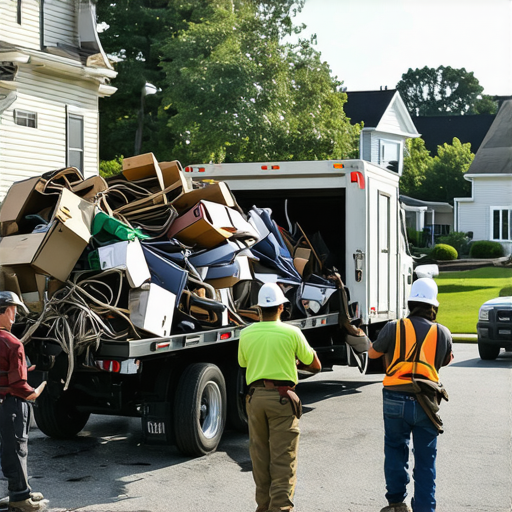

I once cleared a house where the junk wasn’t just stuff. It was a structural hazard. We found the floor joists were bowing under the weight of 40 years of newspapers that had absorbed ten years of basement humidity. This is the gritty reality of a deep hoarder clean out aurora. It is not just about clearing space. It is about salvage, safety, and scientific waste management in the Fox Valley region.
The weight of a forgotten history
Hoarder clean out Aurora projects require a deep understanding of structural load limits and biohazard mitigation. In Aurora Illinois, the high humidity of the Fox River valley turns organic debris into a heavy, semi-liquid sludge. This increases the tonnage fees significantly at local transfer stations. The physics of a hoarder house involve more than just volume. You are dealing with compaction. When newspapers are stacked six feet high, the bottom layers undergo a physical transformation. They become a dense, fibrous block that weighs approximately 40 pounds per cubic foot. In a standard 1,500 square foot ranch in Aurora, a floor-to-ceiling hoard can easily exceed 50 tons. This weight is not distributed. It sits on joists designed for a live load of 40 pounds per square foot. We often see structural failure before we even open the front door. The logistics of removing this mass requires a staggered approach. We cannot simply pull from the bottom. We must de-layer the stack to prevent a localized collapse.
The tactical geometry of appliance removal
Appliance removal in older Aurora homes often involves navigating narrow basement stairs that were never designed for modern high-capacity washing machines. These units contain refrigerants like R-134a or R-600a which require specialized recovery. Junk removal Aurora specialists must identify these chemicals before transport. The average refrigerator contains about 150 pounds of recyclable steel, but it also contains polyurethane foam insulation that is often treated with ozone-depleting substances. In Illinois, the law is clear. You cannot simply vent these gases. We use recovery cylinders and vacuum pumps to ensure compliance with Section 608 of the Clean Air Act. When we pull a water heater from a basement on Grand Blvd, we are calculating the center of gravity and the shear strength of the straps. If a 40-gallon tank is full of sediment, it can weigh over 400 pounds. That is a kinetic battery waiting to go wrong on a flight of stairs.
Why your cheap hauler is a legal time bomb
Illegal dumping in the Kane County forest preserves is a rising issue driven by unlicensed haulers who offer low prices. If your junk removal provider lacks a proper waste hauler permit, you remain legally responsible for those items until they are processed. The Resource Conservation and Recovery Act (RCRA) ensures that the generator of the waste is liable. I have seen business owners fined thousands of dollars because their junk ended up in a ditch on the edge of Montgomery. Your junk is your liability until it hits the scale at a licensed facility.
“Waste is merely a resource in the wrong place; professional removal is the science of putting it back where it belongs.” – Disposal Industry Maxim
While most people think recycling is always better, the carbon footprint of hauling low-grade plastics 500 miles often exceeds the impact of local, high-efficiency waste-to-energy incineration. This is a hard truth of modern waste management. We prioritize local diversion to minimize the diesel burn required for transport.
The physics of the fifteen yard bin
Dumpster rentals Aurora users often fail to account for bulk density and weight limits. A 15-yard dumpster can only hold so much concrete or shingles before it exceeds the legal road weight limits for Illinois. A single cubic yard of loose household debris weighs about 250 pounds. A cubic yard of wet soil weighs 2,100 pounds. If you fill a 20-yard bin with dirt, no truck in Aurora can legally lift it. This is where the Tetris of the load becomes vital. We pack heavy items on the bottom and lighter items on top to keep the center of gravity low for the roll-off truck. This prevents tipping during the pick-up process.
| Material Type | Weight per Cubic Yard (lbs) | Disposal Priority |
|---|---|---|
| Household Junk | 250-300 | Landfill/Recycle |
| Construction Debris | 400-500 | Transfer Station |
| Green Waste | 300-400 | Composting Facility |
| Concrete/Brick | 2,000-2,400 | Aggregate Recovery |
The toxicity of a garage floor
Garage clean outs in Aurora frequently uncover household hazardous waste that has been sitting for decades. Lead-acid batteries from old vehicles can leak, saturating the concrete with sulfuric acid and lead. This is not a simple sweep-up job. We use neutralizing agents to stabilize the pH before removal. Furniture removal is another challenge. Modern furniture is often made of Medium Density Fiberboard (MDF), which contains urea-formaldehyde resins. If this furniture is left in a damp Aurora garage, it swells and off-gases. It becomes a health hazard. We handle these items with respiratory protection to ensure our crew does not inhale toxic dust during the break-down phase.
Items your hauler cannot legally touch
- Lead-acid batteries (Automotive batteries)
- Liquid oil-based paints and thinners
- Pressurized gas cylinders (Propane, Oxygen)
- Biohazardous medical waste and sharps
- Radioactive materials (Old smoke detectors)
- Explosives or unspent ammunition
The recovery of the Fox Valley residential footprint
Junk removal Aurora is about more than just clearing the path. It is about restoring the value of the property. When we finish a hoarder clean out aurora, we are looking at the air quality and the structural integrity of the home. We look for signs of mold growth in the drywall where the junk was pressed against the exterior walls.
“The management of solid waste is the most important service a city provides that its citizens never think about until it stops.” – SWANA Technical Report
We use high-velocity air movers to clear the stagnant pockets of air that develop in hoarded environments. This prevents the spread of fungal spores. In the end, the goal is a clean slate. We take the burden of the heavy lifting and the complex logistics of Illinois waste laws so the homeowner can breathe again. Whether it is a single appliance removal or a full garage clean out, the methodology remains the same. Calculate the weight, optimize the load, and ensure legal disposal.