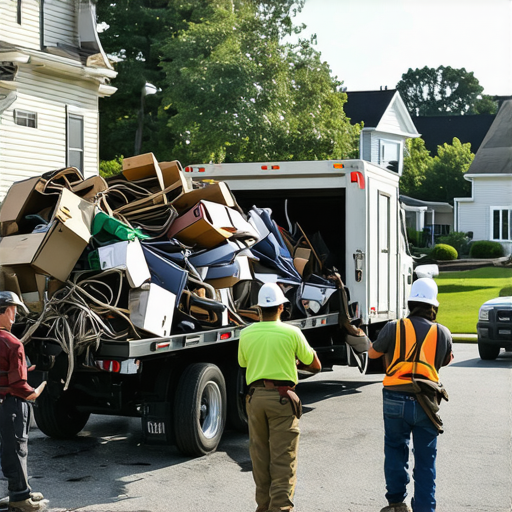

The air in the cabin of my heavy duty hauler smells like diesel and hydraulic fluid. It is the scent of progress. I have spent twenty five years watching people drown in their own possessions. I have seen the way a home transforms from a sanctuary into a warehouse of forgotten intentions. This was the case when I pulled up to a quiet cul de sac in Aurora during the spring of 2026. The house was a textbook example of logistical failure. I once cleared a house where the junk was not just stuff. It was a structural hazard. We found the floor joists were bowing under the weight of 40 years of newspapers that had absorbed ten years of basement humidity. The ink had turned into a sludge that bonded the stacks together into a single, three ton block of cellulose. That experience taught me that junk removal is not about lifting. It is about forensic engineering. You must understand the physics of the hoard before you pull a single item.
The skeletal remains of a suburban hoard
Hoarder clean out in Aurora requires a calculated approach to volume, weight, and material classification. Success depends on the ability to categorize debris into distinct waste streams including recyclables, hazardous materials, and general landfill waste while maintaining the structural integrity of the property during the extraction process. The Aurora project involved a 3,500 square foot home where the volume of material had exceeded the living space capacity. We were looking at a 150 cubic yard extraction. That is ten full loads in a standard 15 yard dump truck. Most people see a mess. I see a Tetris puzzle where every air pocket in the truck represents wasted money and lost efficiency. The family had tried to handle it themselves. They failed because they did not understand the science of the load. They were thinking in terms of boxes. I was thinking in terms of tonnage and tipping fees at the Denver Regional Landfill. We start with the perimeter. We clear the egress points. You cannot evacuate a hoard if you do not have a clear path for the heavy hitters. The furniture removal was the first phase. In the dry Aurora climate, old wood furniture becomes brittle. It snaps. It splinters. If you do not wrap it or break it down correctly, you leave a trail of debris that creates trip hazards for the crew. We dismantled the heavy oak dressers in the upstairs bedrooms. This reduced the physical strain on the stairs and maximized the density in the truck bed.
“Waste is merely a resource in the wrong place; professional removal is the science of putting it back where it belongs.” – Disposal Industry Maxim
Why Aurora families lose the war against clutter
Clutter accumulation often stems from a breakdown in household logistics and the absence of a consistent disposal strategy. Residents often find themselves overwhelmed by Appliance removal and Garage Clean outs because the local municipal services have strict limitations on volume and material types for curbside pickup. The Aurora family had three refrigerators in the garage. Two were dead. One was a relic from the 1980s. People think they can just put these on the curb. They are wrong. In Aurora, you deal with specialized recycling requirements for refrigerants like Freon. If you vent that into the atmosphere, you are a criminal. We utilize recovery systems to ensure every appliance is drained before it hits the scrap yard. The garage was the heart of the problem. It was a graveyard for failed hobbies. We found two hundred linear feet of rusted shelving. The logistical zoom here is intense. You have to consider the metal grade. Is it light iron? Is it heavy melt? We sorted it on site. The efficiency of a Garage Clean out depends on the density of the metal. We compressed the shelving units using a hydraulic press on the truck. This allowed us to fit three garages worth of metal into a single trip. Most curbside cowboys would have taken four trips. They would have charged the customer for the extra fuel and time. We do not do that. We cube out the truck every time. The goal is zero wasted space.
The hidden geometry of a fifteen yard truck
Maximizing truck capacity involves an advanced understanding of volumetric pricing and material compaction. By strategically layering heavy furniture at the bottom and lighter debris on top, professional haulers can reduce the number of trips to the transfer station and lower the total carbon footprint of the project. Let us talk about the math. A 15 yard truck has a specific footprint. If you toss chairs and tables in randomly, you get 40 percent air. That is a failure. We use the wall method. Large, flat items like mattresses and plywood go against the sides. Heavy items like old washing machines and stoves go over the axles to balance the load. Then we fill the gaps with bags of soft goods. This is how you achieve a 95 percent fill rate. In the Aurora house, we had to deal with a massive amount of old electronics. E-waste is a logistical nightmare. While most people think recycling is always better, the carbon footprint of hauling low-grade plastics 500 miles often exceeds the impact of local, high-efficiency waste-to-energy incineration. We provide a contrarian perspective here. We look for the shortest path to a legal end point. In Aurora, that means using specific transfer stations that specialize in material recovery. We do not just dump. We divert. We found forty years of tax records. Those went to a secure shredding facility. Your junk is your liability until it hits the scale. If your hauler dumps those records in a ditch, your identity is gone. We provide a manifest for every load. We track the weight. We track the destination. This is the difference between a professional and a guy with a pickup truck.
Prohibited items for professional removal
- Lead-acid automotive batteries which pose a significant chemical leak risk.
- Pressurized propane tanks regardless of their fill level.
- Liquid paints and solvents that have not been solidified with kitty litter or sawdust.
- Industrial grade chemicals or unidentified biohazards.
- Asbestos containing materials found in old pipe insulation.
- Fluorescent light ballasts containing PCBs.
The heavy cost of keeping everything
The financial and emotional burden of maintaining a hoard exceeds the one time cost of a professional Junk Removal service. In the Aurora market, the price of Junk Removal Aurora is determined by the volume of material, the labor hours required for extraction, and the current tipping fees at regional disposal sites. We had to explain this to the family. They were worried about the cost. I showed them the math. They were paying for a storage unit across town that they had not visited in three years. That cost them two thousand dollars annually. Our clean out cost less than two years of storage fees. We reclaimed their garage. We reclaimed their basement. We even found a stash of vintage tools that had actual resale value. We credited that back to their bill. That is how a professional operation works. We are not just movers. We are asset recovery specialists. The Appliance removal phase was particularly satisfying. We pulled out an old chest freezer that had been buried since the 90s. The seals were gone. The smell was a biological event. We sealed it in plastic before moving it. If that thing had leaked on the carpet, the house would have been uninhabitable for weeks. We use heavy duty dollies. We use floor protection. We treat the house like a surgical suite because it is. One wrong move with a heavy appliance and you are looking at a three thousand dollar floor repair. We do not make those mistakes.
| Service Category | Average Weight (lbs) | Disposal Method | Cost Factor |
|---|---|---|---|
| Appliance Removal | 150 – 450 | Metal Recycling | Per Unit |
| Furniture Removal | 50 – 300 | Donation / Landfill | By Volume |
| Garage Clean out | 500 – 2,500 | Sorted Recovery | Mixed Load |
| Hoarder Clean Out | 5,000+ | Multi-stream | Project Based |
| Dumpster Rentals | Up to 4,000 | Customer Load | Flat Rate |
The ghost in the garage
Managing a large scale clean out requires a deep understanding of the Resource Conservation and Recovery Act guidelines regarding household waste. Every item removed from an Aurora property must be accounted for to ensure compliance with local and federal environmental standards. I watched a rookie almost lose his eyebrows because a customer hid a half-full propane tank inside a pile of harmless yard waste. We do not just lift. We inspect. Every. Single. Item. In the Aurora house, we found a collection of old car parts in the back of the garage. There were three engines. They were leaking oil. That is a hazmat situation. We had to use absorbent pads. We had to degrease the concrete. A standard junk hauler would have just dragged them across the driveway. They would have left a permanent stain and an environmental fine for the homeowner. We handled it correctly. We used a crane hoist to lift the blocks into a steel lined bin. We took them to a specialized metal recycler that handles oily waste. This is the science of the haul. It is not about brute force. It is about knowledge. We finished the job in three days. Thirty tons of material gone. The family could finally breathe. The air in the house changed. The humidity dropped. The smell of mold was replaced by the scent of pine cleaner. That is the success story. We did not just move junk. We restored a family. We used 2026 technology and 20th century work ethic. Aurora is a better place because another hoard has been neutralized.
“Proper management of household hazardous waste protects sanitation workers and prevents groundwater contamination in growing urban corridors.” – SWANA Technical Guide