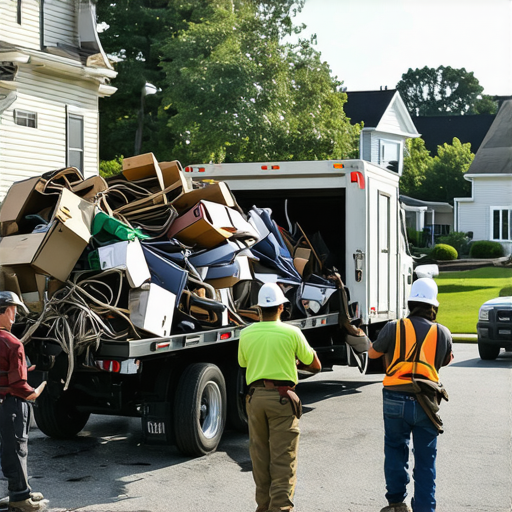

The hazardous surprise behind the cushions
Aurora furniture disposal requires a calculated assessment of volume, weight distribution, and municipal waste ordinances to avoid heavy fines or structural damage during the removal process. I watched a rookie almost lose his eyebrows because a customer hid a half-full propane tank inside a pile of harmless yard waste near a couch. We do not just lift. We inspect. Every. Single. Item. In the hauling industry, your junk is your liability until it hits the scale at the transfer station. The smell of diesel and hydraulic fluid is the scent of a workspace where physics meets waste. When you deal with a 300-pound sleeper sofa in an Aurora basement, you are not just moving a piece of furniture. You are managing a logistical puzzle that involves the tensile strength of steel coils and the densification of polyurethane foam. Most people see an old chair. I see three cubic yards of wasted air space if it is not broken down correctly. The Tetris of the load is everything. A poorly packed truck is a financial leak. It means more trips, more fuel, and higher tipping fees at the landfill. In Aurora, the logistics of disposal are dictated by the sheer volume of material we move through sites like the Denver Regional Landfill or local transfer stations. If you do not respect the weight, the weight will break your equipment or your back.
The structural physics of sofa extraction
Professional couch removal in Aurora demands an understanding of center-of-gravity variables and the load-bearing limits of residential staircases to prevent property damage. Furniture is not static mass. A vintage sofa with a solid oak frame has a different density than a modern flat-pack piece made of particle board and glue. When navigating a narrow hallway in an Aurora townhome, the pivot point is the only thing that matters. We calculate the turn radius before the first lift. I have seen floors snap because a hauler tried to drag a heavy hutch instead of using a four-wheel dolly with non-marking rubber wheels. The friction coefficient of hardwood versus carpet changes the energy required for the move. Modern furniture often contains high-density polyethylene and various flame retardants. These chemicals make the item heavy and difficult to incinerate. If you are doing a garage clean out, the couch is often the anchor of the load. We place it at the front of the truck bed, against the cab, to keep the weight over the axles. This is basic heavy-load math. We use ratchet straps with a 3,300-pound break strength to ensure the load does not shift during transport on I-225. A shifting load is a dangerous load. Air pockets in the truck are the enemy of efficiency. We crush, we stack, and we wedge smaller items into the gaps. This is the science of cubing out a truck.
“Waste is merely a resource in the wrong place; professional removal is the science of putting it back where it belongs.” – Disposal Industry Maxim
Aurora local disposal logic and legalities
Navigating Aurora furniture disposal regulations involves coordinating with local waste management authorities to ensure compliance with bulky item pick-up schedules and hazardous material restrictions. The City of Aurora has specific rules for what can sit on the curb. If you leave a sectional out for more than 24 hours without a scheduled pick-up, you are looking at a code enforcement violation. The local tipping fees are calculated by the ton or the cubic yard. We track these numbers daily. A 15-yard dumpster rental in Aurora might seem simple, but the permit requirements for street placement can be a nightmare. You need a live-load truck for the tight streets of older neighborhoods. We analyze the diversion rate of every load. This means we look at how much of that couch can be stripped for metal or wood before the rest goes to the landfill. The Resource Conservation and Recovery Act governs how we handle certain materials. You cannot just toss a lead-acid battery into the middle of a sofa and hope nobody notices. The sensors at the scale house will find it. Then comes the fine. The environmental impact of a single couch left in a ditch is massive. The foam leaches chemicals into the soil. The wood, often treated with formaldehyde, does not break down cleanly. We avoid the local creek dumpers at all costs.
| Material Type | Decomposition Rate (Years) | Recyclability Potential |
|---|---|---|
| Solid Hardwood | 10-20 Years | High (Reclamation) |
| Polyurethane Foam | 50-100 Years | Low |
| Steel Springs | 50+ Years | Very High |
| Particle Board | 20-30 Years | Zero (Resins) |
| Cotton Fabric | 1-5 Years | Medium |
The engineering of the garage clean out
Successful garage clean outs in Aurora require a staged approach where heavy furniture is removed first to create a clear staging area for smaller debris. I have walked into garages where the junk was stacked to the rafters. It is a data overflow error in physical space. We start by identifying the hazardous items. Paint cans. Old tires. Used motor oil. These cannot go into the general waste stream. Once the perimeter is clear, we go for the heavy hitters. Appliance removal is its own beast. A refrigerator contains freon. You cannot just vent that into the Aurora air. It is a federal crime. We use recovery pumps to capture the gas. Then we pull the compressor. The couch in the corner is usually a nesting ground for rodents. We wear respirators. The dust alone can carry hantavirus. We break the couch down with a reciprocating saw if it will not fit through the door. It is faster to carry three pieces than one giant one. We look for the backdoor logistics. Is there an alley access? Is the driveway sloped? A sloped driveway means the truck needs chocks. Safety is not a suggestion. It is a requirement for survival in this trade.
“Landfills are not bottomless pits; they are engineered cells that require precise management of incoming material density.” – Solid Waste Association of North America (SWANA)
- Wet Paint and Solvent Containers
- Loose or Friable Asbestos
- Sealed Pressure Vessels (Propane Tanks)
- Biohazardous or Medical Waste
- Lead-Acid Batteries and Lithium Ion Packs
- Industrial Chemicals or Pesticides
Why your cheap hauler is a legal time bomb
Hiring unlicensed junk removal services in Aurora creates significant liability risks for homeowners because the owner remains legally responsible for waste until it is properly processed. I have seen it happen. A business owner tries to save 500 dollars by hiring a guy with a pickup truck from a social media ad. Two weeks later, the police call him because his company’s confidential files or branded furniture were found in a ditch. Your junk is your liability until it hits the scale. If that guy dumps your old couch in a park, the city will trace it back to you. They look for mail, receipts, or unique identifiers. Professional Aurora furniture disposal companies provide a manifest or a receipt from a licensed transfer station. This is your insurance policy. Furthermore, a budget hauler lacks workers’ compensation insurance. If they drop a heavy dresser on their foot in your hallway, they can sue you. We carry the high-limit policies because we know the risks. We use back braces and steel-toed boots. We use team lifts for anything over 75 pounds. The cheap guy uses a cigarette and a prayer. Do not gamble with your property or your legal standing. High-efficiency waste-to-energy incineration is a better path for non-recyclables than a ditch in the outskirts of town. We prioritize the carbon footprint of the haul. Sometimes, driving 20 miles to a better recycling center is the only ethical choice. We choose the right path, not the easy one.
Your detailed breakdown of the complexities involved in Aurora furniture disposal really highlights how much thought and expertise goes into what many might see as a simple cleanup. I’m especially intrigued by the emphasis on load balancing and the physics behind safe removal — it’s a reminder that even seemingly straightforward tasks can have significant safety considerations. I’ve personally faced issues with improper load securing during moves, which can be dangerous and damaging. Have others found that investing in professional assessment and handling actually saves money and trouble in the long run? It seems like working with licensed, experienced teams not only prevents hazards but also aligns better with environmental regulations, especially in densely populated areas like Aurora. What are some common mistakes homeowners make that might lead to legal or safety issues with furniture disposal?