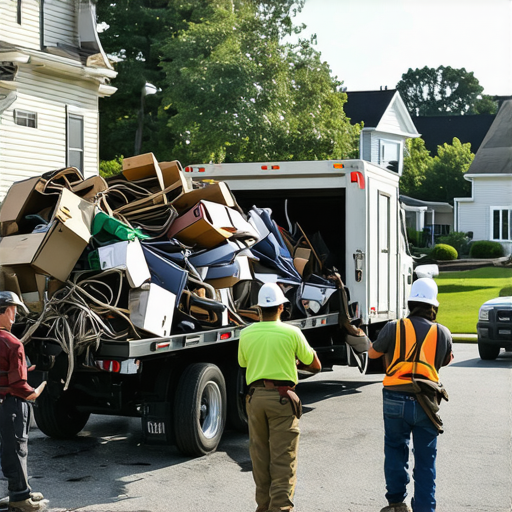

The ghost in the Aurora garage
Junk Removal Aurora services frequently encounter garages that have transformed from vehicle shelters into high-density storage failures. In the logistics of waste management, a garage clean out is not merely a chore, it is a material recovery operation that requires precise sorting of polymers, metals, and organic debris to avoid excessive tipping fees. This process begins with the identification of cubic yardage and the assessment of load-bearing structures that have likely been compromised by years of accumulated weight.
I watched a rookie almost lose his eyebrows because a customer hid a half-full propane tank inside a pile of harmless yard waste. We do not just lift. We inspect. Every. Single. Item. This happened during a routine call in a suburban Aurora neighborhood where the garage had become a pressurized vault of forgotten items. The homeowner thought the cold Colorado air stabilized the old chemicals. He was wrong. Every piece of debris we touch undergoes a visual and olfactory manifest check before it ever touches the bed of the truck. If you are not looking for the hiss of a leaking valve or the oily sheen of a cracked lead-acid battery, you are not a hauler. You are a liability.
The hidden weight of plastic storage
Garage Clean outs in Aurora often center around the seasonal rotation of heavy-duty plastic bins which present unique challenges for volumetric truck loading. These bins are frequently made of high-density polyethylene or polypropylene, materials that do not compress easily under standard hydraulic pressure. When you stack these bins, you create air pockets that inflate your disposal costs because you are paying to haul oxygen instead of solid waste. We utilize a process called cubing out where we dismantle the structural integrity of these bins to ensure every square inch of the truck is utilized.
“Waste is merely a resource in the wrong place; professional removal is the science of putting it back where it belongs.” – Disposal Industry Maxim
The physics of a garage purge involves calculating the static load of shelving units. Many Aurora homes use particle board shelves that absorb basement humidity over the winter. This absorption increases the weight of the shelf by up to thirty percent while simultaneously reducing its structural shear strength. If you attempt to move a fully loaded shelf without first stripping the holiday bins, the entire unit can suffer a catastrophic failure. This puts the operator at risk of crush injuries and complicates the removal of the debris. We treat every shelf as a potential collapse zone.
Why a ten yard bin beats the curb
Dumpster Rentals Aurora logistics require a deep understanding of local zoning and the physical footprint of roll-off containers. A ten-yard dumpster is the industry standard for a heavy garage purge because it allows for a weight limit that accommodates dense items like old tools or boxes of magazines without exceeding the legal road weight of the truck. If you choose a container that is too large, you risk the bin sinking into your asphalt driveway during a typical Aurora freeze-thaw cycle, which creates a permanent scar on your property.
| Material Type | Avg Weight per Cubic Yard | Disposal Priority |
|---|---|---|
| Flattened Cardboard | 100 lbs | Recycle First |
| Holiday Decor Mixed | 250 lbs | Landfill Target |
| Upholstered Furniture | 300 lbs | Special Handling |
| Metal Appliances | 500+ lbs | Scrap Recovery |
We analyze the weight distribution within the bin to ensure the center of gravity remains low. This is not just about safety. It is about the economics of the dump. Landfills in the Aurora region charge by weight, whereas many haulers charge by volume. If you fill a bin with heavy construction debris from a garage workshop, you might face a surcharge that doubles your initial quote. Professional management involves balancing the load with lighter holiday ornaments and artificial trees to stay within the weight window provided by the transfer station.
The heavy cost of keeping everything
Hoarder Clean Out aurora situations represent the extreme end of the waste management spectrum where the volume of material exceeds the designed capacity of the residential structure. In these cases, the junk is no longer just a collection of items. It is a consolidated mass that can trap moisture and encourage the growth of mold. The removal of such material requires personal protective equipment and a systematic approach to the hazardous materials often buried at the bottom of the pile. We look for signs of pest infestation and structural rot before we begin the extraction process.
- Propane tanks and pressurized cylinders
- Wet paint and liquid solvents
- Lithium-ion batteries from old tools
- Tires and rubber tracks
- Asbestos-containing insulation materials
The logistics of appliance and furniture extraction
Appliance removal and Furniture Removal in Aurora are the most physically demanding aspects of any garage project. Old refrigerators contain refrigerants like R-134a or older CFCs that must be recovered by a certified technician according to the Clean Air Act. Simply throwing a fridge into a dumpster is an environmental crime and a violation of local Aurora waste ordinances. We utilize specialized appliance dollies and ramp systems to extract these units without damaging the garage floor or the truck lift gate.
“The efficiency of a waste management system is determined by its ability to separate at the source rather than the dump.” – SWANA Technical Guide
Furniture disposal involves the assessment of wood quality and metal content. Modern particle board furniture has a very low BTU value and is essentially compressed sawdust and glue. It is a filler material in the truck. In contrast, older solid oak or steel shelving has a high recovery value. We separate these streams at the point of pick up. If we can divert five hundred pounds of steel from the landfill, we reduce the overall environmental footprint of the clean out. This is the difference between a curbside cowboy and a professional waste strategist. We know where every pound of material is destined before the truck engine even starts.