The liability trap of the cut-rate hauler
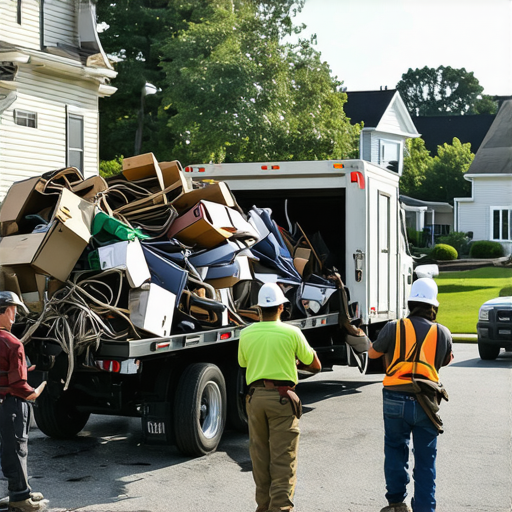
A business owner tried to save $500 by hiring a guy with a pickup truck from a social media ad. Two weeks later, the police called him because his company’s confidential files were found in a ditch near a local Aurora creek. Your junk is your liability until it hits the scale at the transfer station. I have seen it a hundred times. People think the job is done when the truck pulls away. It is not. The legal chain of custody for waste is a heavy chain. If that chain breaks, the fines hit your mailbox, not the hauler who disappeared into the night. My eyes have seen the worst of it. Diesel fumes and the sharp scent of hydraulic fluid define my mornings. I spend my days calculating the tetris of a 15-yard truck bed. Every cubic inch of air is a waste of money. When you look at your garage, you see a mess. I see a logistical puzzle that requires precise weight distribution and an understanding of material science.
Volumetric physics of the residential driveway
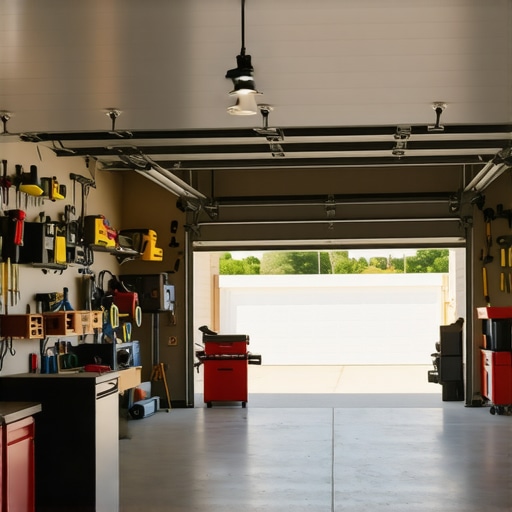
Garage Clean outs and Junk Removal in Aurora require an understanding of cubic yard density, weight limits, and driveway load-bearing capacities. A standard 15-yard dumpster or a junk removal truck must be packed with heavy items at the bottom to maintain a low center of gravity. Most Aurora driveways are rated for standard passenger vehicles. When a heavy-load hauler or a dumpster rental sits on asphalt during a hot Illinois or Colorado summer, the risk of structural deformation or surface scarring increases. The garage is the staging ground for this operation. We calculate the volume of your discarded items by measuring height, width, and depth. A typical three-car garage in Aurora can hold up to 40 cubic yards of uncompressed waste. This includes old lumber, broken bicycles, and the inevitable piles of cardboard that have absorbed local humidity. Moist cardboard is a weight multiplier. A dry box weighs pennies. A wet box, soaked from a leaky garage roof, can weigh five pounds. When you have a thousand of them, your tipping fees skyrocket. We use the cubing out method. We break down every box. We nest smaller items inside larger ones. We eliminate the air. Air is the enemy of profit in the waste industry. If I am hauling air, I am losing money, and so are you. The goal is 100 percent density.
Chemical ghosts in the suburban storage unit
Appliance removal and Furniture Removal are not just about muscle. They involve hazardous waste protocols and RCRA compliance. Many Aurora residents do not realize that their old chest freezer contains refrigerant gases like Freon that require specialized EPA-certified recovery.
“Waste is merely a resource in the wrong place; professional removal is the science of putting it back where it belongs.” – Disposal Industry Maxim
Hidden beneath the piles of old clothes and plastic bins are the real dangers. Lead-acid batteries from an old lawnmower. Half-empty cans of oil-based paint. Pressurized canisters of fire extinguisher chemicals. These are not general waste. If we crush a lithium-ion battery in the back of a hydraulic packer, the resulting thermal runaway can melt the truck frame in minutes. This is why we inspect. We don’t just lift. We categorize. We look for the symbols on the plastic. We check the seals on the jugs. We understand that a garage clean out is often an accidental hazmat survey. In Aurora, the local transfer stations have strict rules about what can hit the floor. If we bring a load contaminated with prohibited chemicals, the entire truck is rejected. We then face decontamination fees that can reach thousands of dollars. We pass that knowledge to the homeowner because an informed client is a safe client.
The heavy cost of keeping everything
Hoarder Clean Out aurora projects represent the peak of logistical complexity and material recovery challenges. The weight of forty years of newspapers is not just a fire hazard. It is a structural load that can bow floor joists and crack foundation slabs. In these environments, the air is thick with particulate matter and organic decay. We wear respirators not for show, but because the bio-load of a stagnant garage can cause permanent lung damage. We track the diversion rate. This is the percentage of waste that stays out of the landfill. For a typical Aurora hoarder situation, we aim for a 60 percent diversion rate. Metal goes to the scrap yard. Clean wood goes to the mulcher. E-waste goes to specialized processors who strip the gold and copper from the circuit boards.
| Waste Type | Disposal Method | Decomposition Time |
|---|---|---|
| Corrugated Cardboard | Recycling / Pulped | 2 Months |
| Untreated Wood | Mulching / Biomass | 1-3 Years |
| Plastic Furniture | Landfill / Incineration | 450+ Years |
| E-Waste | Rare Metal Recovery | Indefinite |
| Concrete/Brick | Crushed for Road Base | Never |
The economics of waste are shifting. While most people think recycling is always better, the carbon footprint of hauling low-grade plastics 500 miles often exceeds the impact of local, high-efficiency waste-to-energy incineration. We make those calls based on the current market price of commodities. If the price of scrap steel is down, we might hold the load. If paper prices are up, we prioritize the pulp mill. It is a stock market of trash.
The structural limits of modern furniture disposal
Furniture Removal in Aurora has changed because the quality of the furniture has declined. Particle board and MDF (Medium Density Fiberboard) are the primary components of modern household items. Unlike solid oak or maple, these materials use formaldehyde-based resins as a binder. When they get damp in a garage, they swell and lose all structural integrity. They cannot be donated. They cannot be refinished. They are essentially compressed sawdust and glue. When we lift a water-damaged MDF wardrobe, it often disintegrates. This creates a mess of fine, toxic dust that requires industrial vacuums. We prefer the old stuff. The heavy, mid-century dressers. They have BTU potential. If they are too damaged for the thrift store, they can be processed for waste-to-energy plants. The energy density of old-growth wood is significantly higher than the chemical-heavy glues of modern flat-pack furniture. We also handle Appliance removal with an eye on the motor. The copper windings in a 1970s refrigerator are three times thicker than what you find today. There is value in the vintage, even when it is broken.
“The most environmentally friendly product is the one that was never manufactured; the second best is the one that is recycled with 90% efficiency.” – SWANA Resource Guide
We look for that efficiency in every Aurora driveway.
Navigating Aurora municipal waste codes
Dumpster Rentals Aurora are governed by specific city ordinances that dictate permit requirements and placement duration. You cannot simply drop a 20-yard container on the street and leave it for a month. The Aurora code enforcement team monitors for runoff pollution and sidewalk obstruction. If your dumpster leaks hydraulic fluid or if rain washes debris into the storm drains, you are looking at environmental fines. We use street-legal containers and load-rated trucks to ensure we stay within the law. Here is the list of things we cannot, and will not, put in a standard bin.
- Leaking Lead-Acid Car Batteries
- Asbestos-Containing Floor Tiles or Pipe Insulation
- Wet Oil-Based Paint and Thinners
- Propane Tanks and Pressurized Cylinders
- Biohazardous Medical Waste
- Fluorescent Light Ballasts containing PCBs
- Tires (Requires a specialized tire-only manifest)
If you try to hide these items at the bottom of the pile, the thermal imaging cameras at the transfer station will find them. They see the heat signature of a battery or the density of a tire. The truck gets flagged. The load gets dumped in a containment cell. The bill for that process will make your head spin. We prevent this through source separation. We provide separate bins for different waste streams. It takes more time. It requires more focus. But it is the only way to operate with professional integrity in the Aurora junk removal market.
The final tally of garage reclamation
Reclaiming your Aurora driveway space is a financial investment in your property value. A cluttered garage is a signal to pests and rodents. Mice love the insulation value of old blankets and the nesting potential of stacked newspapers. By clearing the space, you eliminate the habitat for infestations. You also reduce the fire load of your home. A garage filled with dry wood and old chemicals is a tinderbox. Once we clear the floor, we often find that the concrete needs a degreasing treatment. We see the stains of automotive fluids that have been leaching into the slab for years. We handle the heavy lifting so you don’t have to risk a lumbar injury. The physics of a refrigerator move are unforgiving. One wrong tilt and the compressor oil migrates into the evaporator coils, ruining the machine if it was meant to be reused. We use appliance dollies with stair-climbing treads. We use leverage straps. We use our brains before we use our backs. Your Aurora home deserves a clean, functional garage. We provide the logistical expertise to make that happen without the legal or environmental risks of the amateur alternatives.