The black rubber plague in your garage
Garage clean outs in Aurora require a logistical strategy that accounts for weight density, environmental compliance, and municipal waste codes to ensure a successful disposal process. Tires represent a specific category of waste that complicates standard hauling due to their refusal to stay buried in landfills and their tendency to trap methane gases. Most homeowners underestimate the cubic volume of their garage debris until they are staring at a half-filled 15-yard dumpster with zero space left for the heavy hitters like old tires or concrete debris. Success depends on the math of the load.
I watched a rookie almost lose his eyebrows because a customer hid a half-full propane tank inside a pile of harmless yard waste. We do not just lift. We inspect. Every. Single. Item. That incident taught me that junk removal is not about brute force. It is a forensic analysis of what the owner decided to hide from the world. In Aurora, people love their garages, but they treat them like a physical junk drawer where the most hazardous materials migrate to the bottom of the pile. When you start pulling out old tires and rusted appliances, you are not just cleaning. You are mitigating a local environmental hazard that the city inspectors will not ignore if it hits the curb incorrectly.
The hidden physics of tire disposal in Aurora
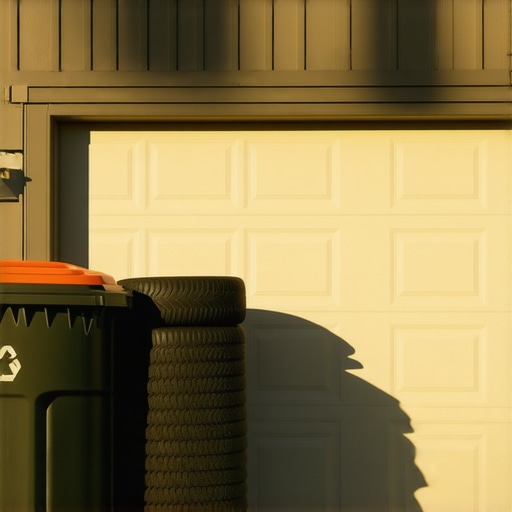
Getting rid of tires in Aurora involves navigating Illinois scrap tire regulations which strictly prohibit whole tires from entering the general waste stream of local landfills. These tires are essentially vulcanized structural nightmares that do not break down over time. When buried, they have a buoyancy effect. They trap gases and literally float back to the surface of a landfill over several years, puncturing liners and causing massive environmental remediation costs. This is why your standard Aurora trash pick-up will leave them on the parkway every single time. They are not being lazy. They are following a legal mandate designed to prevent landfill failure.
“Waste is merely a resource in the wrong place; professional removal is the science of putting it back where it belongs.” – Disposal Industry Maxim
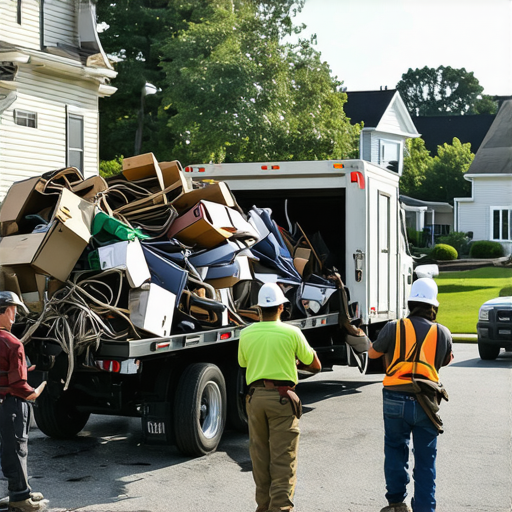
The logistics of a tire are frustrating. A standard passenger tire weighs roughly 20 pounds. A light truck tire hits 35 pounds. If you have a stack of ten, you are looking at 200 to 350 pounds of dead weight that cannot be compacted. In a junk removal truck, tires are the enemy of ‘cubing out.’ They create massive pockets of wasted air. Professional Aurora haulers often have to slice these tires or find specialized recyclers who turn them into tire-derived fuel or crumb rubber for playground surfaces. If you try to dump these illegally in a Kane County ditch, you are looking at fines that far exceed the cost of a professional junk removal service.
The heavy cost of keeping everything
Hoarder clean out Aurora projects often reveal that the garage is the first place where the domestic systems of organization completely collapse under the weight of excessive furniture and appliances. When a garage reaches the state of a hoarder situation, the floor joists and concrete pads often show signs of stress or chemical staining. We often find old refrigerators and freezers buried under mountains of cardboard. These appliances contain refrigerants like Freon that require specialized recovery before the metal can be scrapped. You cannot just throw an old fridge into a dumpster rental Aurora unit without following the Clean Air Act protocols.
| Material Type | Decomposition Time | Disposal Difficulty (1-10) | Aurora Recovery Potential |
|---|---|---|---|
| Passenger Tires | 2,000+ Years | 9 | High (Crumb Rubber) |
| Old Appliances | 20-50 Years | 7 | High (Steel Scrap) |
| Particle Board Furniture | 10-15 Years | 3 | Low (Landfill) |
| Lead-Acid Batteries | Infinite (Toxic) | 10 | Mandatory Recycling |
The math of the load is everything. When I arrive at an Aurora property for a furniture removal job, I am looking at the ‘tetris’ of the truck. If I put the sofa in first, I lose the floor space for the heavy, dense items like books or tools. We stack vertically. We use every cubic inch. A poorly loaded truck is a financial disaster for a waste management company because we pay by weight at the transfer station but charge by volume. If the truck is full of air, we lose money. If the truck is over-weight, we risk fines at the scale. It is a delicate balance of physics and logistics that most DIY homeowners ignore until they realize their rented dumpster is overflowing after only four hours of work.
Items your hauler cannot legally touch
Standard junk removal Aurora services must adhere to strict hazardous waste guidelines that prevent the transport of volatile, flammable, or toxic substances found in residential garages. This is where the friction happens between the customer and the specialist. You want the stuff gone. We want to stay out of jail and keep our crew safe from chemical burns. [IMAGE_PLACEHOLDER] Most garages in Aurora are accidental chemistry labs filled with old paint, pesticides, and pool chemicals that have long since lost their labels. These items require a specialized hazardous waste drop-off event, often hosted by the local county waste management office.
- Propane tanks and pressurized cylinders
- Loose lead-acid automotive batteries
- Industrial solvents and oil-based paints
- Biohazardous materials or medical waste
- Ammunition or unspent explosives
- Asbestos-containing materials like old pipe insulation
The carbon footprint of hauling low-grade plastics 500 miles often exceeds the impact of local, high-efficiency waste-to-energy incineration. While the public is obsessed with ‘recycling’ every scrap of plastic, the reality of the global market means much of that plastic ends up sitting in warehouses. In Aurora, we prioritize metal recovery and wood waste diversion because those markets are stable and local. When we clear a garage, the steel from the old shelving and the aluminum from the broken lawn chairs are pulled out. That metal goes to a local yard where it is melted down and back in the supply chain within weeks. That is true waste management.
The ghost in the garage
Appliance removal is a common request during Aurora garage clean outs because these massive units become permanent fixtures that collect dust and attract pests. An old chest freezer in the back of a garage is a ticking time bomb. The seals dry out and the unit starts to leak coolant. If it was manufactured before 1995, it likely contains CFCs that are devastating to the ozone layer. We see this often in Aurora’s older neighborhoods. A homeowner thinks they are doing a favor by keeping an old fridge for ‘extra drinks,’ but the energy draw of a 30-year-old compressor is massive. Removing it is an act of financial and environmental mercy.
“Management of scrap tires remains a significant challenge because they do not compress and they provide breeding grounds for pests.” – EPA Waste Guidelines
When you look at your garage, do not see ‘stuff.’ See a logistical puzzle. The tires are the corner pieces. The appliances are the heavy center. The furniture is the filler. If you are planning a clean out in Aurora, start by separating your tires from the general junk. Call a specialist who understands the Kane County or DuPage County disposal nuances. Whether you need a dumpster rental or a full-service crew, the goal is the same. You want that concrete floor visible again. You want the fire hazard gone. You want to stop paying the ‘clutter tax’ on your sanity every time you try to park your car. Professional junk removal is the only way to ensure your liability ends the moment the truck pulls out of your driveway.