The day a rookie almost lost his face
I watched a rookie almost lose his eyebrows because a customer hid a half-full propane tank inside a pile of harmless yard waste. We do not just lift. We inspect. Every. Single. Item. This happened during a standard garage clean out in a suburban Aurora neighborhood. The garage was packed to the rafters with old lawn equipment and boxes of what looked like dry debris. When my guy grabbed a tangled mess of rusted garden tools, he did not see the small white cylinder tucked in the middle. The tank valve had been sheared slightly by the weight of a corroded table saw sitting on top of it. As he moved the pile, the hiss of escaping gas was the only warning. We cleared the site immediately. That is the reality of the logistics of waste. It is not just moving stuff from A to B. It is managing potential kinetic and chemical energy. In Aurora, where temperature swings cause metal to expand and contract, old pressurized containers become ticking time bombs in the back of a junk truck. We treat every pile like a crime scene. We look for the leak. We look for the hazard. We look for the weight that will snap a floorboard. This is the difference between a professional crew and two guys with a pickup truck who found your job on a social media app.
Aurora waste disposal protocols for metallic debris
Professional garage clean outs in Aurora require strict adherence to local municipal codes and regional landfill regulations regarding scrap metal and hazardous household waste. The city guidelines mandate that heavy iron and steel must be separated from general household refuse to optimize diversion rates at local transfer stations. Failure to identify corroded tools containing lead based coatings can lead to massive fines at the scale. In the waste management industry, we call this the load audit. When we pull into a facility like the Aurora Transfer Station or the Denver Regional Landfill, we are responsible for the manifest of every cubic yard on that truck. Corroded tools are particularly tricky. Rust is not just iron oxide. In older garages around the E-470 corridor, we often find tools from the mid-twentieth century. These items frequently feature lead paint or cadmium plating. When these metals corrode, they flake off into the dust of the garage floor. This creates a respiratory hazard for the removal team. We use 6-mil poly sheeting to contain the dust during high-volume removals. This is not about being neat. This is about the Resource Conservation and Recovery Act standards. Your junk is your liability until it hits the scale and the weight is recorded under a professional license. If your hauler dumps those corroded tools in a ditch, the EPA can track that waste back to your address through serial numbers or identifiable personal property. We protect your legal standing by ensuring a clean chain of custody from your garage to the scrap processor.
“Waste is merely a resource in the wrong place; professional removal is the science of putting it back where it belongs.” – Disposal Industry Maxim
The hidden chemistry of your rusted workbench
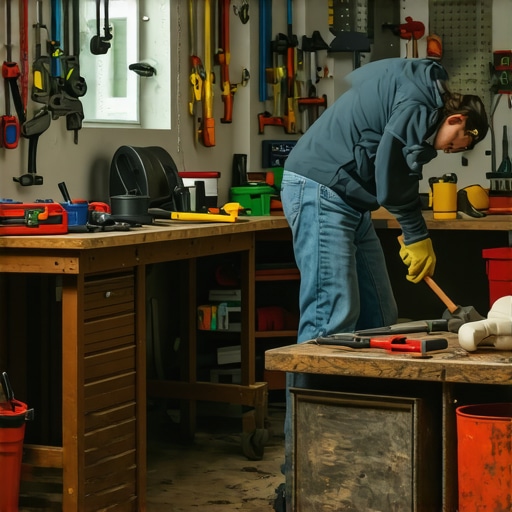
Rusted tools and corroded hardware represent a specific category of waste known as ferrous and non-ferrous scrap that requires specialized handling to prevent environmental leaching. The oxidation process destroys the structural integrity of the metal, making it dangerous to stack. When we cube out a 15-yard truck, we have to calculate the density of that rust. A cubic yard of solid steel weighs roughly 13,000 pounds. A cubic yard of loose, rusted hand tools might only weigh 1,200 pounds, but it occupies the same volume while creating a higher risk of puncture for our hydraulic lines. We see it all the time in older Aurora homes. A homeowner thinks they have a simple pile of junk. I see fifty pounds of oxidized carbon steel that is ready to crumble into a tetanus-rich powder. We use magnetic sweeps after the initial haul to ensure every small shard is recovered. This is a matter of safety for your tires and your pets. The chemistry of the garage is a stagnant pool of volatile organic compounds. Old oil cans, half-used jars of wood stripper, and corroded battery terminals from a forgotten lawnmower all react over time. When we enter a garage in the heat of an Aurora summer, the air is thick with these vapors. We vent the space before the first heavy lift. We do not take chances with the lungs of our crew or the safety of your property.
The physics of cubing out a fifteen yard truck
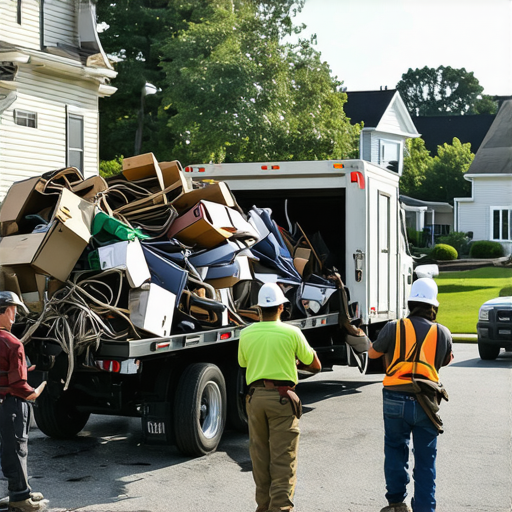
Maximizing truck capacity through volumetric density is the primary objective of a logistics manager during a hoarder clean out or garage clearing project. We do not just toss items into the hopper. We stack. We interlock. We eliminate air. Every cubic inch of empty space in the truck is money lost on fuel and tipping fees. We call this cubing out. For a garage clean out in Aurora, we start with the heaviest items on the floor of the truck to maintain a low center of gravity. This is vital when navigating the sharp turns of residential streets near Cherry Creek State Park. Old appliances like refrigerators or chest freezers are placed against the bulkhead. These are the anchors. We then layer the corroded tools and smaller hardware into the gaps. If we leave gaps, the load shifts. A shifting load can lead to a rollover or a spilled manifest. This is why we charge by volume. It reflects the labor required to pack that truck like a three-dimensional puzzle. We also have to watch the weight limits. A truck might be physically half-full but already at its legal GVWR because of the weight of rusted iron. This is the math of the haul. We calculate the BTU potential of wood waste versus the salvage value of the metal. If we can divert 40 percent of your garage to a scrap yard, we reduce the environmental impact and the total tipping fee. This is the science of waste management in the modern era.
| Material Category | Weight per Cubic Yard (Approx) | Disposal Strategy in Aurora |
|---|---|---|
| Mixed Steel Tools | 1,200 lbs | Scrap Metal Recovery |
| Drywall Debris | 500 lbs | Construction Landfill |
| General Garage Trash | 250 lbs | Municipal Waste Facility |
| Old Power Tools | 400 lbs | E-Waste Processing |
| Empty Paint Cans | 100 lbs | Hazmat Diversion (if dry) |
Items your Aurora junk hauler cannot legally touch
Specific hazardous materials are prohibited from standard junk removal trucks due to federal DOT regulations and regional environmental safety laws. Before we arrive at your property, you must identify these items. We are licensed for solid waste, not toxic biohazards. If we find these items hidden in a pile, we must stop the job until they are mitigated. This protects our equipment and the community. In the waste industry, the presence of a single gallon of liquid pesticide can contaminate an entire 20-yard load, turning a standard landfill run into a ten-thousand-dollar hazmat cleanup. Here is what we cannot take:
- Wet paint or liquid solvents that have not been solidified with kitty litter or sawdust.
- Propane tanks, oxygen cylinders, or any pressurized vessel regardless of fill level.
- Lithium-ion batteries from power tools or electric lawnmowers.
- Motor oil, transmission fluid, or gasoline stored in containers.
- Materials containing friable asbestos, such as old pipe insulation or certain floor tiles.
- Biohazardous waste or medical sharps.
- Tires that have not been de-rimmed (though we can often arrange special transport for these).
The heavy cost of keeping everything
Hoarding corroded tools and obsolete equipment in an Aurora garage leads to structural degradation of the property and increased fire risks. I have seen garage floors cracked under the weight of sheer clutter. When you store piles of metal and wood in an unconditioned space, you are creating a habitat for pests. Rodents love the gaps in a disorganized garage. They chew through the wiring of your old tools, creating a fire hazard. The moisture trapped between boxes of junk leads to mold growth on the drywall. By the time you call us for a junk removal project, the damage to the structure is often visible. We have had to reinforce stairs before carrying out heavy appliances because the wood had rotted beneath the weight of the clutter. Clearing the space is the first step in home maintenance. It allows you to see the foundation. It allows you to see the roof leaks. A clean garage is a safe garage. It is also an asset. In the Aurora real estate market, a functional two-car garage adds significant value. If your garage is a graveyard for rusted tools, you are losing money every day. We provide the labor and the logistics to reclaim that space. We handle the heavy lifting so you do not have to risk a back injury or a tetanus infection from a rusted saw blade.
“Professional waste management is the first line of defense in urban environmental protection.” – Solid Waste Association of North America
The true cost of landfill versus diversion
While most people think recycling is always better, the carbon footprint of hauling low-grade plastics five hundred miles often exceeds the impact of local high-efficiency waste-to-energy incineration. This is a contrarian view in the industry, but the data supports it. We focus on high-value diversion. Steel, copper, and aluminum are always diverted. These materials have a high recovery value and a low energy cost for reprocessing. However, a broken plastic toy that is contaminated with garage grease is often better suited for a modern landfill with methane capture. In Aurora, we utilize facilities that are moving toward better environmental outcomes. We do not just dump. We analyze the load. If we can send your old appliances to a shredder that recovers 98 percent of the metal, we do that. If your old furniture is beyond repair, we ensure it is disposed of in a way that minimizes the footprint. The goal of a logistics manager is to find the most efficient path for every item. This is how we keep our prices competitive while maintaining our commitment to the local environment. We are residents of the Aurora area too. We drink the water. We breathe the air. We do not want your junk in our creeks any more than you do. That is why we follow the rules. That is why we use the scales. That is why we are professionals.