The illegal dumping trap
Junk Removal Aurora operations often fail because homeowners prioritize price over legality. A verified waste strategy ensures that Garage Clean outs don’t result in legal citations. Your liability for household waste ends only when the material is processed at a licensed facility, making documented disposal the only safeguard against environmental fines.
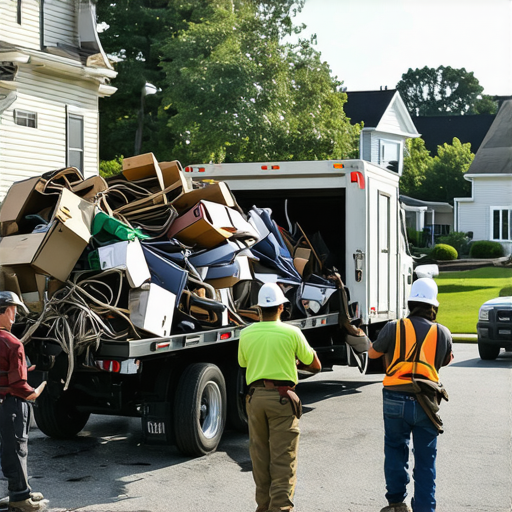
A business owner tried to save €500 by hiring a guy with a pickup truck from a social media ad. Two weeks later, the police called him because his company’s confidential files were found in a ditch. Your junk is your liability until it hits the scale. This is the reality of the waste industry that the curbside cowboys never mention. They take your cash, drive three miles into the woods, and dump your old life into a creek. When the Aurora authorities find a piece of mail or a prescription bottle with your name on it, you are the one facing the court date, not the guy with the rusty tailgate. I have seen it a hundred times. I have seen families lose thousands in legal fees because they wanted to save fifty bucks on a furniture removal job. The waste stream is a chain of custody. If you break that chain, you are responsible for where the pieces land. The smell of diesel and hydraulic fluid is the smell of a job done right. It is the smell of a truck that is actually going to the transfer station. In my twenty-five years of hauling, I have learned that the cheapest quote is usually a precursor to a police report. We do not just lift objects. We manage risk. Every cubic yard of debris we pull from a garage in Aurora is a potential liability that we neutralize through proper logistics and legal disposal paths. The industry is full of people who think a trailer and a pair of gloves make them a professional. They are wrong. A professional understands the physics of the load and the weight of the law.
The physics of the fifteen yard bin
Dumpster Rentals Aurora services depend on understanding the volumetric density of the materials being discarded. A standard Hoarder Clean Out aurora project can easily exceed the weight limits of a single axle truck if heavy tools are involved. Professional loading requires a tetris-like precision to maximize space while maintaining safe transport weights.
| Material Category | Estimated Weight per Yard | Disposal Priority | Aurora Recovery Path |
|---|---|---|---|
| Mixed Tool Steel | 450 lbs | High | Metal Scrap Yard |
| Demolition Wood | 250 lbs | Medium | C&D Processing |
| General Household Trash | 150 lbs | Low | Transfer Station |
| Heavy Appliances | 350 lbs | High | Appliance Recycling |
The truck groaned. The springs flattened under two tons of cast iron. This is what happens when you don’t calculate the density of your garage contents. A fifteen-yard dumpster might look huge, but when you start tossing in old engine blocks and floor jacks, you reach your weight limit long before you reach the top of the rail. Most people think about volume. I think about mass. I think about the strain on the hydraulic lift when we try to pull that bin onto the rails. If you air-stack your load, you are paying to haul Aurora oxygen. You need to break down every box. You need to nest smaller items inside larger ones. This is the science of cubing out a truck. When we handle a Furniture Removal task, we don’t just throw the sofa in. We dismantle the frame if it saves three cubic feet. Those three feet, multiplied across a whole garage, mean the difference between one trip and two. In the hauling world, the second trip is where the profit dies. The air in your dumpster is the most expensive thing you will ever buy. We focus on the microscopic reality of the removal. We look at the exact physics of how a 1970s drill press occupies space compared to a modern plastic storage bin. The drill press is dense and dangerous if it shifts. The plastic bin is light but consumes massive volume if it is not crushed. Managing these two extremes is how we maintain a high diversion rate and keep tipping fees manageable for the client.
Hazardous shadows in the tool chest
Appliance removal and tool disposal in Aurora involve strict adherence to the Resource Conservation and Recovery Act guidelines. Old power tools often contain nickel-cadmium batteries that pose a significant fire risk if crushed in a standard refuse truck. Identifying these hazards before they enter the waste stream is a core requirement for any legitimate Junk Removal specialist.
“Waste is merely a resource in the wrong place; professional removal is the science of putting it back where it belongs.” – Disposal Industry Maxim
I watched a rookie almost lose his eyebrows because a customer hid a half-full propane tank inside a pile of harmless yard waste. We don’t just lift; we inspect. Every. Single. Item. A garage is not just a room. It is a chemical storage facility that most people have forgotten about. Under that workbench, there is probably a gallon of lead-based paint from 1994. Behind the lawnmower, there is a plastic jug of old gasoline that has turned into a gummy, explosive varnish. These are the things that keep me up at night. When a truck catches fire on the way to the landfill, it is usually because someone hid a lithium-ion battery in a bag of trash. The pressure of the packer blade snaps the casing, the lithium hits the air, and suddenly you have a chemical fire that you cannot put out with water. This is why we are obsessed with the manifest. We need to know what we are hauling. If we see a tool chest, we open every drawer. We are looking for the oily rags that can spontaneously combust. We are looking for the old mercury switches. We are looking for the containers of banned pesticides that were pulled off the shelves decades ago. In Aurora, the local ground water is protected by these regulations. If we take a load of hazmat to a general landfill, we are poisoning the very soil our neighbors live on. It is not just about the heavy lifting. It is about the chemistry of the cargo.
Aurora transfer station reality
Junk Removal Aurora providers must navigate specific regional tipping schedules and permit requirements for large scale disposals. The local transfer stations have strict rules regarding the separation of electronics and metal from general debris. Failure to pre-sort a Garage Clean outs load can result in rejected shipments or significant surcharges at the scale house.
- Loose Asbestos insulation from old garage ceilings.
- Sealed pressurized cylinders including old fire extinguishers.
- Wet lead-acid batteries from forgotten automotive projects.
- Liquid industrial solvents or unhardened oil-based paints.
- Large quantities of unbagged fiberglass insulation.
The narrow streets of certain Aurora neighborhoods mean a 20-yard dumpster is a permit nightmare. You need a live-load truck for those tight spots. If you leave a bin on the street without a flashing light or a permit from the city, you are looking at a fine before the sun goes down. I know the guys at the scale house. They are tired of seeing people show up with a mixed load that hasn’t been sorted. They will make you turn around and drive thirty miles back to your house if they see a computer monitor buried under a pile of wood. That is why we sort on-site. We create piles for scrap metal, piles for e-waste, and piles for the landfill. It looks like a mess for the first hour, but it is the only way to be efficient. The carbon footprint of hauling low-grade plastics 500 miles often exceeds the impact of local, high-efficiency waste-to-energy incineration. This is a contrarian point that the green-washing companies won’t tell you. Sometimes, the most environmental thing you can do is burn the waste for electricity rather than shipping it across three states to a recycling center that is just going to store it in a warehouse. We understand the local Aurora grid. We know which facilities are actually recovering energy and which ones are just holes in the ground. Professional waste management is about making those choices on behalf of the client. It is about knowing that the wood waste from your old shelving has a high BTU potential and should be diverted to a biomass facility rather than a landfill.
Why your heavy workbench is a liability
Furniture Removal in a garage setting often involves structural elements like built-in workbenches and heavy-duty shelving units. These items require mechanical advantage and specific lifting techniques to avoid injury or damage to the property. A Hoarder Clean Out aurora often reveals that these structures are the only thing holding up decades of accumulated weight.
“Proper identification of hazardous materials in residential settings is the first line of defense for municipal groundwater safety.” – SWANA Technical Guide
I once cleared a house where the junk wasn’t just stuff. It was a structural hazard. We found the floor joists were bowing under the weight of 40 years of newspapers that had absorbed ten years of basement humidity. This happens in garages too. You have a workbench built by a grandfather who thought four-by-fours were the minimum requirement for a birdhouse. That bench weighs 400 pounds. It is bolted to the studs. If you try to pull it out without a reciprocating saw and a plan, you are going to bring the drywall with it. We approach these items with the mindset of a demolition crew. We evaluate the load-bearing points. We check for electrical lines that might be running through the bench for shop lights. We don’t just pull. We dissect. The floor snapped. That is the sound of an amateur trying to move a cast-iron lathe without a pallet jack. We use the right tools for the weight. We have the straps, the dollies, and the ramps. If your hauler shows up with just a pair of sneakers and a bad attitude, send them home. You are paying for the equipment and the expertise to use it. A garage clean out is a high-risk environment. You have sharp edges, heavy weights, and unstable stacks. It is a logistical puzzle that can break your back if you don’t respect the physics of the objects. We treat every heavy item as a tactical problem to be solved with leverage rather than brute force. This is how we keep our crews safe and your garage floor intact. The final tally of the load is always measured in tons and cubic yards, but the real success is a job where nothing was broken except the clutter cycle.