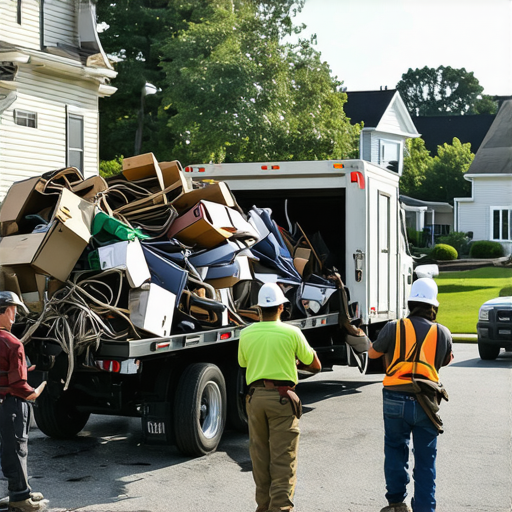

The physics of the load and the liability of the curb
I smell like diesel and hydraulic fluid because I spend twelve hours a day calculating how to fit five pounds of junk into a four pound bag. Experience teaches you that waste is not just debris. It is a logistical puzzle with legal consequences. A business owner once tried to save 500 dollars by hiring a guy with a pickup truck from a social media ad. Two weeks later, the police called him because his company confidential files were found in a ditch. Your junk is your liability until it hits the scale at a licensed facility. In Aurora, the shift toward stricter environmental enforcement means your old dresser is a data point in a waste stream that the city monitors with increasing scrutiny. If you think a curb is a magic portal where things disappear, you are mistaken. The curb is the start of a chain of custody. If that chain breaks, the fines follow the paper trail back to your front door.
The legal trap of unverified hauling
Furniture removal Aurora services must operate under strict state and local environmental guidelines to ensure that bulk waste like sofas, mattresses, and entertainment centers do not end up in local waterways or illegal dump sites. Your choice of a hauler determines your legal exposure under the Resource Conservation and Recovery Act (RCRA). Proper junk removal Aurora requires a manifest. This document proves the material reached a registered transfer station. Without it, you are gambling with municipal codes. The city has zero tolerance for fly-tipping. Local ordinances in 2026 have tightened. Cameras at common dumping spots now use plate recognition. If a cut-rate hauler dumps your old sectional in a forest preserve, the bill for the cleanup comes to you. Professionalism is not an aesthetic choice. It is insurance against litigation. We track every cubic yard. We know the tipping fees at every local station. We understand that the weight of the load dictates the route of the truck. This is the science of disposal.
“Waste is merely a resource in the wrong place; professional removal is the science of putting it back where it belongs.” – Disposal Industry Maxim
The heavy cost of keeping everything
Hoarder clean out Aurora projects represent the ultimate challenge in weight distribution and structural integrity. A house is not a warehouse. When you stack forty years of newspapers and furniture, the floor joists begin to fail. I have seen homes where the internal load exceeded the architectural limits by twenty tons. This is a structural hazard. The material absorbs moisture. It becomes a heavy, fermenting mass. We do not just walk in and start throwing things. We calculate the load path. We identify the load-bearing points. We remove items in a sequence that prevents a collapse. Junk removal in these environments is more like a controlled demolition. You have to account for the dust. You have to account for the biohazards. You have to consider the BTU potential of the debris if it were to catch fire. This is about safety first and volume second. The air in these homes is thick with particulate matter. We wear respirators. We use heavy-duty dollies. We never underestimate the grip of a wet carpet on a floorboard.
The anatomy of a garage clean out
Garage clean outs often reveal the hidden environmental dangers of a typical household. We find lead-acid batteries leaking onto concrete. We find old cans of oil-based paint that are now hazardous waste. You cannot just throw these into a dumpster rental Aurora unit. The landfill will reject the entire load. This triggers a contamination fee. A proper clean out involves sorting at the source. We separate the ferrous metals from the MDF furniture. We pull out the electronics for e-waste processing. The goal is diversion. We want to keep as much as possible out of the landfill. This lowers the tipping fee and satisfies state recycling mandates. The garage is the staging area for your home’s waste legacy. If you treat it like a pit, the cleanup becomes a hazmat operation. If you treat it like a logistics hub, the process is fast. We look for the tetris. We stack the heavy items low. We keep the center of gravity in the truck stable. We avoid wasted air space. Wasted space is wasted money. Fuel is expensive. Time is more expensive.
| Disposal Method | Volume Limit | Legal Liability | Environmental Impact |
|---|---|---|---|
| Curb Pickup | Low (2 items) | Homeowner | High |
| Dumpster Rental | Medium (10-30 yd) | Contractual | Moderate |
| Full Service Removal | High (Unlimited) | Transferred | Low (Recycling focus) |
The phantom weight of modern furniture
Furniture removal has changed because furniture has changed. The old solid oak tables were heavy but durable. Modern furniture is mostly medium-density fibreboard (MDF). This material is a nightmare. It is held together by resins that off-gas formaldehyde. When it gets wet, it swells and loses structural integrity. It crumbles during transport. This creates a mess in the truck and a hazard for the crew. We have to wrap these items to prevent them from disintegrating. The bulk density is high but the value is low. You cannot donate most modern flat-pack furniture because it does not survive a second move. This increases the landfill volume. We calculate the compaction ratio. We know that a modern sofa will take up six cubic yards but weigh less than an old four-yard solid frame. We adjust the truck’s hydraulic pressure to handle these varying densities. It is a constant recalibration of force and volume.
The hazardous surprise in the pile
Appliance removal is where the chemistry of waste management becomes apparent. You cannot simply toss a refrigerator. It contains refrigerants like Freon or R-134a. These are potent greenhouse gases. If you puncture a line, you are violating federal law. We use specialized recovery equipment. We check the compressors. We look for mercury switches in old washing machines. Junk removal Aurora teams must be certified to handle these materials. The same applies to old televisions. The cathode ray tubes (CRTs) in vintage sets contain pounds of lead. If the glass breaks, the lead dust becomes airborne. We treat every appliance as a potential environmental incident. We secure the doors. We strap the units. We ensure they stay upright to prevent oil leaks from the compressors. This is not just lifting. This is hazardous material handling. The city of Aurora requires specific disposal routes for these items. We follow them to the letter. We keep the logs. We protect the client.
- Lithium-ion batteries and power tool packs.
- Pressurized tanks including propane and fire extinguishers.
- Unlabeled liquid chemicals or industrial solvents.
- Biohazardous materials and medical waste.
- Tires and heavy automotive components.
- Ammunition or explosive materials.
The strategic use of dumpster rentals
Dumpster rentals Aurora provide a different logistical solution for long-term projects. If you are doing a phased renovation, a 15-yard roll-off is your best friend. But you must manage the load height. If the debris is over the rim, the driver cannot legally transport it. It is a safety risk on the highway. We see people trying to hide heavy concrete under light brush. This is a mistake. The truck has a lifting limit. If the dumpster is overweight, the hydraulics will stall. Then you are stuck with a heavy box on your driveway and a daily rental fee that never stops. You must understand density. A dumpster full of shingles weighs more than three dumpsters full of household junk. We help clients choose the right size. We explain the tonnage caps. We ensure the placement does not crack the driveway. We use wood planks to distribute the pressure. This is professional waste management. We think about the ground. We think about the overhead wires. We think about the neighbors. A dumpster is a tool. Use it wrong and it becomes a liability.
The future of waste diversion in Illinois
The goal is 100 percent diversion. We are not there yet. But the 2026 mandates are pushing us closer. We look for secondary markets for wood waste. We send scrap metal to local processors. We track the carbon footprint of our routes. While some think recycling is always the best path, the reality is complex. The energy cost of hauling low-grade plastics across three states often exceeds the benefit. We prefer local, high-efficiency waste-to-energy incineration for non-recyclable residuals. This reduces the need for new landfill cells. It provides power back to the grid. Junk removal Aurora is an essential part of the circular economy. We are the gatekeepers. We decide where the material goes. We take that responsibility seriously. Every load is an opportunity to recover value or mitigate harm. The floor snapped. The truck groaned. We moved the weight. That is the job. It is not pretty. It is necessary. It keeps the city clean. It keeps the environment safe. It keeps the law on your side.
“The Resource Conservation and Recovery Act (RCRA) creates a framework for the proper management of hazardous and non-hazardous solid waste.” – Environmental Protection Agency
This post highlights how critical proper waste management processes are, especially when dealing with bulky or hazardous items. From my experience living in Aurora, I’ve seen how stricter regulations and monitoring at the curb require homeowners to be more informed before disposal. The logistics involved in ensuring that items like MDF furniture or appliances with refrigerants are properly handled can be complex and often overlooked by the average person. I’ve always wondered how much of a difference local source separation makes in overall waste diversion? Personally, I think early sorting and understanding what can or cannot go in the regular trash are key to avoiding additional fees and environmental harm. Has anyone found particularly effective ways to prepare for a comprehensive cleanout without running into these hazardous surprises or legal pitfalls? It seems that partnering with the right professional not only saves money but also ensures compliance and environmental safety.