The burden of massive timber
Furniture Removal involves the strategic extraction of oversized pieces like armoires that exceed standard door widths and floor load capacities. In Aurora, this process requires understanding local tipping fees, weight distribution, and material recovery. Professional haulers prioritize cubic yard density to ensure the most efficient disposal path for these heavy oak or mahogany relics.
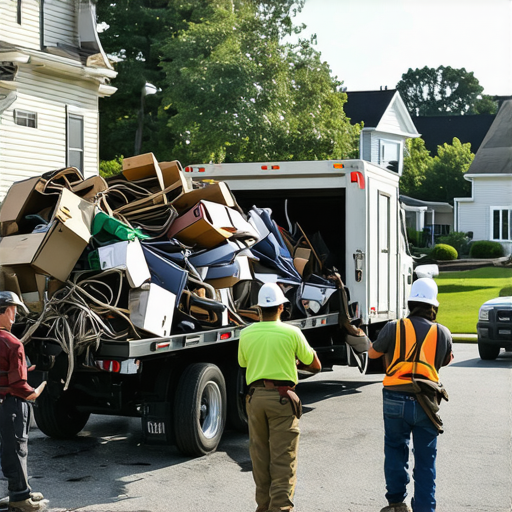
I smell like diesel and hydraulic fluid today. My hands are stained with the grey dust of a thousand basements. I see a room and I do not see memories. I see cubic yards. I see the Tetris of a fifteen yard dump truck. If there is a gap of six inches between a sofa and a wardrobe, that is a failure. That is wasted air. Wasted air is wasted money. I once cleared a house where the junk was not just stuff. It was a structural hazard. We found the floor joists were bowing under the weight of 40 years of newspapers that had absorbed ten years of basement humidity. The house was literally groaning under the mass of paper. We had to shore up the basement before we could even begin the removal. This is the reality of heavy loading. It is physics. It is sweat. It is the science of empty space.
The heavy cost of keeping everything
Junk Removal is often delayed until the weight of the objects threatens the physical integrity of the residential structure. An oversized armoire can weigh 400 pounds. This exerts significant pounds per square inch on aging floorboards. Identifying the structural load limits of your home is the first step before attempting any heavy furniture extraction or appliance removal project.
“Waste is merely a resource in the wrong place; professional removal is the science of putting it back where it belongs.” – Disposal Industry Maxim
A business owner tried to save 500 dollars by hiring a guy with a pickup truck from a social media ad. Two weeks later, the police called him because his company confidential files were found in a ditch. Your junk is your liability until it hits the scale. This is the law of the landfill. In Aurora, if your name is on a piece of paper found in an illegal dump site, you are the one the sheriff visits. We do not just haul. We chain of custody. We ensure that every scrap of wood and every ounce of metal reaches a licensed transfer station. The cheap guys dump in the creek. The pros pay the tipping fees at the Denver Arapahoe Disposal Site. You pay for the peace of mind that your debris will not end up as an environmental fine on your doorstep. Every single item we touch is inspected. We do not just lift. We verify. I watched a rookie almost lose his eyebrows because a customer hid a half-full propane tank inside a pile of harmless yard waste. That tank could have been a bomb in the back of the truck. We check everything.
The logistical failure of the DIY move
Furniture Removal Aurora residents often underestimate requires specific tools like forearm forklifts and high-capacity dollies. Attempting to move an armoire without weight-rated equipment leads to floor damage and personal injury. Professionals use ramps and lift-gates to manage the center of gravity of these top-heavy units during the loading phase.
| Method | Cost Basis | Labor Intensity | Landfill Impact |
|---|---|---|---|
| Professional Hauling | Cubic Yardage | Low | Medium |
| Dumpster Rental | Flat Rate plus Tonnage | High | High |
| Donation Pickup | Zero Cost | Moderate | Low |
| Material Breakdown | Time Invested | Extreme | Minimal |
When you look at an armoire, you see a cabinet. I see a logistical nightmare of solid cherry or oak. The wood density alone makes it a beast. A typical solid wood armoire can have a density of 40 to 50 pounds per cubic foot. In a 15 yard truck, that is a massive chunk of your weight limit. Most trucks in the Aurora fleet are rated for a specific Gross Vehicle Weight Rating. If we load too many solid wood pieces without balancing the load with lighter debris, we risk a fine at the scales. The physics of the load matter. We place the heaviest items over the axles. We never put an armoire at the very back of the gate. It makes the front wheels light. It makes the steering loose. It is a safety hazard on the highway. We think about these things so the customer does not have to.
Why your cheap hauler is a legal time bomb
Junk Removal regulations under the Resource Conservation and Recovery Act mandate that certain materials be separated before disposal. Fly-by-night operations often ignore these hazmat protocols, leading to potential legal action against the original homeowner. Verification of hauling permits and insurance coverage is mandatory for any large scale furniture removal project in the Aurora region.
- Lead-acid batteries found in old electronics
- Propane tanks hidden in cabinets
- Wet paint or wood stains inside drawers
- Tires with steel belting
- Fluorescent light tubes containing mercury
- Bio-hazardous waste or medical needles
The narrow streets in some older Aurora neighborhoods mean a 20 yard dumpster is a permit nightmare. You need a live-load truck. A live-load means we pull up, we load, and we leave. No dumpster sitting on your driveway cracking the concrete. No neighbor complaining about the eyesore. Just a clean exit. People think a dumpster is easy. They forget that you have to pay for the permit. They forget that the city will fine you if it blocks the sidewalk. We handle the logistical flow. We know the Aurora municipal code. We know which streets require a flagger for a truck to park. This is the expertise that a curbside cowboy lacks. They do not know the code. They only know the cash.
The ghost in the garage
Garage Clean outs frequently reveal furniture that has absorbed ambient moisture, increasing its weight and fragility. An armoire stored in a damp garage for years will have swollen wood fibers and potentially mold spores. Professionals use PPE and moisture barriers to prevent the transfer of these contaminants into the primary living spaces during the removal process.
“Effective waste management is the silent heartbeat of a functional city; without it, the infrastructure of the modern world collapses under its own weight.” – SWANA Technical Manual
I hate modern disposable furniture. It breaks if you look at it wrong. It is made of sawdust and glue. It is heavy but it has no soul. But an old armoire? That is different. That is real wood. It has a high BTU potential if it goes to a waste-to-energy plant. But most people do not understand the carbon footprint. While most people think recycling is always better, the carbon footprint of hauling low-grade plastics 500 miles often exceeds the impact of local, high-efficiency waste-to-energy incineration. We look at the material. We decide where it goes. Does it go to the wood chipper? Does it go to the secondary market? Does it go to the landfill? We calculate the diversion rate for every load. My goal is a 60 percent diversion rate. That means 60 percent of what we haul does not touch a landfill. That is how you run a professional waste operation.
The heavy cost of ignoring physics
Appliance removal and furniture extraction share the same mechanical requirements. You must understand fulcrums and leverage. Moving an armoire down a flight of stairs requires a two-man minimum with climbing dollies. The structural load of the stairs must be checked for rot or fatigue before the 400 pound descent begins to ensure the safety of the crew and the property.
The floor snapped. That was the sound I heard when a rookie tried to pivot a wardrobe on a weak subfloor. You have to know where the joists are. You have to know how to spread the weight. We use plywood sheets to create a temporary floor if we have to. We do not take chances. We do not guess. We measure the doorway. We measure the hallway. We calculate the turn radius. If the armoire will not fit, we break it down. We remove the doors. We remove the crown molding. We take it apart screw by screw if that is what the job requires. It is not about brute force. It is about intelligence. It is about knowing how the piece was built so you know how to destroy it. Every armoire has a weakness. Usually it is the back panel or the base. Once you find it, the piece yields. Then it becomes manageable sections of wood. Then it becomes a loadable commodity. This is how we win the war against junk. One cubic yard at a time. One heavy lift at a time. The diesel keeps burning. The truck keeps moving. The city stays clean.