The dangerous reality of the curbside gamble
A business owner in the Aurora metro area once tried to save five hundred dollars by hiring a guy with a beat-up pickup truck found on a social media marketplace. Two weeks later, the Aurora Police Department called him because his company’s confidential files and several broken leather recliners were found rotting in a ditch near the Cherry Creek spillway. Your junk is your liability until it hits the certified scale at the transfer station. This is the first lesson of professional waste management. When you hire an unvetted hauler, you are not just paying for a lift. You are outsourcing your legal responsibility to the local environment. Professional furniture removal requires a deep understanding of the Resource Conservation and Recovery Act and local municipal codes. In Aurora, the disposal of bulky items is governed by strict volumetric and weight-based pricing at facilities like the Denver Arapahoe Disposal Site. If that guy with the truck skips the gate fee to pocket your cash, the paper trail leads directly back to your front door. We see this happen every season. It is a logistical failure that costs homeowners thousands in fines and legal headaches. We do not just haul. We provide a chain of custody for your discarded assets. Every recliner and every appliance is tracked until it is processed for material recovery or safely entombed in a managed landfill cell.
The mechanical skeleton of modern seating
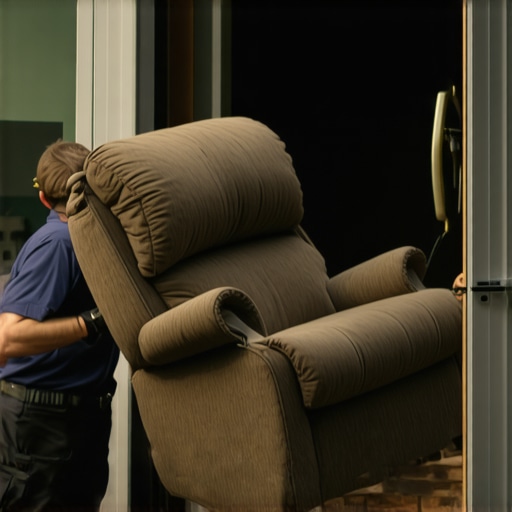
A heavy recliner is not just furniture but a cantilevered machine weighing between 100 and 150 pounds of mixed materials. These units contain high-tension steel springs, salt-treated lumber, and high-density polyurethane foam that often contains legacy flame retardants. Moving these items through a standard 30-inch Aurora residential door frame requires an understanding of the unit’s center of gravity. Most modern recliners are constructed with a modular backrest held by locking metal tabs. If you do not disengage these tabs, you are fighting a dead weight that will likely gouge your drywall or cause a lumbar injury to the operator. The logistics of the move dictate that the mechanism must be wired shut to prevent the footrest from deploying mid-transit. A deployed footrest in a narrow hallway is a recipe for a structural collision. We calculate the turn radius of every piece before it leaves the carpet. This is the difference between a professional load-out and a weekend disaster. The physics of a recliner make it a uniquely difficult item for standard trash pickup. Most local municipal services in Aurora will not touch a mechanical chair because the hydraulic or spring-loaded components can damage the compaction blades of a standard garbage truck.
“Waste is merely a resource in the wrong place; professional removal is the science of putting it back where it belongs.” – Disposal Industry Maxim
The chemistry of the foam and environmental impact
Polyurethane foam found in older recliners is a petroleum-based product that does not break down in the traditional sense within a landfill environment. Instead, it undergoes a process of mechanical fragmentation where it becomes micro-plastic dust that can enter the local water table. In Aurora, protecting our groundwater is a primary concern for waste management professionals. When a recliner is tossed into a dumpster, the foam is often compressed, releasing chemical outgassing. We look at diversion rates. Can the metal frame be stripped and sent to a scrap yard? Can the wood be chipped for biomass? These are the questions a logistics expert asks. The high BTU potential of the wood frames is wasted when they are buried. However, the treated nature of the wood means it cannot be burned in home fireplaces without releasing toxic fumes. The logistical zoom here reveals that a single chair is a complex puzzle of chemical and physical components. We manage the separation of these materials at the source whenever possible. This reduces the overall tipping fee and ensures that the most hazardous parts of the furniture are handled with the respect they deserve under environmental law.
[image_placeholder_1]
Logistical tetris and truck volume optimization
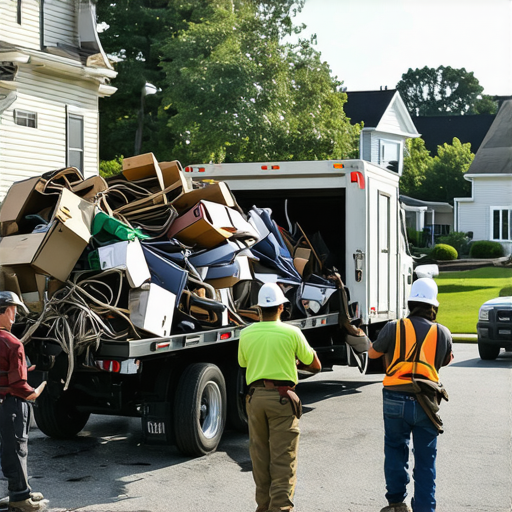
The efficiency of a junk removal job is measured in cubic yards and the density of the pack within the truck bed. A 15-yard dump body is a finite space. If you toss a recliner in haphazardly, you are creating massive air pockets that drive up the cost of the haul. We use the ‘cubing out’ method where we break down the furniture to ensure maximum density. Every square inch of the truck must be accounted for to minimize the carbon footprint of the trip to the Aurora transfer station. A truck that is only fifty percent dense is a logistical failure. It means more trips, more diesel burned, and more wear on the hydraulic systems. We analyze the load. If we are doing a garage clean out, the recliner becomes the anchor point. We pack smaller items into the gaps created by the recliner’s frame. This is a science. We are looking at the weight distribution over the rear axle of the truck. A heavy load shifted too far back can cause the steering to become light, a dangerous situation on the I-225 during a Colorado snowstorm. Professional hauling is as much about road safety as it is about lifting heavy objects.
| Metric | Cubic Yard Pricing | Weight-Based Pricing |
|---|---|---|
| Primary Factor | Space occupied in truck | Tonnage at the scale |
| Best For | Light furniture, boxes | Construction debris, soil |
| Aurora Reality | Standard for residential | Standard for roll-off dumpsters |
| Risk Factor | Under-filling the volume | Exceeding axle weight limits |
Why basement stairs are the enemy of the amateur
Navigating a 120-pound recliner up a flight of narrow basement stairs involves managing the structural load limits of the staircase and the physical stamina of the crew. Many older homes in the Aurora area have stairs that were not designed for the dimensions of modern ‘overstuffed’ furniture. We see stairs that are bowing under the weight of the movers and the piece. This is where the ‘logistical zoom’ becomes a matter of life and safety. We use specialized straps that shift the weight from the lower back to the larger muscle groups of the legs and shoulders. We also use floor protection because the metal feet of a recliner will shred hardwood or laminate if dragged even an inch. The friction coefficient of a heavy chair on a carpeted surface is high. You cannot just pull it. You have to float it. We use sliders and specialized dollies that are rated for the specific weight of the item. If you try to do this yourself, you are one slip away from a trip to the emergency room or a hole in your floor that will cost more to fix than the removal fee itself.
Items your hauler cannot legally touch
- Lead-acid batteries hidden in power recliners
- Propane tanks or pressurized cylinders
- Unlabeled chemical drums or household hazardous waste
- Asbestos-containing materials from old renovations
- Fluorescent light ballasts containing PCBs
- Biological or medical waste
The contrarian truth about recycling furniture
While the public narrative suggests that every piece of furniture should be recycled, the carbon footprint of transporting a low-grade recliner to a specialized textile recycler often exceeds the environmental benefit. This is an uncomfortable truth in the waste industry. If the nearest facility that can handle the specific bonded leather and foam of a cheap recliner is 500 miles away, the diesel burned to get it there creates a net negative for the planet. In these cases, high-efficiency waste-to-energy incineration is often the more ecological choice. In Aurora, we have to balance the desire for 100 percent diversion with the reality of our regional infrastructure. We focus on the high-value materials. Steel is a win. Clean wood is a win. Low-grade composite materials are often best handled through local landfill sequestration where they can be managed without the massive carbon overhead of long-distance hauling. This is the strategic view of waste management. It is not about feeling good; it is about the math of the planet’s resources. We provide our clients with the facts, not the marketing fluff.
“The Resource Conservation and Recovery Act (RCRA) gives EPA the authority to control hazardous waste from the cradle to the grave.” – Environmental Protection Agency
The heavy cost of keeping everything
Hoarding situations and overcrowded garages are not just aesthetic issues but fire hazards and structural liabilities for the homeowner. In Aurora, we have seen floors that have settled by two inches because of the weight of accumulated furniture and appliances. A garage clean out is often a mechanical necessity for the home. When you stack items against a wall, you are creating a habitat for pests and trapping moisture against the foundation. This leads to mold growth and the degradation of the home’s envelope. The ‘logistical zoom’ into a hoarded space reveals a complex ecosystem of decay. We approach these jobs with a tactical mindset. We clear paths. We identify the ‘data overflow’ in the physical space. We look for the basement joists that are under stress. Removing three or four old recliners can take half a ton of pressure off a residential floor. This is home maintenance through subtraction. It is a necessary process to preserve the value of the property and the safety of the occupants.