
The logistical weight of an Aurora heritage
Moving heavy oak desks in Aurora requires more than just muscle; it demands a calculated understanding of structural load-bearing limits and regional disposal regulations. When you encounter a solid oak executive desk from the mid-twentieth century, you are not dealing with modern particle board. You are dealing with a biological density of approximately 45 pounds per cubic foot. This translates to a single piece of furniture that can easily exceed 300 pounds. My twenty-five years in the waste management sector have taught me that these items are the primary cause of lower back injuries and damaged drywall in suburban Aurora homes. A business owner once tried to save 500 dollars by hiring a guy with a pickup truck from a social media ad. Two weeks later, the police called him because his company’s confidential files were found in a ditch. Your junk is your liability until it hits the scale. This is the reality of the illegal dumping trap. You think you are paying for removal, but if you do not verify the destination, you are paying for a potential lawsuit. In Aurora, the local transfer stations demand strict adherence to manifest protocols. If that desk contains lead-based paint or old solvent residues in the drawers, it ceases to be furniture and becomes a hazardous waste management challenge. We do not just lift, we inspect. Every. Single. Item.
The physics of the fifteen yard tetris
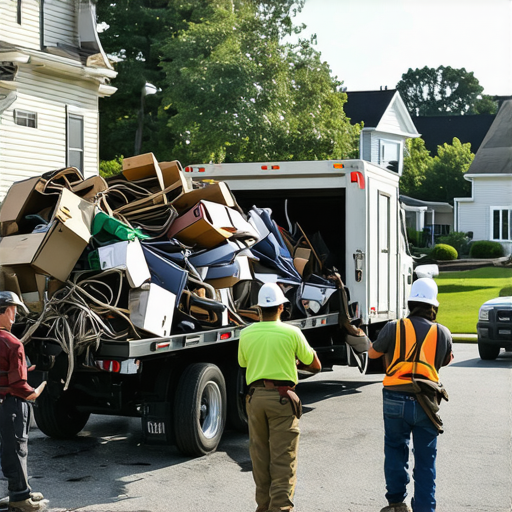
Optimizing truck space during furniture removal involves calculating the displacement of solid mass versus air volume to ensure the highest diversion rate possible. When a 15-yard truck rolls into a driveway for a Hoarder Clean Out aurora, the goal is ‘cubing out’ the load. This means filling every square inch of the cargo area so that no air is being transported. Air is expensive. Air does not pay the tipping fees at the landfill or the processing costs at the recycling center. A solid oak desk is a logistical nightmare because it is a ‘hollow’ cube. To counter this, we use the internal cavities of the desk to store smaller items from Garage Clean outs or general Junk Removal. We might pack a disassembled bed frame or several bags of clothing into the knee-hole of the desk. This maximizes the weight-to-volume ratio. The structural integrity of the oak allows it to act as a base layer for heavier Junk Removal Aurora projects. You can stack three hundred pounds of debris on top of a quality oak desk without the wood splintering. Try that with a modern flat-pack desk and the whole pile collapses, creating a safety hazard for the crew and a mess for the homeowner. Logistics is about managing gravity and friction. We use 1,000-pound rated moving dollies with non-marring rubber wheels to navigate the tight corridors of older Aurora residences. If the desk is on a second floor, we have to calculate the pivot point of the staircase. One wrong move and the desk becomes a battering ram that can take out a structural banister.
“Waste is merely a resource in the wrong place; professional removal is the science of putting it back where it belongs.” – Disposal Industry Maxim
Aurora transfer stations and the paper trail
Navigating the legal requirements of Furniture Removal in Aurora requires documented proof of disposal at licensed facilities like the Denver Regional Landfill or local transfer stations. The City of Aurora has specific bulky-item pickup schedules, but they often exclude the massive, heavy-duty furniture found in estate clearings. This is where professional Junk Removal Aurora services become necessary. We maintain a strict paper trail for every ton we haul. This protects the client from the legal fallout of fly-tipping. When we pull onto the scales, the truck is weighed in and weighed out. The difference is the tonnage we pay for. For heavy oak furniture, the weight adds up quickly. A single house cleanout involving three or four of these desks can push a truck over its Gross Vehicle Weight Rating (GVWR) if the loader is not careful. We monitor the leaf springs of the truck as we load. If the suspension is bottoming out, the load is finished, regardless of how much visual space is left. This is the technical reality that ‘curbside cowboys’ ignore. They overload their pickups, creating a hazard on I-225 when their tires blow out under the stress of two tons of oak and old appliances. Appliance removal is another layer of complexity. If we are pulling a refrigerator alongside that desk, we must ensure the freon has been recovered by a certified technician. The EPA is very clear on this. Failure to manage ozone-depleting substances results in fines that can bankrupt a small operation.
| Metric | Cubic Yard Basis | Weight-Based Basis |
|---|---|---|
| Primary Cost Driver | Volume of space occupied | Tonnage at the scale |
| Best for | Light debris, sofas, chairs | Oak desks, concrete, dirt |
| Aurora Average Fee | $40 – $60 per yard | $75 – $110 per ton |
| Risk of Overload | Low | Very High |
The structural limits of a residential staircase
Assessing the structural capacity of a home during a heavy furniture move is a critical safety protocol that prevents catastrophic floor failure. Most residential stairs are designed for a live load of 40 pounds per square foot. When two men weighing 200 pounds each carry a 300-pound oak desk, the concentrated load on a single stair tread can exceed 700 pounds. If the wood is aged or has moisture damage from a basement Hoarder Clean Out aurora, the treads can snap. We look for signs of dry rot and termite damage before we even touch the furniture. The physics of the ‘tip and slide’ method is our preferred approach. By using high-density polyethylene sliders, we reduce the coefficient of friction, allowing the desk to move across carpets with minimal effort. This protects the carpet fibers from being sheared off by the weight of the oak. In Aurora’s newer developments, the hallways are wider, but the walls are often thinner. One slip with a heavy desk corner and you are looking at a four-foot hole in the drywall. We use corner guards and moving blankets as a standard operating procedure. It is not about being ‘careful,’ it is about the mechanical application of padding to mitigate the risks of inertia. When a 300-pound object is in motion, it wants to stay in motion. Controlling that momentum is the hallmark of a professional hauler.
The toxic reality of forgotten lacquer
Furniture Disposal is not just a physical task but an environmental one because of the VOCs and heavy metals found in old wood finishes. The beautiful sheen on a vintage oak desk is often the result of nitrocellulose lacquer or lead-based stains. When these items are crushed in a landfill, those chemicals can leach into the groundwater. While most people think recycling is always better, the carbon footprint of hauling low-grade plastics 500 miles often exceeds the impact of local, high-efficiency waste-to-energy incineration. However, solid oak is different. It is a high-BTU fuel source. If the wood is untreated or the finish can be stripped, the wood can be diverted from the landfill and sent to a biomass processor. In Aurora, we strive for a diversion rate of at least 60 percent. This means sixty cents of every dollar of waste is kept out of the ground. We identify pieces that are eligible for donation to local charities or woodworkers who can reclaim the lumber. Reclaimed oak is a premium material. By stripping the desk down, we turn a disposal cost into a resource gain. This is the core of the ethical waste management philosophy. We do not see trash, we see raw materials that have been temporarily abandoned. The challenge is the labor cost of disassembly. It takes thirty minutes to break down a desk into its component parts. At current labor rates in Aurora, that can sometimes cost more than the tipping fee. This is the economic paradox of recycling.
- Lead-acid batteries hidden in drawers
- Propane tanks or pressurized cylinders
- Aerosol cans with residual solvents
- Fluorescent light tubes from desk lamps
- Biohazardous materials or medical waste
- Industrial chemicals or unlabelled liquids
The economics of the local tipping fee
The financial feasibility of a Junk Removal Aurora project is dictated by the fluctuating tipping fees at regional disposal sites. These fees are not static. They change based on the landfill’s remaining capacity and state environmental surcharges. In the Aurora area, you are looking at a complex mix of municipal and private facilities. A Dumpster Rentals Aurora service might seem cheaper upfront, but once you factor in the permit for placing a bin on a public street and the ‘overage’ fees for exceeding the weight limit, the costs explode. Heavy oak furniture is the ‘weight-limit killer.’ A 20-yard dumpster has a weight limit of usually three or four tons. If you fill that with heavy furniture and old appliances, you will hit that limit long before the bin is visually full. Then you are paying 100 dollars for every ton over the limit. This is why a full-service Junk Removal model is often more cost-effective for homeowners. You pay for what we take, and we handle the ‘tetris’ to ensure the weight is distributed correctly. We also avoid the ‘dead time’ of a dumpster sitting in your driveway for a week. A professional crew can clear a garage full of junk in two hours, whereas a rental dumpster requires you to do the heavy lifting yourself, risking injury and property damage.
“Modern waste management is the invisible thin red line between a functional city and a public health crisis.” – SWANA Technical Report
The better way to handle heavy wood
Sustainable furniture disposal focuses on the hierarchy of waste which prioritizes reuse and reclamation over landfilling and incineration. When we handle an oak desk in Aurora, we look at the joinery. If it is dovetail construction, it is worth saving. If it is held together by staples and glue, it is headed for the shredder. The shredding process at a modern transfer station is a marvel of engineering. Massive hydraulic teeth can grind a solid oak desk into mulch in under ten seconds. This mulch is then screened for metal (screws, drawer pulls, hinges) using powerful electromagnets. The resulting wood chips can be used for landscaping or as cover material for the landfill itself. This is the ‘backdoor’ of the industry that most people never see. Every item has a lifecycle. Our job is to manage the end of that cycle with maximum efficiency and minimum environmental impact. Whether it is a Hoarder Clean Out aurora or a simple Appliance removal, the goal remains the same. We reduce the volume, recover the value, and dispose of the rest responsibly. This is the science of waste. This is why we are the veterans of the load. We understand that in the world of hauling, there is no such thing as ‘away.’ Everything goes somewhere. Our mission is to ensure that ‘somewhere’ is the right place for the material and for the community of Aurora.