The illegal dumping trap
Furniture removal in Aurora requires strict adherence to local disposal laws and heavy load logistics. Most residents understate the complexity of hauling heavy executive desks. A professional furniture disposal strategy involves assessing material density, weight distribution, and the legal chain of custody for waste materials to ensure environmental compliance.
A business owner tried to save 500 dollars by hiring a guy with a pickup truck from a social media ad. Two weeks later, the police called him because his company documents and office furniture were found in a ditch. Your junk is your liability until it hits the scale at the transfer station. This story illustrates the danger of the curbside cowboy. These operators ignore tipping fees at the Denver Regional Landfill and dump in local creeks. When you hire for junk removal Aurora, you pay for the peace of mind that comes with a certified weight ticket. I have seen countless homeowners face fines because they thought a cheap hauler was a bargain. It is a legal time bomb.
The physics of heavy weight
Heavy desks often consist of high density fiberboard or solid mahogany which creates significant structural load during removal. Professional haulers calculate the center of gravity before lifting to prevent floor damage or personal injury. Most executive desks weigh between three hundred and six hundred pounds requiring specialized equipment for safe extraction from residential spaces.
The mahogany desk is a beast of burden. It does not bend. It does not forgive. When we enter a home for furniture removal, the first thing we check is the floor joists. If a desk has sat in one spot for thirty years, the wood underneath has compressed. Moving that weight suddenly can cause floorboards to groan. We use heavy duty glass suction cups or specialized furniture dollies with non-marking rubber wheels. The goal is to minimize the friction coefficient. Every inch of movement is a calculation of torque and leverage. In Aurora, many homes have narrow basements. This means we often have to perform a total disassembly. This is not just unscrewing a few bolts. It is a surgical strike on the structural integrity of the piece. We track every cam lock and dowel. If the desk is destined for a donation center, it must arrive functional. If it is headed for the scrap heap, we focus on material separation.
“Waste is merely a resource in the wrong place; professional removal is the science of putting it back where it belongs.” – Disposal Industry Maxim
The math of the fifteen yard truck
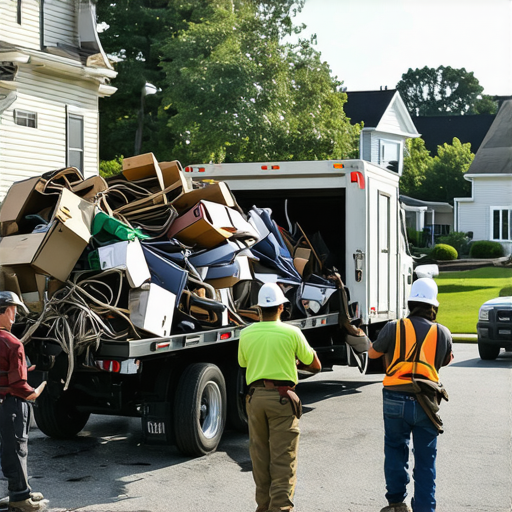
Cubic yard density determines the cost of any junk removal project in Aurora. We utilize the tetris method to minimize air gaps in the truck bed. A fifteen yard truck can hold the equivalent of six standard sofas. Maximizing this space is the only way to offset rising fuel and tipping costs.
Air is the enemy of the logistics manager. If I see a truck leaving a job site with empty pockets of space, that is lost revenue and wasted fuel. We stack desks vertically when possible, using the flat surfaces to create shelves for smaller items like office chairs or lamps. This is called cubing out the load. In Aurora, tipping fees are calculated by weight or volume depending on the facility. The logic is simple. More weight equals more fuel consumption. We must balance the load over the rear axles to maintain hydraulic pressure and braking efficiency. A truck that is nose heavy is a death trap on the I-225. We look at the BTU potential of the wood. Solid wood desks can be diverted to wood waste processors where they are ground into mulch or biomass fuel. Particle board is a different story. It contains resins and glues that make it a Grade D waste product. It goes straight to the landfill. We minimize the environmental footprint by separating these materials at the source.
Aurora furniture disposal protocols
Local waste ordinances in Aurora dictate where and how office furniture can be discarded. Residents must distinguish between municipal bulky item pickup and private hauling services. Many local facilities require a manifest for commercial loads to ensure that no hazardous materials are hidden within the furniture frames.
The City of Aurora has specific rules about what can sit on the curb. A massive L-shaped desk is rarely accepted by standard trash cycles. This is where dumpster rentals Aurora become a viable secondary option for large garage clean outs. If you are clearing a whole office, a 20 yard roll-off is more efficient. However, the permits for street placement in certain Aurora neighborhoods are a hurdle. We handle the permit logistics. We know which streets require a traffic control plan. We also know the hours of the local transfer stations like the back of our hands. We avoid the mid-day rush when the wait times can exceed two hours. Time is money in the waste industry. Every minute spent sitting in a queue at the scale house is a minute the truck is not earning its keep. We prioritize early morning drops to keep the flow of materials moving toward their final destination.
| Material Type | Weight per Cubic Foot | Primary Disposal Method | Environmental Impact |
|---|---|---|---|
| Solid Oak Wood | 45 lbs | Recycling / Mulch | Low |
| MDF / Particle Board | 38 lbs | Landfill | High |
| Steel Frame Desk | 490 lbs | Scrap Metal | Negative (Carbon Credit) |
| Glass Desktop | 160 lbs | Specialized Glass Recycling | Moderate |
The desk disassembly blueprint
Disassembling a heavy desk reduces the physical footprint and prevents damage to interior walls during the removal process. Professionals use impact drivers and hex keys to break down furniture into manageable components. This process allows for better weight distribution within the hauling vehicle and protects the home.
I have seen rookies try to carry a full sized executive desk down a flight of stairs. It usually ends with a hole in the drywall or a broken toe. We strip the desk to its carcass. Drawers come out first. They are packed separately to prevent them from sliding out and acting like a guillotine. The hutch is the next to go. We check for hidden screws behind the backing board. Many modern desks use cam locks that require a specific quarter turn to release. If you force it, the MDF shatters, creating a cloud of formaldehyde-laden dust. This is a health hazard. We wear respirators during heavy disassembly. The goal is a clean exit. We use moving blankets to wrap the larger panels. This is not just to protect the desk. It is to protect the house. A sharp corner of a mahogany desk will slice through plaster like a knife. We treat the home like a high security zone. One wrong move and the profit from the job is gone in repairs.
“Solid waste management represents the final stage of the materials lifecycle, requiring rigorous adherence to local transfer station protocols.” – EPA Waste Management Guidelines
The heavy cost of keeping everything
Hoarder clean out Aurora services address the psychological and physical burden of accumulated furniture. Excessive furniture creates fire hazards and limits egress routes in emergency situations. Clearing out heavy desks is often the first step in restoring the safety and functionality of a living space.
In a hoarding situation, a desk is never just a desk. It is a horizontal surface that has collected strata of paper and debris over decades. The weight is not just the furniture; it is the compressed history on top of it. We have found floor joists bowing under the pressure of twenty years of National Geographic magazines stacked on a heavy oak desk. The moisture in the basement gets absorbed by the paper, doubling its weight. We call this a structural hazard. When we perform a hoarder clean out, we have to clear a path to the desk first. It is often the anchor of the room. We use industrial strength shovels and heavy duty bags before we even touch the furniture. The smell is a mix of dust, old ink, and neglect. We wear Tyvek suits for a reason. You never know what is living under a desk that has not moved since 1994. We found a nest of brown recluse spiders in one Aurora garage clean out last month. We don’t just lift. We inspect. Every. Single. Item.
Items your hauler cannot legally touch
Federal and state laws prohibit junk removal companies from transporting hazardous materials without specific licensing. This protects the workers and the environment from chemical spills and fires. You must dispose of these items through specialized municipal hazardous waste programs.
- Lead-acid batteries found in desk UPS systems
- Mercury switches in old office equipment
- Unbound asbestos insulation in vintage desk safes
- Wet paint or varnish containers
- Pressurized cylinders or fire extinguishers
- Fluorescent light tubes from desk lamps
The lifecycle of a desk
Furniture disposal concludes when the materials are processed at a certified facility. This ensures that wood, metal, and plastic components are diverted from the landfill whenever possible. Professional removal companies provide a chain of custody that satisfies environmental audits and local regulations.
Once the truck is loaded and the tarp is secured, the journey is only half over. We head to the transfer station where the load is inspected. If we have done our job right, the metal is separated. Steel pedestals go to the scrap yard where they are melted down. This is the ultimate recycling. It takes ninety five percent less energy to recycle steel than to mine it. The wood goes to a grinder. The particle board, unfortunately, reaches the end of its life. It is buried in a lined cell at the landfill where the leachate is monitored for years. We take this responsibility seriously. Every cubic yard we divert is a win for the local environment. We don’t just throw things away. There is no such place as away. Everything goes somewhere. Our job is to make sure it goes to the right place. We provide the documentation to prove it. In the world of waste, the paper trail is as important as the truck.