Why your cheap hauler is a legal time bomb
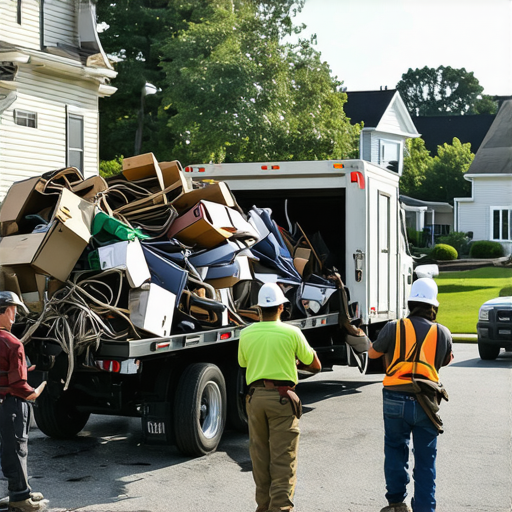
Junk removal Aurora services must prioritize legal disposal and environmental safety to protect homeowners from liability and environmental fines. I once cleared a house where the junk was not just stuff. It was a structural hazard. We found the floor joists were bowing under the weight of 40 years of newspapers that had absorbed ten years of basement humidity. A business owner tried to save 500 dollars by hiring a guy with a pickup truck from a social media ad. Two weeks later, the police called him because his company confidential files were found in a ditch near the Fox River. Your junk is your liability until it hits the scale. The illegal dumping of hazardous materials can lead to massive Kane County fines. We see it every day. Fly-tippers take your money and dump your old sofa in a forest preserve. The paper trail leads back to you. Professional waste management is about the chain of custody. When we pull a truck into a transfer station in Aurora, we receive a weight ticket. That ticket is your insurance. It proves the material reached a licensed facility. Without it, you are gambling with the law. The scent of diesel and hydraulic fluid is the smell of a legitimate operation. We track every cubic yard. We calculate the density of every load. If a truck is over-weighted, it becomes a kinetic weapon on the Illinois tollway. Safety is not an accident. It is a logistical requirement. Use a pro. Save your future. Protect the Fox River. Keep Aurora clean.
“Waste is merely a resource in the wrong place; professional removal is the science of putting it back where it belongs.” – Disposal Industry Maxim
The ghost in the garage
Garage clean outs involve the systematic identification and removal of accumulated debris, hazardous chemicals, and forgotten inventory to restore property value and safety. Most people see a pile of old boxes. I see a fire load. I see a collection of volatile organic compounds leaking from half-filled paint cans. The garage is often the most dangerous room in an Aurora home. We find old fertilizers that have turned into unstable nitrates. We find lead-acid batteries leaking onto concrete. This is where the Tetris of the load begins. We pack the heavy, inert items at the bottom. We secure the hazardous items in specialized bins. A garage clean out is not just tossing bags. It is an audit. We look for the silverfish nesting in the cardboard. We look for the mold spores on the drywall. Every item has a weight. Every item has a volume. The math of the truck is absolute. We do not allow wasted air space. Air space is lost profit. We pack tight. We pack smart. We ensure that the tires of the truck are pressured for the load. The physics of junk removal requires a deep understanding of structural load limits. If your garage floor is cracked, we do not park the 15-yard dumpster there. We use wooden planks to distribute the pressure. We protect your driveway. We protect your peace of mind.
The heavy cost of keeping everything
Hoarder clean out Aurora projects require specialized logistics, heavy-duty protective gear, and a deep understanding of material density to safely clear hazardous living environments. A hoarding situation is a data overflow error in physical space. The sheer mass of the objects creates a unique set of challenges. The air quality is often compromised. We wear respirators. We wear puncture-resistant gloves. The material is often compacted. A stack of newspapers three feet high has the density of a soft wood. It is heavy. It is dangerous. We have seen floorboards snap under the weight of collected magazines. In Aurora, the humidity can turn a hoarded house into a breeding ground for pathogens. We do not just haul. We sanitize. We sort the recoverable metals from the rotting organic matter. The goal is a high diversion rate. We want to keep as much as possible out of the landfill. This is the science of material recovery. We identify copper, aluminum, and high-density plastics. We look for the BTU potential in the wood. It is a grueling process. It takes a team of specialists. It is not a job for a weekend warrior. It is a professional extraction. We clear the paths. We secure the exits. We restore the flow of the home. It is a logistical victory over chaos.
The phantom weight of appliance removal
Appliance removal in Aurora necessitates the recovery of refrigerants and the recycling of heavy metals according to strict environmental regulations and local ordinances. An old refrigerator is a box of legal requirements. It contains Freon. It contains mercury switches. You cannot just throw it in a landfill. The EPA is clear on this. We extract the gases. We strip the components. The steel is sent to a shredder. The copper coils are recovered. The appliance removal process is a surgical operation. We use specialized dollies. We protect the floors of your Aurora kitchen. We calculate the center of gravity of a washing machine before we move it. If you tilt it the wrong way, the counterweights shift. It can crush a foot. It can dent a wall. We don’t just lift. We inspect. Every. Single. Item. The logistics of moving a 300-pound stove down a flight of stairs requires a two-man team and a specific strap system. We do not gamble with gravity. We respect the weight. We respect the material. The goal is total recycling. The metal from your old stove will become a beam in a new building. That is the circular economy in action. That is how we keep Aurora green.
| Landfill Tipping | $65 – $95 | High Methane | 0% |
| Recycling Center | $40 – $60 | Low Carbon | 85% |
| Waste-to-Energy | $75 – $110 | Medium Carbon | 100% |
| Illegal Dumping | $10,000+ (Fine) | Severe Damage | -100% |
Furniture removal and the particle board myth
Furniture removal services focus on the separation of high-quality wood from low-grade composites to maximize the recycling potential of residential waste streams. I hate modern furniture. It is mostly glue and sawdust. It is designed to fail. When we do a furniture removal in Aurora, we look for the real wood. Real wood has value. Particle board is a liability. It is filled with formaldehydes. It cannot be easily recycled. It goes to the landfill. If the furniture is in good shape, we donate it. We work with local Aurora charities. We want to extend the lifecycle of the object. If it is broken, we dismantle it. We take the metal springs from the sofa. We take the wooden legs. We leave the fabric and foam for the waste-to-energy plant. The logistical zoom here is the volume-to-weight ratio. A sofa takes up a lot of space but doesn’t weigh much. It is a truck-killer. It fills the bin without hitting the weight limit. We call this cubing out. We have to balance the sofa with heavy items like old books or ceramic tile. It is a puzzle. It is the Tetris of the trash. We master the space.
“Sustainable waste management is the foundation of a resilient city; every ton diverted is a victory for the next generation.” – SWANA Regional Guidelines
Dumpster rentals Aurora permit nightmares
Dumpster rentals Aurora residents use must comply with municipal codes regarding placement, weight limits, and the duration of stay on public property. If you put a 20-yard bin on an Aurora street without a permit, the city will find you. We handle the paperwork. We know the zones. We know which streets can handle the weight of the truck. A full dumpster can weigh ten tons. It can sink into soft asphalt. It can crack a sidewalk. We use outrigger pads. We use protection. The logistical reality of a dumpster rental is the delivery. The driver needs 60 feet of clear space to drop the bin. They need 23 feet of vertical clearance to lift the hoist. If there are power lines, the job stops. Safety is the priority. We do not drop in tight spots without a spotter. We do not leave the bin in a way that blocks a fire hydrant. We follow the rules of the Resource Conservation and Recovery Act. We ensure your project stays legal. We ensure your project stays on schedule. The bin is a tool. We manage the tool. You get the results.
The logistical math of a 15 yard load
The 15 yard dumpster is the standard unit of junk removal efficiency, balancing the volume of household debris with the weight limits of local roads. A 15-yard bin holds about six pickup truck loads. It is 14 feet long, 8 feet wide, and 4 feet high. We calculate the volume before we arrive. We ask for photos. We look at the density. If the customer says it is just yard waste, we look for the hidden logs. Wet logs are heavy. They double the weight. We adjust the price. We adjust the truck. We do not allow surprises. The math is the truth. If we overfill the bin, the tarp will not cover the load. In Illinois, an uncovered load is a 150 dollar ticket. We do not take tickets. We pack the bin level. We secure the gate. We check the chains. We drive with precision. The carbon footprint of hauling low-grade plastics 500 miles often exceeds the impact of local, high-efficiency waste-to-energy incineration. We choose the local option. We choose the green option. We choose the smart option. This is how we run a veteran waste operation.
Items your hauler cannot legally touch
- Lead-Acid Automotive Batteries
- Unsealed Propane Tanks
- Liquid Oil-Based Paints
- Medical Sharps and Biohazardous Waste
- Radioactive Smoke Detectors
- Asbestos-Containing Materials
- Ammunition and Explosives