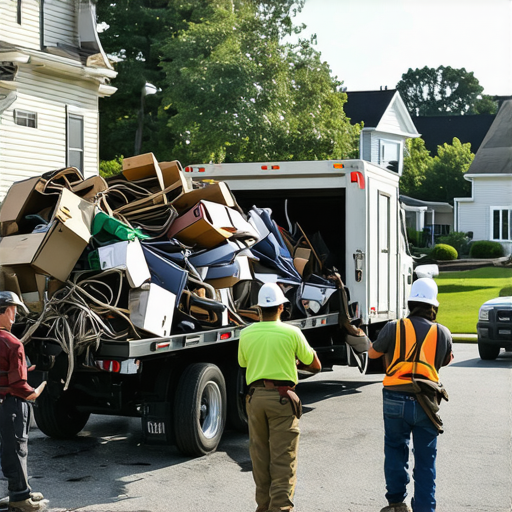
Professional waste management is not a simple game of lift and drop. It is a calculated exercise in spatial geometry and environmental mitigation. Junk Removal Aurora operations require a mastery of load density, tipping fees, and diversion rates to ensure that waste streams are directed toward resource recovery centers rather than overflowing landfills. Every cubic yard of space in a 15-yard dump truck represents a logistical puzzle where wasted air is wasted money and unnecessary carbon emissions.
The illegal dumping trap
A business owner tried to save €500 by hiring a guy with a pickup truck from a social media ad. Two weeks later, the police called him because his company’s confidential files were found in a ditch. Your junk is your liability until it hits the scale. This is the reality of the curbside cowboy. They take your cash, drive to a secluded perimeter road near the Aurora Transfer Station, and dump your life’s clutter into a ravine. When the local authorities find a mailer with your name on it or a serial number linked to your old refrigerator, you are the one facing the five-figure fine. Professional haulers provide a manifest. We provide a paper trail that proves the material reached a licensed Material Recovery Facility (MRF). We understand that in the world of Junk Removal, the chain of custody is the only thing protecting a homeowner from legal catastrophe.
“Waste is merely a resource in the wrong place; professional removal is the science of putting it back where it belongs.” – Disposal Industry Maxim
The physics of a perfect load
Load optimization and spatial efficiency are the hallmarks of a veteran Junk Removal Aurora specialist. We utilize a technique called cubing out the truck. This involves breaking down furniture to its flat-pack components and nesting smaller items within the cavities of larger appliances. If a truck leaves a site with 30 percent air gaps, the fuel efficiency of that haul drops significantly. We calculate the gross vehicle weight rating (GVWR) against the volumetric capacity to ensure we never exceed axle load limits while maximizing the amount of debris removed in a single trip. This reduces the number of truck cycles, lowering the overall carbon footprint of the project.
The appliance graveyard protocol
Appliance removal in Aurora involves strict adherence to EPA Rule 608 regarding the handling of refrigerant gases like R-22 or R-134a. These substances have a global warming potential thousands of times higher than carbon dioxide. When we pull a freezer from a basement, we aren’t just moving metal. We are securing a pressurized system of chemicals. A single puncture during a DIY haul can vent enough gas to equal the yearly emissions of a passenger vehicle. We transport these units to specialized processing centers where the coolant is vacuum-extracted before the steel and copper are harvested for scrap metal recycling. The compressor itself is a high-value item that contains oil which must be handled as hazardous waste if not processed correctly.
| Material Category | Decomposition Time (Years) | Recovery Potential |
|---|---|---|
| Untreated Timber | 10-15 | High (Mulch/Fuel) |
| Ferrous Metals | 50-100 | Total (Infinite Loop) |
| Plastic Components | 450-1000 | Low (Energy Recovery) |
| Standard Gypsum | Variable | Moderate (Soil Amendment) |
The heavy cost of a full house
Hoarder Clean Out aurora projects are structural interventions rather than simple cleaning tasks. The static load of accumulated paper waste and textiles can exceed the pounds per square foot (PSF) rating of residential flooring. We have seen 1970s-era joists bowing under the weight of decades of magazines. These environments often harbor biohazards, including rodent droppings and mold spores, which become airborne the moment the piles are disturbed. We use high-grade PPE and HEPA filtration to manage the air quality while we systematically dismantle the stacks. It is a slow, methodical process of zoning. We identify the primary egress routes and clear them first to ensure safety in case of a structural failure or fire.
The furniture landfill myth
Furniture Removal is a battle against composite materials and toxic finishes that plague modern manufacturing. Most modern desks are made of particle board or medium-density fiberboard (MDF), which is held together by urea-formaldehyde resins. When these items are crushed in a compactor, they release volatile organic compounds (VOCs). Our goal is material separation. We strip the textiles and foam padding from sofas, which are often treated with flame retardants. The solid wood frames are separated for biomass fuel, while the metal springs are sent to the foundry. This level of diversion is the difference between a green hauler and a simple trash man.
“The Resource Conservation and Recovery Act (RCRA) creates a framework for the proper management of hazardous and non-hazardous solid waste.” – Environmental Protection Agency
The permit trap and logistical hurdles
Dumpster Rentals Aurora require a deep understanding of municipal code and right-of-way permits. If you place a 20-yard roll-off container on a public street without a street occupancy permit, the city will issue a stop-work order within hours. We manage the zoning requirements and ensure that the container is placed on dunnage to protect the asphalt from hydraulic pressure damage. Many homeowners forget that weight limits are strictly enforced at the weigh station. If you fill a dumpster with concrete or dirt, you will likely exceed the legal hauling limit of the hook-lift truck. This results in overage fees that can double the cost of the rental.
- Lead-acid batteries (Fire hazard in trucks)
- Propane tanks (Explosion risk at the incinerator)
- Fluorescent tubes (Mercury vapor contamination)
- Industrial solvents (Groundwater leaching)
- Wet paint (Container contamination)
The ghost in the garage
Garage Clean outs often reveal the hidden hazards of a household. We frequently find pesticides from the 1980s that have been banned for decades. These bottles are often brittle and leaking. If a standard hauler tosses these into a crusher, the chemicals mix and create toxic plumes. We treat every garage as a miniature hazardous waste site until proven otherwise. We look for the diamond placards on old barrels. We check the Safety Data Sheets for industrial cleaners. It is not just about junk. It is about public safety. While most people think recycling is always better, the carbon footprint of hauling low-grade plastics 500 miles often exceeds the impact of local, high-efficiency waste-to-energy incineration. We make these logistical decisions every day based on current market commodity prices for recyclables. The Aurora waste ecosystem is complex, but with the right logistical framework, we can turn a cluttered garage into a clean slate without harming the local environment.“