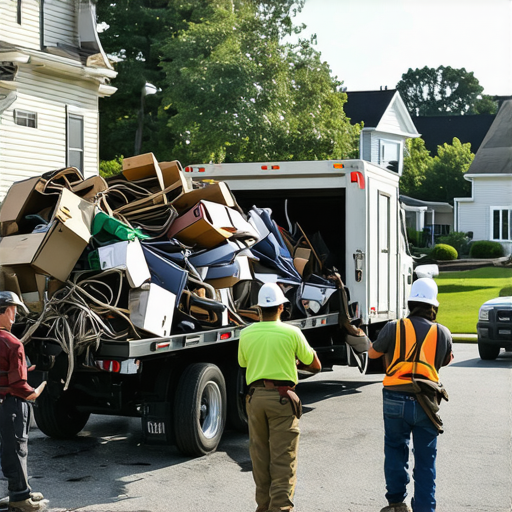
I smell diesel exhaust and the sharp tang of hydraulic fluid before I even step out of my truck. For twenty-five years, my world has been measured in cubic yards and tipping fees. I see a cluttered garage and I do not see memories or ‘stuff.’ I see a logistical puzzle that needs solving. I see volume, density, and potential environmental hazards. One story sticks with me more than others regarding the reality of this business. A local Aurora business owner tried to save five hundred dollars by hiring a guy with a rusted pickup truck he found on a social media marketplace. Two weeks later, the police were at his door. His company confidential files, along with three dozen scrap tires and two old refrigerators, were found in a muddy ditch near the Fox River. Your junk is your legal liability until it hits the scale at a licensed facility. If your hauler cannot produce a weight ticket, you are the one the EPA comes looking for. This is the reality of waste management in the Fox Valley region.
The rubber graveyard in Aurora
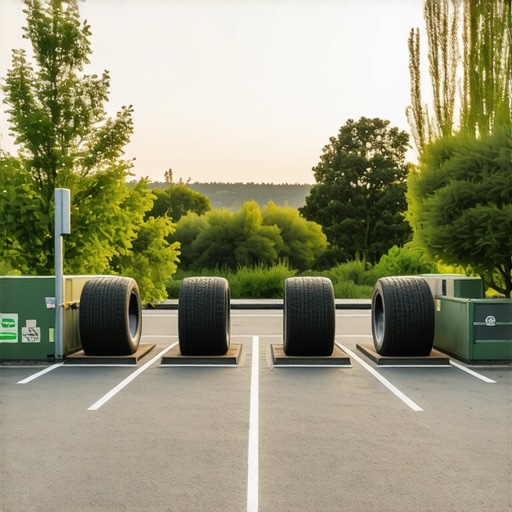
Finding Aurora Tire Drop-Offs requires identifying registered haulers and certified recycling facilities like the Aurora Transfer Station or Kane County Recycles. Local Illinois EPA regulations mandate that scrap tires are separated from municipal solid waste to prevent landfill methane traps and environmental contamination from leaching zinc or heavy metals. Tires are a nightmare for standard landfills. They do not stay buried. Because of their hollow shape and the air trapped inside, they tend to ‘float’ back to the surface over time, puncturing landfill liners. This creates a direct path for leachate to contaminate groundwater. In Aurora, we handle tires through specialized shredding processes where the steel belts are pulled out with high-powered magnets and the rubber is turned into Tire-Derived Fuel or crumb rubber for playgrounds. The energy density of a scrap tire is significant, often exceeding the Btu value of coal, but you cannot simply burn them. They require high-temperature thermal oxidation to neutralize the sulfur dioxide emissions.
“Waste is merely a resource in the wrong place; professional removal is the science of putting it back where it belongs.” – Disposal Industry Maxim
The physics of dumpster rentals Aurora
Selecting Dumpster Rentals Aurora services involves calculating the volumetric density of your debris stream to avoid overage fees or structural load failures. A fifteen yard bin is the workhorse of the industry, but users must understand that weight limits are often more restrictive than volume limits when disposing of construction materials or saturated yard waste. If you are cleaning out a basement in Aurora, you need to think about ‘cubing out’ the truck. This means packing the container so there is zero wasted air space. When we drop a 20-yard roll-off, we tell the customer to put the flat items on the bottom. Plywood, old doors, and drywall sheets should form the base. If you throw a tangled mess of branches or a sofa on the bottom, you create ‘bridging.’ This leaves massive pockets of empty air that you are paying for. A 15-yard dumpster filled with air costs the same as one filled with five tons of concrete, but the latter will cost you a fortune in overweight penalties at the scale. We look at the load and see math. We see the hydraulic pressure required to lift that bin onto the rails. If the front wheels of my Mack truck start lifting off the asphalt, you have overloaded the bin with ‘clean fill’ like dirt or brick.
| Material Category | Weight Per Cubic Yard (Lbs) | Disposal Complexity | Recycling Potential |
|---|---|---|---|
| Mixed Household Junk | 250 – 400 | Low | 30% |
| Scrap Tires (Passenger) | 500 – 800 | High | 95% |
| Demolition Debris | 600 – 1000 | Medium | 50% |
| Concrete or Brick | 2000 – 3000 | Extreme | 100% |
| Appliance (Average) | 150 – 300 per unit | Medium | 90% |
Furniture removal and the structural limit
Professional Furniture Removal in Aurora requires an understanding of center of gravity and material degradation to prevent property damage during the extraction process. Old sleeper sofas can weigh three hundred pounds and contain tension springs that have become kinetic traps over decades of use. I have seen rookies try to muscle a 1970s sectional through a narrow hallway only to have the frame snap, sending a jagged piece of oak through the drywall. We use ‘dollies’ and ‘hump straps’ to shift the center of gravity. We also have to consider the chemical reality of modern furniture. Most ‘fast furniture’ made today is essentially sawdust held together with urea-formaldehyde resins. If it gets damp in a garage, the structural integrity vanishes. It becomes a soggy, heavy mess that crumbles when you touch it. We call this ‘MDF rot.’ When we haul this to a transfer station, it is classified as low-grade fiber waste, which has almost zero recovery value compared to the solid cherry or oak pieces we occasionally find in older Aurora estates.
The hidden chemistry of appliance removal
Effective Appliance removal is governed by the Clean Air Act and RCRA Subtitle C regulations, specifically regarding the recovery of refrigerants like R-22 or R-134a. It is illegal in Aurora to simply vent Freon into the atmosphere, as these hydrofluorocarbons have a global warming potential thousands of times higher than carbon dioxide. When we pull a refrigerator from a kitchen, we are looking for the compressor seal. If that seal is broken, the unit is hazardous. We also deal with old washing machines that contain capacitors filled with PCBs. Polychlorinated biphenyls are persistent organic pollutants. They do not break down in the environment. They bioaccumulate. My team is trained to identify the manufacturing date on the plate. If it is pre-1979, we treat it as a hazardous material. We do not just toss it in the bin. We isolate it. This is why professional junk removal costs more than the ‘guy with a truck’ price. You are paying for the legal disposal of toxins that could otherwise end up in the Fox Valley watershed.
“Landfill gas, consisting primarily of methane and carbon dioxide, is a natural byproduct of the decomposition of organic material; proper waste diversion reduces this atmospheric load.” – Environmental Protection Agency
Garage clean outs and the density problem
Executing Garage Clean outs in Aurora involves a triage of materials where hazardous household waste is separated from recyclable metals and general refuse. The average Aurora garage contains a chemical cocktail of old pesticides, alkyd paints, and used motor oil that cannot be placed in a standard dumpster. People think ‘it is just a garage,’ but I see a hazardous waste site. Those old cans of paint? If they are liquid, they are a ‘no-go.’ We have to mix them with kitty litter or sawdust to solidify them before the landfill will take them. Then there are the batteries. A single lead-acid car battery can leak enough lead to contaminate an entire acre of soil. We look for the ‘density’ of the junk. A garage filled with plastic holiday decorations is a high-volume, low-weight job. A garage filled with old engine parts and stacks of newspapers is a low-volume, high-weight job. The pricing changes based on that math. If we are hauling newspapers that have been sitting for ten years, they have absorbed humidity. They are twice as heavy as dry paper. They are also a fire hazard because of spontaneous combustion risks in high-heat summer months.
- Lead-acid batteries (Must go to a core recycler)
- Propane tanks (Even if they feel empty, they are pressurized hazards)
- Fluorescent light tubes (Contain mercury vapor)
- Wet paint, thinners, and solvents
- Biohazardous waste or medical sharps
- Asbestos-containing floor tiles or pipe wrap
- Explosives or ammunition
The hoarder clean out autopsy
A Hoarder Clean Out aurora project is a high-stakes logistical operation that requires structural assessment and personal protective equipment to manage biohazards and unstable loads. In these environments, the static load on the floor joists often exceeds the original architectural specifications by three hundred percent. I once walked into a house in Aurora where the stack of magazines reached the ceiling. Paper is heavy. At forty pounds per cubic foot, a room full of paper can weigh several tons. The floor was bowing. We had to shore up the basement with jacks before we could even start the removal. This is not just ‘cleaning.’ This is engineering. We use respirators because of the ‘dust load.’ Decades of skin cells, pet dander, and mold spores become airborne the moment you move a pile. We also have to watch for ‘pest vectors.’ Roaches and rodents create ‘runs’ through the junk. If you do not have a systematic plan to bag and seal as you go, you just move the infestation from the house to the truck and then to the next job site. We use heavy-duty 4-mil contractor bags and clear the ‘egress paths’ first. Safety is the only priority when a pile could collapse and pin a worker.
The heavy cost of keeping everything
Professional Junk Removal Aurora services provide a regulatory firewall between the property owner and environmental litigation by ensuring traceable disposal paths. While some think recycling is the ultimate solution, the carbon footprint of transporting low-grade plastics across the country often exceeds the environmental impact of local high-efficiency waste-to-energy. This is my contrarian truth. If I have to drive a truck fifty miles to drop off a load of ‘recyclable’ plastic that will eventually be rejected due to food contamination and sent to a landfill anyway, I have wasted fuel and increased emissions. Sometimes, the most ‘eco-friendly’ path is the local transfer station that uses advanced sorting technology to pull out the high-value metals and sends the rest to a modern, lined landfill with methane capture. We focus on ‘diversion rates.’ My goal on every Aurora job is to keep sixty percent of the load out of the landfill. That means the scrap yard for the appliances, the tire processor for the rubber, and the donation center for the furniture that still has structural integrity. The ‘curbside cowboy’ takes it all to a ditch. I take it to its proper destination. The floor snapped under the weight of the last load. We adjusted. We hauled. We cleared the space.