The hazardous surprise in a pile of debris
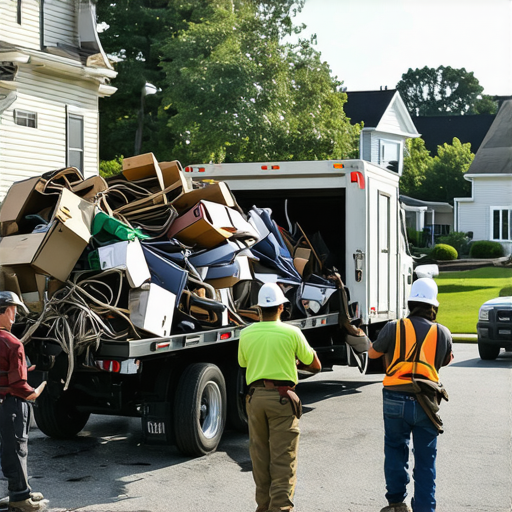
I watched a rookie almost lose his eyebrows because a customer hid a half-full propane tank inside a pile of harmless yard waste. We do not just lift, we inspect every single item. Junk removal involves the meticulous sorting and safe transport of discarded materials. Professional Junk Removal Aurora services prioritize the Resource Conservation and Recovery Act (RCRA) standards to prevent environmental contamination. Every load is a logistical operation requiring volumetric assessment and hazardous material screening.
Waste management is not merely a task of hauling objects from point A to point B. It is a rigorous science of mass, density, and chemical volatility. When a truck pulls up to a residential driveway in Aurora, the logistics manager immediately calculates the cubic yardage. A standard 15-yard dump truck has limited real estate. If the load is not cubed out properly, the company loses money on fuel and time. Air space is the enemy of profit. We look at a pile of old furniture and see a puzzle. The heavy oak desk goes at the bottom to lower the center of gravity. The light, breakable plastics go on top. Every void must be filled with smaller debris like bagged clothes or loose papers. This is the only way to ensure the truck operates at peak efficiency.
“Waste is merely a resource in the wrong place; professional removal is the science of putting it back where it belongs.” – Disposal Industry Maxim
The physics of heavy appliance removal
Appliance removal requires an understanding of mechanical leverage and refrigerant recovery protocols. Aurora recycling centers mandate the extraction of CFCs and HFCs before any scrap metal processing. Modern units contain polyurethane foam insulation and circuit boards with heavy metals. These e-waste components must be diverted from landfills to avoid leachate migration into the local groundwater supply.
When we pull an old refrigerator from a basement, we are not just moving metal. We are moving a potential environmental hazard. Old compressors often contain oils that are acidic. If a line snaps during the move, that acid eats through flooring and creates a toxic plume. We use specialized heavy-duty dollies with pneumatic tires to distribute the 300-pound load across the floor joists. This prevents the wood from splintering. In Aurora, the temperature shifts can make plastic components brittle. A fridge that looks solid might shatter if handled roughly in sub-zero weather. We track the scrap price of copper and steel daily. The value of the motor windings often offsets the cost of the labor, but only if the recovery is clean. We do not just smash things. We dismantle them with the precision of a surgeon to maximize the recovery of the ferrous and non-ferrous metals.
The structural risks of a hoarder clean out aurora
Hoarder clean out aurora projects demand personal protective equipment (PPE) and structural load assessments. Compacted debris can exert hundreds of pounds per square foot on residential flooring, leading to joist failure. Professional teams manage biohazardous waste, rodent infestations, and stagnant air quality using industrial HEPA filtration. The logistics of removal must account for pathway clearance and fire egress during the extraction phase.
A house filled to the ceiling is a physical trap. The air is thick with particulate matter, dead skin cells, and dried rodent droppings. We wear Level C suits because the dust alone can cause permanent lung damage. The floor is often soft. Years of accumulated trash trap moisture against the subfloor, leading to rot that you cannot see until the trash is gone. We once cleared a house where the junk was the only thing holding up a partition wall. As we removed the stacks of National Geographic magazines, the wall began to lean. We had to shore it up with 4×4 posts just to finish the job. This is why the curbside guys cannot handle these jobs. They do not have the insurance or the engineering mindset. We look for the load-bearing paths. We clear a central artery first so that we have a fast exit if the structure shifts. Every bag of trash is scanned for needles or broken glass. The density of these loads is immense. A single room can yield four tons of waste. The math of the dump fees alone can be staggering, which is why sorting on-site is the only way to keep the project viable.
| Disposal Method | Cost Basis | Ideal Material | Environmental Impact |
|---|---|---|---|
| Full-Service Hauling | Cubic Yardage | Mixed Household | High Diversion Rate |
| Dumpster Rental | Flat Fee + Overweight | Construction Debris | Landfill Heavy |
| Transfer Station | Weight per Ton | Bulk Furniture | Moderate Recycling |
| Hazardous Pickup | Per Item Fee | Tires/Batteries | Maximum Safety |
The legal ghost in the dumping ditch
Junk removal liability remains with the property owner until the waste manifest is signed by a licensed facility. Dumpster rentals Aurora clients must ensure their hauler is not fly-tipping on public land or private property. Municipal ordinances in the City of Aurora carry heavy fines for illegal disposal of tires, electronics, and chemicals. Proper documentation is the only defense against environmental litigation.
People think that once the truck pulls away, the problem is gone. It is not. If your old computer monitor ends up in a creek and the serial number is traced back to you, the EPA does not care who you paid to take it. They care whose name is on the device. This is the danger of hiring the cheapest guy on a social media app. They do not pay the $80 per ton tipping fee. They drive out to the plains and dump it in a ditch. We provide a paper trail. We show you the receipt from the Denver Regional Landfill or the specific recycling center in Aurora. We take the liability off your shoulders and put it on ours. That is what you are paying for. You are paying for the peace of mind that your waste will not come back to haunt you in a courtroom.
“Modern waste management is a defensive strategy against the long-term degradation of our shared soil and water resources.” – SWANA Technical Report
Furniture removal and the fast furniture epidemic
Furniture removal has changed because particle board and MDF materials lack the structural integrity of solid wood. Aurora donation centers often refuse mass-produced furniture due to low resale value and formaldehyde off-gassing. Professional removers must decide between repurposing, shredding for biomass, or landfill disposal based on material quality and infestation risks.
The furniture industry has become a disposable nightmare. We see dressers that weigh sixty pounds but fall apart the moment you tilt them. This stuff is not wood, it is sawdust and glue. It is a nightmare for the environment because it cannot be easily recycled. The glue contains resins that are toxic when burned and do not break down in the soil. We try to find a home for the old solid oak tables. Those are the treasures. But the modern flat-pack stuff is usually destined for the grinder. We also have to be hyper-vigilant about bed bugs. One infested couch can ruin an entire truckload of clean goods. We inspect the seams. We look for the tell-tale black spots. If we find them, that item is wrapped in 6-mil plastic before it even leaves the room. We do not risk cross-contamination. Our trucks are swept and sanitized after every load. It is a standard of cleanliness that separates the professionals from the amateurs.
- Lead-acid batteries and lithium-ion cells
- Pressurized cylinders including propane and oxygen
- Biohazardous materials and medical waste
- Wet paint and liquid industrial chemicals
- Fluorescent tubes and mercury-containing bulbs
- Untreated asbestos materials
- Gasoline and volatile petroleum products
The math of a perfectly loaded bin
Dumpster rentals Aurora projects require load balancing to prevent axle overage during transportation. Weight limits for a 20-yard container are strictly enforced by the Department of Transportation (DOT) to protect Aurora road surfaces. Overloading a roll-off bin results in safety hazards and significant financial penalties for the customer.
When you rent a dumpster, you are not just renting a box. You are renting a weight allowance. A 20-yard bin filled with shingles weighs significantly more than a 20-yard bin filled with drywall. If you go over the weight limit, the hydraulic arm on the truck might not even be able to lift it. Or worse, the truck becomes a rolling hazard on I-225. We see people try to hide concrete at the bottom and cover it with light trash. The scale at the transfer station does not lie. We charge by the ton for a reason. The physics of the load matter. A heavy load increases the stopping distance of the truck. It puts stress on the tires that can lead to blowouts. We manage the density. If we see a customer putting heavy masonry in a large bin, we stop them. It is for their safety and ours. We suggest 10-yard bins for heavy materials like dirt or rock because it is impossible to go over the road weight limit in a smaller container. This is the kind of logistical foresight that saves thousands of dollars in the long run.
Garage clean outs and the chemical graveyard
Garage clean outs often uncover legacy pollutants such as banned pesticides and old motor oil. Aurora waste protocols require these hazardous materials to be separated from general debris to prevent chemical reactions in the truck bed. Professional clean outs include sorting stations to categorize metal scrap, hazardous liquids, and donatable goods.
The garage is where the dangerous stuff hides. People have half-empty cans of paint from 1994. They have bottles of Roundup that have been banned for years. When these liquids mix in the back of a garbage truck, they can create toxic smoke or even fire. We have seen it happen. A little bit of pool chlorine mixed with a little bit of brake fluid and suddenly you have a chemical emergency. This is why we go through every shelf. We do not just toss things into the bin. We identify the liquids. If it is old oil, it goes into a sealed container for the recycling center. If it is latex paint, we dry it out with kitty litter before disposal. We are the gatekeepers of the landfill. Our job is to make sure that the only things that go into the ground are things that belong there. Everything else gets diverted, recycled, or neutralized. The smell of a garage clean out is the smell of old grease and stagnant air. It is the smell of a job that requires a professional touch.