The liability of the low bid
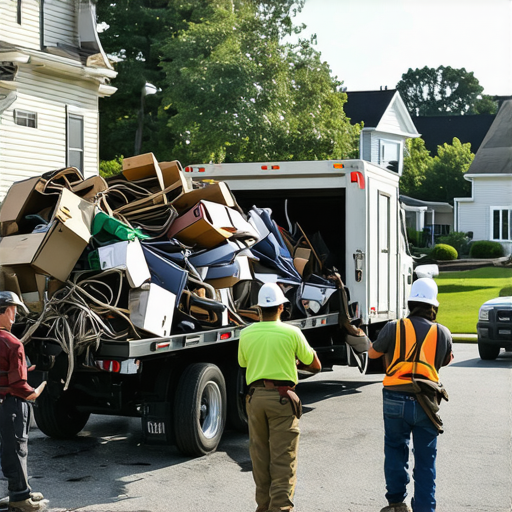
Eco-friendly waste disposal in Aurora requires understanding local diversion mandates and the specific logistics of material recovery. By 2026, Aurora residents must separate organic waste from dry recyclables to meet state sustainability goals. Professional junk removal services provide the heavy lifting, sorting, and transport to specialized transfer stations. I smell diesel and hydraulic fluid every morning before the sun hits the pavement. After twenty-five years in this sector, I can tell you that a truck is more than a vehicle. It is a mathematical equation. A business owner once tried to save five hundred dollars by hiring a guy with a pickup truck from a social media ad. Two weeks later, the police called him. His company confidential files were found in a ditch near the Aurora reservoir. Your junk is your liability until it hits the scale at a licensed facility. If you hire someone without a DOT number and a commercial waste hauler permit, you are gambling with your reputation. Professional junk removal Aurora services ensure that your debris is tracked from the curb to the recovery center. We do not just toss items into a heap. We perform a high-speed autopsy on every load. We look for lead-acid batteries, mercury switches in old thermostats, and the telltale bulge of a lithium-ion battery in a child’s toy. These are the hidden killers in our industry. One spark in the back of a packer truck can lead to a million-dollar fire.
“Waste is merely a resource in the wrong place; professional removal is the science of putting it back where it belongs.” – Disposal Industry Maxim
The mathematics of a clean garage
Garage clean outs in Aurora involve more than just hauling away old boxes. Most residential garages become the final resting place for materials that require specific disposal protocols, such as old paint, motor oil, and pressurized canisters. To optimize space, we use a technique called ‘truck tetris.’ We maximize every cubic inch of the vehicle. If you leave air gaps, you are wasting money. We stack flat items like plywood and old doors against the bulkheads. We nest chairs. We break down non-structural furniture to increase density. The goal is to hit the maximum allowable weight without exceeding the volume of the 15-yard or 20-yard container. In Aurora, the local transfer stations are getting stricter. They want clean loads. If we bring a load of ‘clean wood’ that has one treated 4×4 post in it, the whole load gets rejected or reclassified as general refuse. That jump in tipping fees is passed to the customer. This is why we inspect every pile. We look for the green tint of CCA-treated lumber which contains arsenic. We do not let that mix with your recyclable scrap. [IMAGE_PLACEHOLDER]
Why your old sofa is a logistics puzzle
Furniture removal in Aurora is a challenge of volume versus weight. A standard three-cushion sofa takes up approximately 1.5 to 2 cubic yards of space but weighs less than 150 pounds. This disparity makes furniture one of the least efficient items to haul. When we handle furniture removal, we are looking for recyclables. That sofa has a wooden frame, polyurethane foam, and steel springs. In a perfect world, we strip those. But the labor cost often exceeds the recovery value. This is the hard truth of the waste industry. We try to donate items that are still ‘life-capable,’ meaning they do not have structural damage or infestations. In Aurora, the local charities have strict intake rules. If a sofa has a single tear or a pet odor, it is headed for the landfill or the waste-to-energy plant. We have to be honest with homeowners. That ‘vintage’ dresser might just be pressed sawdust with a plastic veneer. It has zero recovery value. It is essentially solidified glue and wood chips. We calculate the BTU potential of such items if they are headed for incineration. Modern waste management is about finding the highest and best use for every pound of debris.
The structural reality of a hoarder house
Hoarder clean out Aurora projects require a deep understanding of structural load limits and biohazard risks. These are not standard junk removal jobs. They are tactical recoveries where the weight of the accumulated material can exceed the original design specifications of the flooring system. I have seen floor joists bowing under the weight of forty years of newspapers. Paper is deceptively heavy. A one-foot stack of damp newspapers can weigh thirty pounds. Multiply that by a room filled to the ceiling. You are looking at thousands of pounds of static load that the builder never intended for that second story. We use small-diameter bins for these jobs. If we use a 40-yard dumpster for paper, the truck will not be able to lift it. It will ‘scale out.’ We have to manage the physics of the site. We also deal with ‘compaction.’ Over years, the bottom layers of a hoard become a solid mass of organic decomposition and compressed cellulose. It requires more than a shovel. It requires a hazmat mindset. We wear respirators because of the particulate matter. Dust is not just dust. It is a cocktail of mold spores and dander.
“The Resource Conservation and Recovery Act establishes the framework for a national system of solid waste control, ensuring that hazardous and non-hazardous wastes are managed in a manner that protects human health and the environment.” – EPA Regulatory Summary
Death of the white goods
Appliance removal is governed by the Clean Air Act, specifically regarding the recovery of refrigerants. Old refrigerators and air conditioners contain CFCs or HCFCs that must be recovered by a certified technician before the metal can be recycled. You cannot simply crush a fridge. If a hauler tells you they just ‘take it to the scrap yard’ without mentioning refrigerant recovery, they are likely venting gases into the atmosphere. This is a federal offense. We use specialized recovery pumps to draw out the Freon. Then we remove the compressor. The shell of the appliance is high-grade light-melt steel. It is valuable. But the prep work is essential. We also handle washing machines. A top-load washer has a concrete counterweight that can weigh sixty pounds. We account for that density when we quote the job. We do not want surprises at the scale. The motor contains copper windings. The outer skin is steel. The internal tub might be stainless steel or porcelain-coated steel. We know the difference by the sound it makes when you tap it. This is the level of detail required for true eco-friendly disposal. | Debris Type | Density (Lbs/CuYd) | Disposal Method | | :— | :— | :— | | Household Junk | 250 – 300 | Transfer Station | | Construction Debris | 400 – 500 | C&D Landfill | | Green Waste | 150 – 200 | Composting Facility | | Concrete/Brick | 2000+ | Recycling/Crushing |
The permit dance of dumpster rentals
Dumpster rentals Aurora residents often overlook require specific permits if placed on public property or narrow streets. A 20-yard dumpster has a footprint of approximately 8 feet by 22 feet. If your driveway is not long enough, it ends up on the street. In Aurora, that means a right-of-way permit. If you ignore this, the city will fine you before the bin is even half full. We prefer the ‘live load’ method. We bring the truck, we load it, and we leave. No permits. No damage to your asphalt. Heavy dumpsters can ‘sink’ into a driveway on a hot Colorado or Illinois summer day. The PSI (pounds per square inch) on the four small rollers of a dumpster is immense. We always use wood blocking to distribute that weight, but a live-load truck is safer. It also prevents the ‘neighborhood tax.’ That is when neighbors see a dumpster and decide to toss their own old mattresses in it overnight. When you wake up, you are paying for their junk. A truck that arrives and leaves the same day solves this problem entirely.
The carbon math of modern hauling
Professional junk removal is a game of logistics that balances fuel consumption against diversion rates. While most people think recycling is always better, the carbon footprint of hauling low-grade plastics 500 miles often exceeds the impact of local, high-efficiency waste-to-energy incineration. We look at the ‘net green’ impact. If we can find a local recycler for your scrap metal in Aurora, that is a win. If the nearest glass recycler is three states away, we might suggest alternative local uses. This is the contrarian truth of the industry. Not everything can be recycled sustainably. We focus on high-impact materials: steel, copper, aluminum, and clean wood. These have a high recovery value and a low energy cost for reprocessing. We also look at ’embodied energy.’ That old solid oak table has more value as a table than as wood chips. We prioritize reuse. Our trucks are routed using GPS to minimize ‘deadhead’ miles. Every mile a 16,000-pound truck drives without a load is a waste of fuel. We coordinate pickups to ensure we are always moving towards a facility with a full load. This is how we keep prices stable while meeting environmental goals. Below is a checklist of items that no legitimate hauler should ever touch without a specialized hazmat license.
- Gasoline and Propane (Explosion risk in the compactor)
- Wet Paint and Solvents (Leaking risks and soil contamination)
- Lead-acid Batteries (Acid burns and heavy metal leaching)
- Biohazardous Waste (Medical needles and infectious materials)
- Asbestos-containing Materials (Friable fibers that cause lung disease)
The next time you look at a pile of debris, do not just see ‘junk.’ See the density. See the BTU potential. See the legal liability. Professional junk removal is the barrier between a clean community and a logistical nightmare. We handle the heavy lifting so you do not have to worry about the police calling you about a ditch near the reservoir. We keep the Aurora environment clean, one cubic yard at a time. This is not just a service. It is a science. We are the masters of the load, the kings of the transfer station, and the guardians of the landfill. Your space is too valuable to be a storage unit for things you no longer need. Clear it out. Do it right. Use a pro who knows the math of the truck.
I appreciate how this article highlights the importance of proper waste handling and the risks involved when shortcuts are taken. Having worked in environmental cleanup, I can attest that many companies underestimate the complexity of safely managing hazardous materials like refrigerants, batteries, or asbestos. The detail about managing the physics inside a hoarder’s house really resonated with me — it’s not just about cleaning out space, but understanding the structural integrity and biohazards involved. It makes me wonder how often projects end up costing more because of overlooked risks or improper disposal. Has anyone here experienced unexpected hurdles during a large cleanout that could have been mitigated with better planning or knowledge about these logistics? Also, I’d love to hear about local solutions or innovative ways Aurora residents are managing such hazardous waste efficiently. The emphasis on logistics and environmental impact really underscores that junk removal is a science, and I think that perspective can help communities prioritize safety and sustainability more effectively.
Reading this detailed overview of Aurora’s waste management, I realize how critical it is to work with licensed professionals who understand the full scope of environmental and safety regulations. Back in my former role at a construction site, we once accidentally mixed treated wood with recyclable scrap because of inadequate inspection, which led to increased fees and delays. It’s apparent that a lot of people underestimate how complex effective waste disposal is, especially with hazardous materials like batteries and chemicals. One thing I’ve been curious about is the emerging technology in waste tracking systems—how are newer tools improving accountability and safety in junk removal? Also, considering Aurora’s strict regulations, I’d be interested to hear how local residents navigate permits, especially for DIY projects. Does anyone have tips on streamlining the permit process or leveraging community programs to ensure compliance while staying affordable? This post makes me appreciate the science behind proper waste management even more.