Navigating the Logistics of Aurora Waste Management and the 2026 Composting Mandate
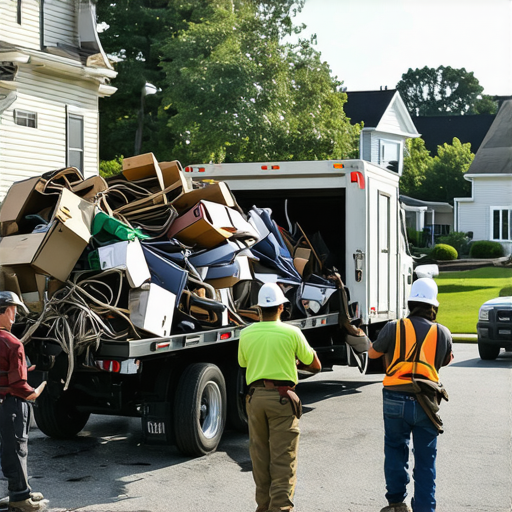
I watched a rookie almost lose his eyebrows because a customer hid a half-full propane tank inside a pile of harmless yard waste. We do not just lift. We inspect. Every. Single. Item. I have spent twenty-five years smelling diesel and hydraulic fluid while managing the physics of a fifteen-yard truck. You learn quickly that junk is not just a pile of objects. It is a mass of potential energy, chemical hazards, and volume that must be optimized. In Aurora, the game is changing. The 2026 Composting Law is not just a suggestion for the future. It is a complete overhaul of how we handle garage clean outs, furniture removal, and general debris. If you are not prepared for the shift in tipping fees and sorting requirements, you are going to find yourself in a logistical nightmare.
The logistical shift of Aurora waste laws
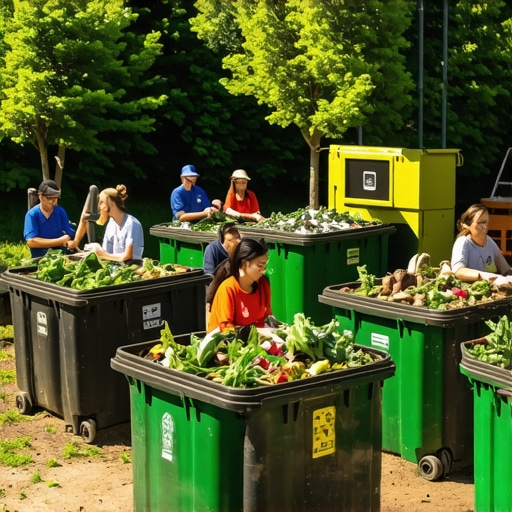
Aurora’s 2026 Composting Law mandates organic waste separation for all residential and commercial properties to reduce methane at the Aurora Denver Regional Landfill. This regulation requires junk removal Aurora operators to audit every load for organic material. Food waste, yard debris, and even untreated wood furniture must be diverted from traditional landfill streams. The city aims for a sixty percent diversion rate within the first eighteen months. This means every appliance removal and hoarder clean out Aurora project must now account for material composition at the point of pickup.
The physics of waste disposal are unforgiving. When we arrive for a garage clean out, we are looking at the cubic yard density. A standard mattress takes up roughly two cubic yards of space but has very little weight. Conversely, a pile of old shingles or concrete from a renovation might only occupy one cubic yard but will hit the suspension limits of a heavy-duty truck. The 2026 law adds a third dimension to this math: biological viability. We can no longer just smash everything into a compactor. We have to separate the cellulose-based materials from the synthetic polymers. If we mix them, the transfer station on Tower Road will reject the entire load. That is a two-hundred-dollar dry-run fee plus the cost of labor to hand-sort the mess back at the yard.
Why your cheap hauler is a legal time bomb
Illegal dumping in Aurora carries significant fines and criminal liability for the waste generator who hires unlicensed contractors. Curbside cowboys often avoid the high tipping fees at the Aurora Denver Regional Landfill by dumping in drainage ditches or abandoned lots. If your old sofa or confidential business files are found in a field near Buckley Space Force Base, the police do not look for the guy with the pickup truck. They look for the person who owned the items. Your junk is your liability until it hits the scale and a manifest is signed.
“Waste is merely a resource in the wrong place; professional removal is the science of putting it back where it belongs.” – Disposal Industry Maxim
The Resource Conservation and Recovery Act (RCRA) sets the baseline, but Aurora municipal codes are even stricter regarding appliance removal. Every refrigerator contains refrigerants like R-22 or R-134a. These are potent greenhouse gases. A unlicensed hauler will often just cut the lines and let the gas vent into the atmosphere to make the unit lighter. This is a federal offense. We use certified recovery systems to evacuate the gas before the steel shell is recycled. The process takes an extra twenty minutes, but it keeps the air clean and the client out of legal trouble.
The technical reality of furniture removal and material recovery
Furniture removal requires systematic disassembly to comply with modern recycling standards and the upcoming 2026 composting regulations. Most modern furniture is not solid wood. It is particle board held together by formaldehyde-based resins. This cannot be composted. It must be separated from genuine organic materials. We analyze the grain and the weight. Real oak has a density of forty-five pounds per cubic foot. Particle board is closer to thirty-five but contains toxic glues that leach into the groundwater if not disposed of in a lined cell.
When we perform a hoarder clean out Aurora, the complexity scales exponentially. We are often dealing with compressed layers of material. These layers create micro-climates where moisture is trapped. I have seen newspapers from the 1980s that are still damp because they were buried under five feet of clothing. This increases the weight-to-volume ratio. A truck that usually holds two tons might suddenly be carrying four tons because of the water weight. This impacts the fuel consumption of our trucks and the strain on the hydraulic rams. We have to recalibrate our load-bearing calculations every thirty minutes during these jobs.
The structural challenges of heavy appliance removal
Appliance removal involves managing high-density weight loads and hazardous components such as mercury switches and PCB-laden capacitors. A standard washing machine weighs between one hundred fifty and two hundred pounds. A cast-iron bathtub can exceed three hundred pounds. Moving these items through a residential hallway requires more than just muscle. It requires an understanding of structural load limits. We use specialized dollies with non-marking tires to distribute the weight across floor joists. If you put three hundred pounds on a single point in an old Aurora farmhouse, you might find that tub in the basement before you reach the front door.
| Material Type | Landfill Decomposition | Diversion Potential | Tipping Fee Impact |
|---|---|---|---|
| Untreated Wood | 15-30 Years | High (Mulch) | Low |
| Mixed Plastics | 400+ Years | Low (Energy) | Moderate |
| Ferrous Metals | 50-100 Years | 100% (Scrap) | Revenue Positive |
| Organic Waste | 1-5 Years | High (Compost) | Tax Credit Eligible |
We look at every appliance as a collection of commodities. The copper coils in an air conditioner have high market value. The sheet metal exterior is shredded and sent to mills. The goal is to minimize the amount of material that actually enters the landfill cell. This is not just for the environment. It is about the economics of the truck. If I can drop off metal at a scrap yard for a profit and only pay to dump the plastic trim, I can keep the price lower for the customer. This is the tetris of waste management.
Hazardous materials and the limits of standard hauling
Professional junk removal services are legally prohibited from transporting certain hazardous materials without specific DOT certifications and hazardous waste manifests. Many homeowners assume that dumpster rentals Aurora services can take anything. This is a dangerous misconception. If we find chemicals mixed into a general load, the entire truck is classified as hazardous waste. This triggers an expensive decontamination process at the transfer station. We must be vigilant about what goes into the hopper.
- Lithium-Ion Batteries (Major fire hazard in compactors)
- Lead-Acid Car Batteries (Must be recycled at specialized centers)
- Wet Paint (Must be solidified with absorbent material first)
- Propane Tanks (Pressurized vessel explosion risk)
- Asbestos-containing materials (Requires specialized abatement)
- Medical Waste (Biohazard protocols apply)
The fire risk from lithium-ion batteries is a growing concern in the industry. These batteries are found in everything from old laptops to cordless drills. When the hydraulic blade of a junk truck crushes a battery, it can cause a thermal runaway event. We have had trucks catch fire on I-225 because someone hid a battery pack inside a sofa cushion. This is why we perform a visual inspection of every load. We are looking for the tell-tale signs of electronics and chemicals. Safety is not a suggestion. It is a requirement for staying in business.
The heavy cost of keeping everything in Aurora
Hoarding creates significant structural and environmental risks that require professional intervention and specialized disposal strategies. In Aurora, we see many cases where the sheer volume of material has compromised the HVAC system. Dust and debris clog the air returns, causing the furnace to overheat. This is a fire hazard that most people ignore. When we perform a hoarder clean out Aurora, we are often removing years of accumulated risk. We use HEPA-filtered vacuums and protective suits to manage the airborne particles. It is not just about the junk. It is about the air quality and the safety of the structure.
“Modern waste management is the frontline of urban health; without it, the city would choke on its own consumption.” – SWANA Technical Report
The carbon footprint of hauling low-grade plastics five hundred miles often exceeds the impact of local high-efficiency waste-to-energy incineration. This is a hard truth many people do not want to hear. They want everything to be recycled, but the logistics do not always support it. In Aurora, we focus on local diversion. We work with local nonprofits to donate functional furniture and appliances. This keeps the items in the community and out of the landfill. It is the most efficient form of recycling because it requires the least amount of energy to process.
Optimizing your next removal project
Preparation for a junk removal project in Aurora should focus on material separation and clear access for heavy equipment. If you are planning a garage clean out, start by grouping like-materials together. Put all the metal in one corner and the wood in another. This speeds up the loading process and ensures we can get the best possible diversion rate at the transfer station. Clear a path that is at least four feet wide for our dollies. This prevents damage to your walls and ensures the safety of our crew.
The future of waste in Aurora is about precision. The 2026 Composting Law is just the beginning. We are moving toward a circular economy where every item we pick up is viewed as a source of raw material. Whether it is furniture removal or a full hoarder clean out, the goal is the same. We want to maximize the load, minimize the waste, and keep the city of Aurora clean for the next generation. It is a game of inches and ounces. It is the science of the load. It is what we do every day. The smell of diesel and the sound of the hydraulic lift are the soundtrack to a cleaner world. We are the ones who make sure that when you throw something away, it actually goes where it belongs.