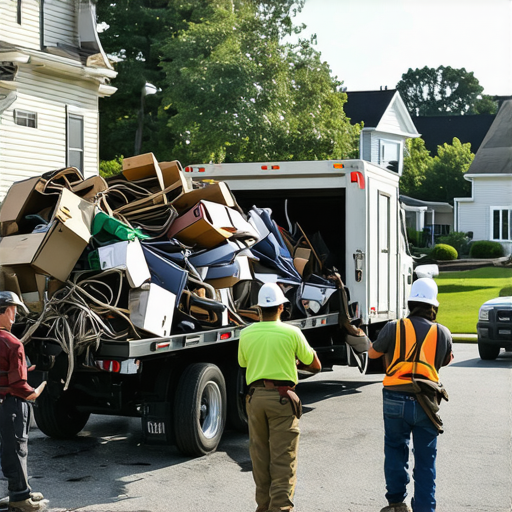

The high cost of cheap disposal
Waste management in Aurora requires a deep understanding of liability, tipping fees, and the physical density of materials before any truck ever leaves the shop. A business owner tried to save 500 dollars by hiring a guy with a pickup truck from a social media ad. Two weeks later, the police called him because his company’s confidential files were found in a ditch. Your junk is your liability until it hits the scale at a certified transfer station. In Aurora, the local authorities do not care if you paid someone else to take it. If your name is on the document or the appliance serial number leads back to your address, the fine belongs to you. This is why professional junk removal Aurora services focus on the chain of custody. We track every cubic yard from the moment it enters the 15 yard bin until it is sorted at the Denver Arapahoe Disposal Site or a specialized paper fiber recovery plant. The logistics of hauling are not just about lifting heavy objects. They are about managing the legal and environmental footprint of your discarded life.
“Waste is merely a resource in the wrong place; professional removal is the science of putting it back where it belongs.” – Disposal Industry Maxim
The physics of a hoarder clean out aurora
Hoarder clean out Aurora projects involve managing extreme weight loads that can compromise the structural integrity of residential flooring. When paper is stacked in high humidity environments, it acts like a sponge. It absorbs moisture from the air, increasing its density and weight by up to thirty percent. I once cleared a house where the junk wasn’t just stuff. It was a structural hazard. We found the floor joists were bowing under the weight of 40 years of newspapers that had absorbed ten years of basement humidity. A standard stack of newspapers three feet high can weigh nearly 100 pounds. Multiply that by a room filled to the ceiling, and you are looking at several tons of static load on a floor designed for 40 pounds per square foot. Our team uses logistical zooming to assess these risks. We calculate the cubic yardage versus the weight capacity of our trucks to ensure we do not exceed the gross vehicle weight rating. Overloading a truck leads to hydraulic failure and increased braking distances on Aurora’s inclined roads. We dismantle piles layer by layer to prevent localized floor collapses.
Paper fiber recovery cycles and local hacks
Aurora paper recycling hacks involve the separation of high-grade white ledger from low-grade mixed paper to maximize diversion rates. Most homeowners throw everything into a single bin, which the industry calls single stream. This often results in cross contamination. If a greasy pizza box touches a stack of high-quality printer paper, the entire batch may be rejected by the mill. To truly engage in eco-friendly waste disposal, you must understand the fiber length. Every time paper is recycled, the fibers shorten. Eventually, they can only be used for egg cartons or insulation. In Aurora, we suggest keeping your cardboard dry and flat. Wet cardboard is a nightmare for recovery facilities because it gums up the sorting screens. We optimize our loads by cubing out the truck, ensuring there is no wasted air space between the flattened boxes. This reduces the number of trips to the recycling center, which lowers the carbon footprint of the haul itself. The logic is simple. More weight per cubic foot equals fewer gallons of diesel burned.
| Material Type | Decomposition Time | Recovery Potential | Aurora Disposal Logic |
|---|---|---|---|
| Corrugated Cardboard | 2 Months | High (Fiber) | Must be flattened and dry |
| Mixed Office Paper | 1-3 Months | High (Pulp) | Sensitive documents require shredding |
| Coated Magazines | 6-12 Months | Medium | High clay content reduces value |
| Softwood Furniture | 10-15 Years | Low (BTU) | Best used for waste-to-energy |
| Appliance Metals | 100+ Years | Extreme | 100 percent recyclable via scrap |
Why your garage is a fire hazard
Garage clean outs often reveal a dangerous accumulation of volatile organic compounds and pressurized vessels hidden behind old furniture. People use their garages as a graveyard for things they are afraid to throw away. This includes half-full cans of oil-based paint, old lawnmower gasoline, and propane tanks for grills that were replaced years ago. These items are the reason we do not just lift, we inspect. Every. Single. Item. A single crushed aerosol can in the back of a junk truck can ignite the hydraulic fluid if a line shears under pressure. During a garage clean out, we look for the telltale signs of chemical leaching. Stains on the concrete are not just ugly. They represent potential environmental liabilities that can complicate a home sale. We categorize items by their disposal requirements. Some go to the hazardous waste facility, while others are destined for the scrap yard. The goal is to clear the space without creating a secondary disaster in the truck or at the landfill.
The metal value in appliance removal
Appliance removal is a game of secondary raw material recovery where the copper and steel value offsets the cost of transport. Old refrigerators and washing machines are heavy, but they are also gold mines for recycling. A standard washing machine contains a significant amount of steel and a copper-wound motor. However, you cannot just toss these into a dumpster. Modern environmental regulations require the recovery of refrigerants like Freon or R134a from fridges and AC units. These gases are potent greenhouse agents. In Aurora, we ensure that every cooling unit is evacuated by a certified technician before the carcass is crushed for scrap. This is the difference between a professional hauler and a curbside cowboy. We respect the law. We also look at the BTU potential of the non-metal components. Plastic housings and rubber belts are often diverted to high-efficiency incinerators that provide power to the grid. It is about closing the loop on the product lifecycle.
“Federal law mandates that hazardous materials be tracked from cradle to grave to ensure the safety of our groundwater and air.” – RCRA Guidelines Overview
Dumpster rentals aurora and the permit trap
Choosing between dumpster rentals Aurora and a full-service junk crew depends entirely on your local street parking ordinances and the duration of your project. If you place a 20-yard roll-off dumpster on a public street in Aurora without a permit, you will face daily fines. These dumpsters are heavy. They can crack older asphalt or leave rust stains on a pristine driveway. We often recommend a live-load service for tight residential areas. A live-load means the truck stays on-site while we fill it. This avoids the permit nightmare and the risk of neighbors using your rented dumpster as their personal trash can overnight. It happens more than you think. You wake up to find your bin overflowing with someone else’s old couch, and you are the one paying the overage fees for the weight. Professional haulers prevent this by controlling the volume in real time. We manage the tetris of the load to ensure you are not paying for the transport of empty air.
Furniture removal and the landfill lie
Furniture removal is the most common request but it is also the most misunderstood in terms of its environmental impact. Most people want to believe their old sofa will go to a family in need. The hard truth is that most thrift stores will not touch a couch with even a minor stain or a hint of pet dander. Much of the furniture produced in the last twenty years is made of particle board and cheap laminates. This stuff breaks the moment you try to move it a second time. It cannot be easily recycled because the glues used in the wood are toxic. We focus on recovering the metal springs and the solid wood frames when possible. The rest is often destined for the landfill, where it takes up massive amounts of space because it does not compress well. Our team uses specialized saws to break down large items on-site, increasing the density of the load and reducing the environmental cost of the trip. We do not lie to our customers. We give you the data on where your items are actually going.
Items Your Hauler Cannot Legally Touch
- Lead-acid car batteries (Extreme fire and acid risk)
- Full or partially full propane tanks (Explosion hazard under compaction)
- Biohazardous waste or medical needles (Public health threat)
- Industrial grade solvents and thinners (Chemical leaching risk)
- Untreated asbestos materials (Respiratory hazard)
- Fluorescent light ballasts containing PCBs (Environmental toxin)
Information gain on the recycling myth
While most people think recycling is always better, the carbon footprint of hauling low-grade plastics 500 miles often exceeds the impact of local, high-efficiency waste-to-energy incineration. This is a hard pill for many to swallow. We advocate for a hierarchy of disposal. First is reduction, then reuse, and finally recycling or recovery. If we can find a local Aurora artist to take your old scrap metal, that is a logistical win. If we have to drive three towns over to drop off a single bag of plastic film, the environmental cost of the fuel burned outweighs the benefit of the recycled material. We optimize our routes using GPS software to minimize idle time and maximize load efficiency. Every turn our trucks take is calculated to save time and carbon. This is the science of waste. It is not just about moving junk. It is about moving it intelligently. We understand the specific tipping fees at every station in the region, and we pass that logistical knowledge on to you by providing the most efficient disposal path possible. Junk removal is an engineering problem. We are the solution.“