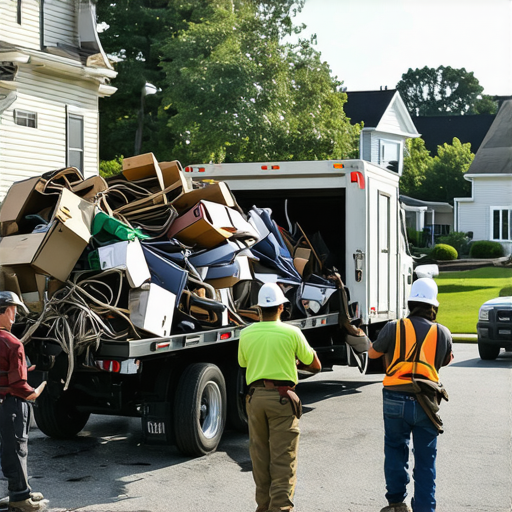

I have spent twenty-five years staring into the back of 15-yard dumpsters. I have smelled the metallic tang of hydraulic fluid on a freezing Tuesday morning in Kane County. I have seen what happens when the Tetris of a load fails. A business owner once tried to save 500 dollars by hiring a guy with a pickup truck from a social media ad. Two weeks later, the police called him because his company confidential files were found in a ditch near the Fox River. Your junk is your liability until it hits the scale at the transfer station. In the world of waste management, there is no away. Stuff just moves from your floor to a processor, or it becomes a legal time bomb. This is the reality of junk removal in Aurora as we approach the 2026 plastic recycling mandates. The stakes for your wallet and the environment have never been higher.
The plastic crisis hitting the Fox River Valley
Aurora plastic recycling targets for 2026 require a 40 percent diversion rate for high-density polyethylene and polypropylene materials from residential and commercial waste streams. This means your standard junk removal pile is no longer just trash. It is a regulated collection of polymers that require specific sorting. When we talk about junk removal in Aurora, we are talking about the chemistry of your old lawn furniture and the density of your discarded storage bins. Most people see a pile of gray plastic. I see HDPE and LDPE that will sit in a landfill for four centuries if not processed correctly. The 2026 mandates will force haulers to prove where every pound of plastic goes. If your hauler cannot provide a manifest, you are part of the problem. We are seeing a shift where the city is tightening the belt on what hits the Orchard Road or Greene Valley sites. You cannot just throw a plastic playset into a bin and hope for the best anymore. The science of sorting starts at the curb.
The myth of the cheap hauler
Low-cost junk removal services often bypass legal disposal fees by utilizing illegal dumping sites or mixing hazardous materials with general waste. This creates a massive liability for the homeowner. Every piece of junk has a fingerprint. I have seen people identified by a single utility bill in a bag of trash dumped in a forest preserve. Professional junk removal Aurora services must account for tipping fees. These fees are the price of admission to a legitimate waste stream. In 2026, those fees will fluctuate based on the purity of the load. If you hire someone who does not ask about the contents of your boxes, they are likely cutting corners. They are the curbside cowboys who ruin the industry. They lack the insurance to cover a punctured hydraulic line on your driveway. They lack the permits to haul across city lines. They are a ghost until something goes wrong. Then they are gone, and you are holding the ticket from the EPA.
“Waste is merely a resource in the wrong place; professional removal is the science of putting it back where it belongs.” – Disposal Industry Maxim
Cubic density and the art of the stack
Maximizing truck capacity through volumetric density calculations reduces the carbon footprint of junk removal by decreasing the number of trips required to the transfer station. When I pull up to a garage clean out Aurora project, I am calculating the void. Every inch of air in my truck is lost money and wasted fuel. We stack heavy items like old oak dressers on the bottom to lower the center of gravity. We use soft junk like mattresses or bagged clothes to fill the gaps. This is the logistics of the load. A 15-yard dumpster has a specific footprint. If you toss items in randomly, you will cub out before you hit your weight limit. We aim for a high packing factor. This requires physical strength and a brain for geometry. We break down furniture removal items to their smallest components. A table is just five pieces of wood once the bolts are out. By minimizing the volume, we maximize the efficiency of the disposal. This is how we keep costs down while staying compliant with Aurora waste regulations.
Aurora dumpster rentals and the permit maze
Securing a dumpster rental in Aurora requires knowledge of local right of way permits and the structural load limits of residential asphalt during peak summer heat. If you place a 20-yard bin on a fresh driveway in July, the steel rollers will sink into the surface. We use wooden planks to distribute the weight. This is the difference between a pro and a rookie. Then there is the permit issue. If that bin sits on the street, you need the city to sign off. I have seen homeowners fined hundreds of dollars because they didn’t know the local code for dumpster placement. In Aurora, the proximity to the Fox River also means we have to be careful about runoff. You cannot put a bin where rain will wash contaminants into the storm drains. It is a logistical puzzle that involves more than just a truck and a box. We manage the paperwork so the client doesn’t have to face the city inspectors.
| Material Type | Decomposition Time (Years) | Recycling Potential (Aurora 2026) |
|---|---|---|
| PET Plastic (Bottles) | 450 | High (Grade 1) |
| HDPE Plastic (Bins) | 600+ | High (Grade 2) |
| Untreated Wood | 13 | Medium (Mulch/Fuel) |
| Steel Appliances | 50 | Very High (Scrap) |
| Glass Furniture | 1,000,000 | High (Infinite) |
Appliance removal and the Freon trap
Legal appliance removal in Illinois requires the recovery of refrigerants by a certified technician to prevent ozone depletion and comply with EPA Section 608 regulations. You cannot just toss a fridge into a landfill. It is a chemical hazard. The compressors contain oils and gases that are high intensity pollutants. When we handle appliance removal, we are looking for the sticker. We check for the integrity of the cooling coils. If a hauler tells you they can take your old freezer for twenty bucks, they are probably venting the gas into the atmosphere behind a warehouse. That is a federal offense. We use specialized equipment to tap the lines and evacuate the gas. Then we strip the copper and the steel. This is the heavy load reality. It is dangerous, technical work. A fridge falling on a foot is a career-ender. We use appliance dollies and straps that are rated for twice the weight of the unit. We protect your floors and our spines.
The hidden dangers of the hoarder clean out
Hoarder clean out Aurora projects involve navigating biohazards, structural instability, and microscopic air quality risks that require specialized personal protective equipment. I have cleared houses where the newspapers had absorbed so much moisture they weighed three times their original mass. The floor joists were bowing under the pressure. This isn’t just junk. It is a structural threat. We find mold, rodent droppings, and sometimes leaking chemicals from decades ago. You need a team that understands the Resource Conservation and Recovery Act. We don’t just throw things in a bag. We sort. We find the lithium batteries that cause truck fires. We find the old cans of lead paint that contaminate the soil. A hoarder situation is a data overflow of physical objects. We have to reboot the space. We use HEPA filters and Tyvek suits. We treat the site like a hazmat scene because often, that is exactly what it is.
“The mismanagement of solid waste is a direct threat to groundwater integrity and local ecosystem health.” – Solid Waste Association of North America (SWANA)
Furniture removal and the death of fast decor
Modern furniture is often composed of medium-density fiberboard and adhesives that complicate the recycling process compared to solid wood vintage pieces. I hate modern disposable furniture. It breaks if you move it across the room. It is held together by glues that off-gas formaldehyde. When we do furniture removal, we are basically hauling compressed sawdust and chemicals. It has zero structural value once it is broken. Vintage furniture is different. We try to divert that to restoration centers. We look for the makers marks. We look for solid oak or maple. In Aurora, we have several partners who take high-quality wood waste. But the flat-pack stuff from the big box stores is just filler for the landfill. It represents the throwaway culture I fight every day. We try to find a second life for everything, but sometimes the material is too far gone. We ensure the metals are stripped and the wood is processed if possible.
Prohibited items your hauler cannot touch
- Lead-acid batteries (Automotive and Marine)
- Propane tanks (Even if they feel empty)
- Industrial chemicals and pesticides
- Medical waste and sharps
- Wet paint and solvents
- Asbestos-containing materials
- Radioactive smoke detectors
- Explosives or ammunition
The logistics of the perfect garage clean out
A successful garage clean out requires a three-stage sorting process to separate recyclables, donations, and true waste before the truck arrives on site. Most people wait until we get there to decide what stays. That is a mistake. It slows the process and increases your labor cost. You should create three zones. Zone one is the high-value scrap. Aluminum siding, copper pipe, and brass fittings. Zone two is the 2026 plastic mandate material. Clean containers and bins. Zone three is the heavy junk. Broken concrete, old tires, and pressure-treated wood. When we arrive, we load in reverse order. The heavy items go in first. They provide the ballast. The loose debris goes on top. We use heavy-duty tarps to secure the load. Nothing flies out on the highway. We are professional. We are fast. We leave the floor swept. That is the standard of the Logistics Manager. We don’t just haul; we curate the exit of your unwanted items.
Why the carbon footprint of your junk matters
The carbon footprint of hauling low-grade plastics 500 miles often exceeds the environmental impact of local high-efficiency waste-to-energy incineration. This is the contrarian truth of the industry. Everyone wants to recycle everything. But if I have to drive a diesel truck halfway across the country to drop off five pounds of plastic, the planet loses. We look for local Aurora solutions. We look for transfer stations that use optical sorters to minimize transport distance. We calculate the BTU potential of the wood waste we recover. If it can be used for local heating, that is a win. We are looking at the 2026 mandates as a way to tighten these loops. We want to keep Aurora’s waste in Aurora’s economy. This is the science of the haul. It is about more than just lifting heavy things. It is about the physics of the planet. We take this seriously because we live here too. We drink the water from the Fox River. We breathe the air. We want it clean.