Beyond the Bin: A Strategist’s Guide to Masterful Waste Management in Aurora
The smell of diesel and hydraulic fluid is the scent of progress. For twenty-five years, I have lived in the world of cubic yards and tipping fees. I see a pile of debris and I see a logistical puzzle that requires surgical precision. Most homeowners see a mess. I see potential liabilities and environmental risks. A business owner tried to save €500 by hiring a guy with a pickup truck from a social media ad. Two weeks later, the police called him because his company’s confidential files were found in a ditch. Your junk is your liability until it hits the scale and you have a manifest in hand. This is the reality of waste management. It is not just about lifting heavy objects. It is about the science of diversion and the legalities of the Resource Conservation and Recovery Act.
The illegal dumping trap
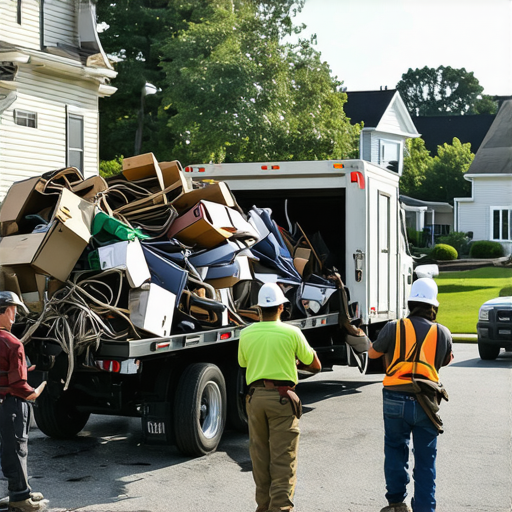
Illegal dumping involves the unauthorized disposal of waste on public or private land, often to avoid tipping fees or professional removal costs. This practice violates environmental regulations like the RCRA, carries heavy fines, and shifts legal liability back to the original owner if the waste is traced via documents or unique items. Commercial entities in Aurora must realize that a cheap guy with a truck is often a legal time bomb. If those items end up in a forest preserve or a vacant lot, the code enforcement officers will come looking for the person whose name is on the mail inside that trash. The physics of waste disposal are unforgiving. A fifteen-yard truck has a specific weight limit. When a hauler exceeds that limit to save on trips, they risk equipment failure and road safety violations. We cube out a truck based on density. We do not just toss items in. We break down furniture to eliminate air pockets. We stack flat items against the bulkhead. Efficiency is the difference between a profitable job and a waste of fuel. Every cubic inch of empty space in a truck is money lost to the wind.
“Waste is merely a resource in the wrong place; professional removal is the science of putting it back where it belongs.” – Disposal Industry Maxim
The heavy cost of keeping everything
Hoarder clean outs in Aurora require specialized logistics to manage the extreme volume of material that often compromises the structural integrity of residential buildings. These projects necessitate heavy-duty debris loaders, personal protective equipment, and a strict adherence to local disposal ordinances at the Aurora Transfer Station. I have stood in homes where the floor joists bowed under the sheer weight of compressed paper. Paper is heavy. When it absorbs humidity, its weight triples. A standard residential floor is rated for forty pounds per square foot of live load. A hoarding situation can push that to two hundred pounds. This is a structural emergency. During a hoarder clean out aurora, we do not just move stuff. We assess the load-bearing capacity of the stairs. We look for signs of pest infestation that could contaminate our trucks. We identify hazardous materials like old paint thinners or leaking alkaline batteries. The logistical flow must be constant. We set up a staging area. We sort by material. Wood goes to one pile. Metal to another. The rest is residual waste. This level of organization prevents the truck from becoming a chaotic mess that is impossible to unload at the landfill. It is about maintaining the flow of the operation.
Five pillars of Aurora waste recovery
Aurora recycling centers provide critical infrastructure for diverting materials from landfills, including specialized facilities for electronics, scrap metal, and construction debris. Utilizing sites like the Aurora Transfer Station or local scrap yards ensures that materials like steel and copper enter the circular economy instead of rotting in a pit. Finding the right destination for your junk is the mark of a professional. In Aurora, you cannot just dump an old CRT television in the trash. It contains lead and mercury. Here are the five essential hubs for your disposal needs. First, the Aurora Transfer Station handles the bulk. Second, the Kane County Electronics Recycling program handles the e-waste that is full of toxic heavy metals. Third, the Habitat for Humanity ReStore in Aurora is the place for functional furniture and surplus building materials. Fourth, the local scrap yards like P&W provide a path for ferrous and non-ferrous metals. Fifth, the Naperville-Aurora Household Hazardous Waste facility is the only safe spot for chemicals and oils. Every one of these locations has specific rules. You do not just show up. You know the gate fees. You know the acceptable load limits. You know the hours of operation. If you miss the window, your truck sits idle. An idle truck is a cost center, not a profit center.
| Material Type | Decomposition Time | Recycling Potential |
|---|---|---|
| Corrugated Cardboard | 3 Months | High – Pulp Recovery |
| Untreated Timber | 15 Years | Medium – Mulch/Biofuel |
| Aluminum Cans | 250 Years | Infinite – High Value |
| Plastic Bottles | 450 Years | Low – High Energy Cost |
| Glass Bottles | 1 Million Years | High – Crushed Cullet |
The appliance disposal gauntlet
Appliance removal requires the recovery of refrigerants like Freon and the separation of electrical components to comply with EPA Clean Air Act mandates. Professional haulers must ensure that old refrigerators and air conditioners are drained by certified technicians before the metal shell is recycled at a scrap facility. The iron weight of an old refrigerator is not the problem. The gas inside is the problem. If you puncture a cooling line, you are releasing ozone-depleting substances. This is a federal offense. We use specialized dollies for appliance removal to protect the customer’s floors. We strap the units down. We remove the doors to prevent any entrapment risks. When we get to the yard, we get a certificate of recovery. This is the paper trail that proves we did it right. A contrarian fact that many green activists ignore is that the carbon footprint of hauling low-grade plastics five hundred miles for recycling often exceeds the impact of local, high-efficiency waste-to-energy incineration. Sometimes, the most eco-friendly move is to burn the trash for power rather than shipping it across the country. We analyze these variables on every job. We look for the shortest route to the highest recovery rate.
- Lead-acid car batteries (Leaking acid is a hazmat risk)
- Pressurized propane tanks (Potential explosion in the truck compactor)
- Liquid oil-based paints (Must be solidified with kitty litter first)
- Asbestos-containing insulation (Requires specialized abatement contractors)
- Medical sharps and biohazardous waste (Strictly regulated disposal flow)
“The efficient management of solid waste is a fundamental requirement for the protection of public health and the environment.” – SWANA Policy Statement
The cold math of the tipping fee
Dumpster rentals Aurora pricing is determined by the volume of the container and the weight of the debris, with overweight penalties applied if the material exceeds the specified tonnage limit. Estimating the density of construction waste versus household junk is essential to avoid unexpected costs at the landfill gate. A twenty-yard dumpster is not a license to fill it with concrete. Concrete is heavy. A dumpster full of concrete will break the lift mechanism of the truck. We call this a heavy load. You must know the difference between a yard of dirt and a yard of old blankets. One weighs two thousand pounds. The other weighs fifty. We calculate the load before we even drop the bin. For garage clean outs, we expect a mix of light-density items and heavy metal tools. We plan the route to the transfer station based on traffic patterns. We want to spend the least amount of time on the road and the most amount of time moving material. The floor snapped when we moved a heavy safe once because the homeowner did not tell us it was bolted to the joists. We inspect every anchor point. We do not take risks. We do the math. We move the weight. This is how we keep Aurora clean and how we keep our trucks on the road. Professionalism is not an accident. It is a calculated series of logistical decisions made by people who understand that waste is a science.
This post really highlights the importance of proper waste management and the complexities involved beyond just throwing things in a bin. I’ve seen firsthand how improper disposal can lead to hefty fines or environmental issues, especially with hazardous materials like old batteries or chemicals. The emphasis on the five pillars of Aurora waste recovery illustrates how critical specialized facilities and proper sorting are in ensuring materials are recycled or disposed of correctly. One challenge I’ve encountered is educating clients about the regulations surrounding e-waste and hazardous waste—many aren’t aware of the restrictions involved. I’m curious—what are some effective ways that Aurora businesses or residents can better stay informed about these processing sites and avoid costly mistakes? I believe that increased awareness and clear guidelines can significantly improve compliance and help protect our environment.