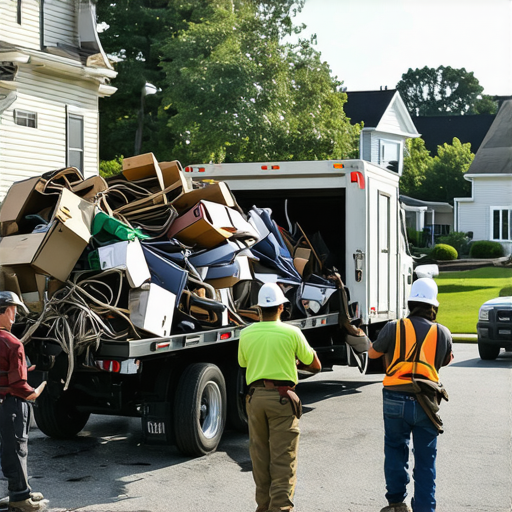

The hazardous surprise that nearly ended a career
Aurora junk removal requires absolute precision to avoid catastrophic failures in safety and environmental compliance. Professional waste management is not about throwing things in a truck. It is the tactical deployment of logistical assets to mitigate risk and maximize material recovery across the Fox Valley region.
I watched a rookie almost lose his eyebrows because a customer hid a half-full propane tank inside a pile of ‘harmless’ yard waste. We don’t just lift. We inspect. Every. Single. Item. The hydraulic packer blade of a 15 yard dump truck exerts enough pressure to crush a steel engine block. When that blade met the pressurized gas tank, the hiss was like a snake in a quiet room. One spark from the friction of shifting debris and my entire crew would have been a headline. This is the reality of waste management in Aurora. People think junk is inert. It is not. It is a volatile collection of chemical compounds and physical hazards waiting for a catalyst. Whether we are dealing with a standard garage clean out or a complex hoarder clean out aurora project, the protocol remains the same. We assume every pile is a threat until we verify the inventory. This experience taught me that shortcuts in disposal lead to the emergency room or the courtroom.
The brutal math of Aurora tipping fees
Tipping fees in the Aurora region are calculated based on tonnage and material classification at licensed transfer stations or landfills. Understanding the difference between cubic yard volume and actual weight is essential for cost management during any large scale junk removal project.
The logistics of a truck load are governed by the law of density. A 20 yard dumpster can hold a mountain of sofa cushions, but it will reach its weight limit long before it is physically full if you load it with roofing shingles. In the waste industry, we call this ‘cubing out’ versus ‘grossing out.’ When you hire a professional for junk removal aurora, you are paying for the expertise to manage this ratio. We look at the load and calculate the moisture content of the wood. Wet lumber weighs double what kiln dried pine does. This affects the fuel consumption of the heavy duty diesel engines and the final bill at the scale. The Orchard Hills Landfill and various transfer stations along the Route 25 corridor have strict mandates. If a load is contaminated with hazardous materials, the entire truck is rejected. That means an extra four hours of drive time and manual sorting. We avoid this by utilizing a strict manifest system for every pickup.
“Waste is merely a resource in the wrong place; professional removal is the science of putting it back where it belongs.” – Disposal Industry Maxim
Why your garage became a graveyard for logic
Garage clean outs often reveal decades of accumulated materials that require specialized sorting to meet Illinois Environmental Protection Agency standards. The process involves categorizing items into recyclables, hazardous waste, and general debris to ensure legal and ecological safety.
The average Aurora garage is a repository for abandoned dreams and chemical liabilities. We find old cans of oil based paint from the 1990s sitting next to bags of nitrogen rich fertilizer. This is a recipe for soil contamination if the containers leak. During garage clean outs, we apply the 80/20 rule of spatial logistics. Eighty percent of the volume is usually low value debris that can be diverted to waste to energy facilities. The remaining twenty percent consists of metals and high grade plastics. We dismantle shelving units to maximize truck space. This is where the Tetris skills of a veteran loader come into play. We place heavy, flat items like old plywood at the bottom. We stack boxes of smaller debris on top. We fill the gaps with soft items like old rugs. This prevents the load from shifting during transport on the Reagan Memorial Tollway. A shifting load is a dangerous load. It changes the center of gravity of the truck, making turns a hazard.
The chemical ghost in the appliance
Appliance removal is a regulated activity that requires the recovery of refrigerants and the management of heavy metals found in old electrical components. Improper disposal of refrigerators or air conditioners can lead to significant fines due to the release of ozone depleting substances.
Old white goods are not just scrap metal. They are complex machines with environmental consequences. When we perform appliance removal in Aurora, we focus on the capacitors and the cooling systems. Units built before a certain era contain PCBs in the capacitors and R-12 or R-22 refrigerants. These cannot be vented into the atmosphere. The Clean Air Act is very clear about the penalties for illegal venting. We use recovery pumps to extract these gases into certified cylinders before the metal shell is sent to the shredder. The weight of an old cast iron stove or a commercial grade freezer also presents structural challenges. We use specialized stair climbing dollies and floor protection kits. We have seen floor joists in older Aurora homes that are on the verge of failure because of the static load of a 400 pound chest freezer that has been full of ice for a decade. The physics of moving these items requires more than just muscle. It requires mechanical advantage and an understanding of load bearing points.
| Material Type | Cubic Yard Density (lbs) | Typical Disposal Pathway |
|---|---|---|
| Mixed Household Debris | 250 – 300 | Transfer Station / Landfill |
| Demolition Concrete | 2,000 – 2,400 | Inert Recycling Center |
| Loose Yard Waste | 150 – 200 | Composting Facility |
| Compacted E-Waste | 400 – 500 | Certified Refurbisher |
The permit trap of dumpster rentals
Dumpster rentals Aurora residents use must comply with local municipal codes regarding placement on public streets and the duration of use. Failure to secure the proper permits can result in daily fines and the immediate removal of the container by city authorities.
A dumpster is not a permanent fixture. It is a temporary industrial tool. When people opt for dumpster rentals aurora, they often forget about the city’s right of way. If you place a 30 yard roll off on a public street without a permit, you are obstructing traffic and creating a liability. The street surface itself can be damaged. Asphalt softens in the Illinois summer heat. The steel rollers of a loaded dumpster can sink right into the road. We use wooden planks to distribute the weight. This is basic load physics. We also monitor for ‘unauthorized additions.’ Neighbors love to throw their own trash into a rented dumpster overnight. This can lead to weight overages that the renter is responsible for. We recommend using tarps or locking lids to protect your investment. The cost of a dumpster is not just the rental fee. It is the tonnage. If it rains, the debris inside absorbs water. You are then paying the landfill to take away water. This is why timing is everything in waste logistics.
“Efficient waste management requires a deep understanding of both the material and the regulatory environment in which it moves.” – SWANA Technical Manual
Managing the cubic density of a hoarder clean out
Hoarder clean out aurora projects require a psychological and logistical strategy to handle high volumes of varying materials under potentially hazardous conditions. These situations often involve biohazards and structural instabilities that demand professional intervention and specialized protective equipment.
A hoarding situation is a data overflow error in physical space. The volume of material is so high that the house itself becomes a container. We have cleared homes where the stack of newspapers reached the ceiling. These papers absorb moisture from the air. Over years, they become a solid, heavy mass. This puts immense pressure on the floor joists. During a hoarder clean out aurora, we work in stages. We establish a ‘clear zone’ at the primary exit. We sort as we go. We look for hidden hazards like needles, rodent droppings, and mold. We use N95 respirators and puncture resistant gloves. The air quality in these environments is often poor due to the lack of circulation and the breakdown of organic materials. We use high volume fans to clear the air. The goal is to maximize the diversion rate. Even in a hoard, there are valuable metals and paper products that can be recycled if they are not contaminated by biohazards. It is a slow, methodical process that requires patience and a high level of logistical organization.
The carbon lie of modern recycling
While most people think recycling is always better, the carbon footprint of hauling low grade plastics 500 miles often exceeds the impact of local, high efficiency waste to energy incineration. This is a hard truth for many to swallow. We focus on the ‘highest and best use’ of materials. If we have to burn five gallons of diesel to move a pound of plastic to a facility that might just discard it anyway, we have failed the environment. In Aurora, we prioritize local scrap yards and regional composting sites. We want to keep the transportation loop as tight as possible. This reduces the overall carbon intensity of the removal process. The logistics manager must be a steward of energy as well as a master of space. We look at the BTU potential of wood waste. If that wood can be processed into mulch or fuel pellets locally, that is a win. If it has to be shipped across state lines, we look for better alternatives.
Items Your Hauler Cannot Legally Touch
- Lead acid batteries from vehicles or UPS systems
- Wet latex or oil based paints and solvents
- Asbestos containing building materials like old floor tiles
- Propane tanks and other pressurized gas cylinders
- Biohazardous waste including medical sharps
- Radioactive materials like certain old smoke detectors
- Explosives or ammunition