The shifting legal ground of Aurora waste disposal
A business owner in Aurora tried to save 500 dollars by hiring a guy with a pickup truck from a social media ad. Two weeks later, the Aurora Police Department called him because his company confidential files and broken office furniture were found in a ditch near Cherry Creek State Park. Your junk is your liability until it hits the scale at a licensed transfer station. In 2026, the City of Aurora has tightened the noose on illegal hauling. This is not just about clearing space. This is about legal indemnity and environmental compliance. When you hire for Junk Removal Aurora or order a roll-off, you are entering a chain of custody that ends either at the Denver Arapahoe Disposal Site or in a courtroom. I have spent 25 years watching the logistics of waste management evolve. The days of the curbside cowboy are over. Modern disposal requires a technical understanding of the Resource Conservation and Recovery Act and the physics of load density.
Why your cheap hauler is a legal time bomb
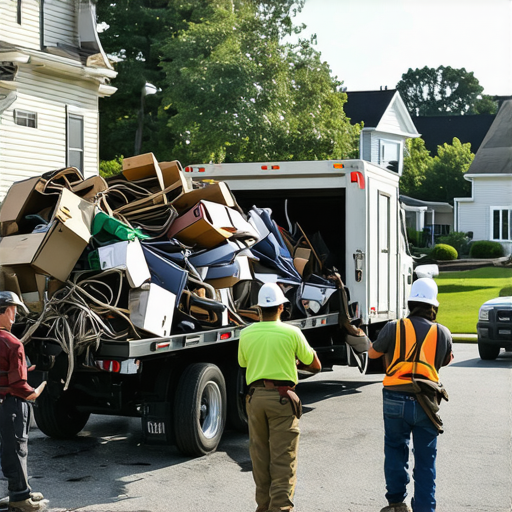
Junk Removal Aurora services and Dumpster Rentals Aurora providers must maintain valid municipal permits and transport insurance to protect homeowners from liability. If an unpermitted hauler dumps your old sofa or refrigerator in a public alley, the city tracks the debris back to the point of origin through mail, serial numbers, or security footage. You become the primary suspect in an illegal dumping investigation. The risk is high. The city is using digital geofencing in 2026 to track every 20-yard container dropped on a public right of way. I have seen rookies lose their business licenses because they ignored the five-foot clearance rule from fire hydrants. When the truck arrives, it is not just about lifting. It is about the manifest. Every load must be documented. If you do not see a manifest, you are looking at a liability.
The math of the right of way
Dumpster Rentals Aurora permit requirements stipulate that any container placed on a public street or sidewalk requires a Right-of-Way permit from the Aurora Public Works Department. In 2026, these permits are strictly monitored by automated traffic safety systems. You cannot simply drop a 30-yard bin on the asphalt and hope for the best. The container must have reflective tape and specific barricades. If the bin blocks a bike lane or a pedestrian path without a site-specific safety plan, the fines start at 250 dollars per day. The logistics of the placement are complex. We look at the overhead power lines and the slope of the street. A 40-yard bin filled with wet construction debris can weigh over ten tons. On a steep Aurora hill, that is a kinetic energy hazard. We calculate the friction coefficient of the pavement before we ever pull the lever on the hoist.
“Waste is merely a resource in the wrong place; professional removal is the science of putting it back where it belongs.” – Disposal Industry Maxim
Forbidden loads in the city of Aurora
Appliance removal and Junk Removal Aurora protocols strictly forbid the mixing of hazardous materials with general municipal solid waste. The physics of a garbage truck compactor are violent. If a customer hides a half-full propane tank inside a pile of yard waste, it becomes a shrapnel bomb when the hydraulic ram engages. I once saw a truck fire caused by a single lithium-ion battery hidden in a box of old toys. The heat generated by these batteries can melt through the steel floor of a dumpster in minutes. In 2026, the Aurora transfer stations use thermal imaging to scan incoming loads. If they find prohibited items, the entire load is rejected and the sender is hit with a decontamination fee. It is cheaper to be honest about what you are throwing away.
Items Your Hauler Cannot Legally Touch
- Propane tanks and pressurized cylinders
- Lead-acid automotive batteries
- Liquid chemicals or wet oil-based paint
- Asbestos-containing insulation or siding
- Biohazardous waste and medical sharps
- Tires without a specialized recycling manifest
The structural collapse of hoarding zones
Hoarder Clean Out Aurora projects represent the most dangerous logistics in the waste industry. The material is often compacted over decades. This creates a structural hazard where the junk is actually supporting the weight of the walls or the ceiling. I cleared a house where the newspapers had absorbed ten years of basement humidity. The weight had caused the floor joists to bow by four inches. We had to shore up the basement with steel jacks before we could remove the first layer of debris. This is not just cleaning. This is an autopsy of a house. Every layer tells a story of neglect and chemical leaching. In a hoarding situation, we assume every pile contains biological hazards or sharp objects. We dress in Level C personal protective equipment because the dust from forty years of mold can cause permanent lung damage. We do not just toss items. We excavate them.
| Container Size | Weight Capacity (Tons) | Aurora Permit Status 2026 | Best Use Scenario |
|---|---|---|---|
| 10 Yard | 2 Tons | ROW Required for Street | Concrete and Dirt Removal |
| 20 Yard | 4 Tons | Mandatory ROW Permit | Garage Clean Outs |
| 30 Yard | 6 Tons | Mandatory ROW Permit | Full House Cleanouts |
| 40 Yard | 8 Tons | Mandatory ROW Permit | Commercial Demolition |
A breakdown of 2026 dumpster logistics
Dumpster Rentals Aurora and Furniture Removal experts must navigate the narrow streets of the older Aurora neighborhoods near the Colfax corridor. A standard roll-off truck needs sixty feet of linear space to drop a container. If you have a narrow driveway, we have to use a hook-lift truck. Hook-lifts are more precise than the old cable-and-winch systems. They allow us to drop a bin in a tight alley without scraping the neighbor’s fence. The physics of the load matter. If you put all the heavy furniture at the back of the bin, the front wheels of the truck will lift off the ground when we try to pick it up. We call this the see-saw effect. It is a rookie mistake that can snap a hydraulic line. We load the heavy items at the front, closest to the truck cab, to maintain a safe center of gravity.
“The Resource Conservation and Recovery Act (RCRA) creates the framework for the proper management of hazardous and non-hazardous solid waste.” – Environmental Protection Agency
The thermodynamics of local waste recovery
Furniture Removal and Junk Removal professionals are now focusing on the BTU potential of recovered materials. While most people think recycling is always better, the carbon footprint of hauling low-grade plastics 500 miles often exceeds the impact of local, high-efficiency waste-to-energy incineration. In the Aurora region, we evaluate the diversion rate of every load. We pull out the clean wood and the scrap metal because they have high recovery value. A broken dresser made of solid oak is a resource. A broken dresser made of particle board is just fuel. The 2026 Aurora waste ordinances require at least 30 percent diversion on all construction projects. We track the weight of the metal vs the weight of the trash. If we miss the target, we pay a higher tipping fee at the landfill. The economics of waste are shifting toward recovery.
Navigating the 2026 permit labyrinth
Garage Clean outs and Appliance removal in Aurora are now subject to the new Clean Air Act enforcement regarding refrigerants. You cannot simply cut the lines on an old freezer. You need a Section 608 certified technician to recover the Freon before the unit can be crushed. If the EPA catches a hauler venting gas, the fine is 44,539 dollars per day. We carry the recovery logs in the truck cab. When we pull into the scrapyard, we show the certification. If a hauler tells you they can take your old fridge for twenty dollars, they are likely venting the gas behind a warehouse. That is a federal crime. Your signature on the work order connects you to that crime. Always demand a certificate of disposal for any appliance containing refrigerants. It is the only way to shield yourself from the legal fallout.
This post highlights some critical points about the importance of proper waste management, especially in a city like Aurora where regulations are becoming increasingly strict. I’ve personally seen how small junk removal companies sometimes overlook the permit requirements or safety standards, which can lead to hefty fines and legal issues. As a homeowner, I always ask for proof of proper disposal, particularly for appliances containing refrigerants or hazardous materials. It’s surprising how many people still underestimate the risks involved in DIY dumping or hiring unpermitted haulers. I’m curious, have others found effective ways to verify the permits and certifications of their disposal service providers? Building a trusted network of reputable haulers could really help avoid accidental liability or compliance issues. Proper planning and knowing what to look for might save a lot of trouble down the line.